- Fall 2025
Improving Longitudinal Joint Performance in Airfield Asphalt Pavement
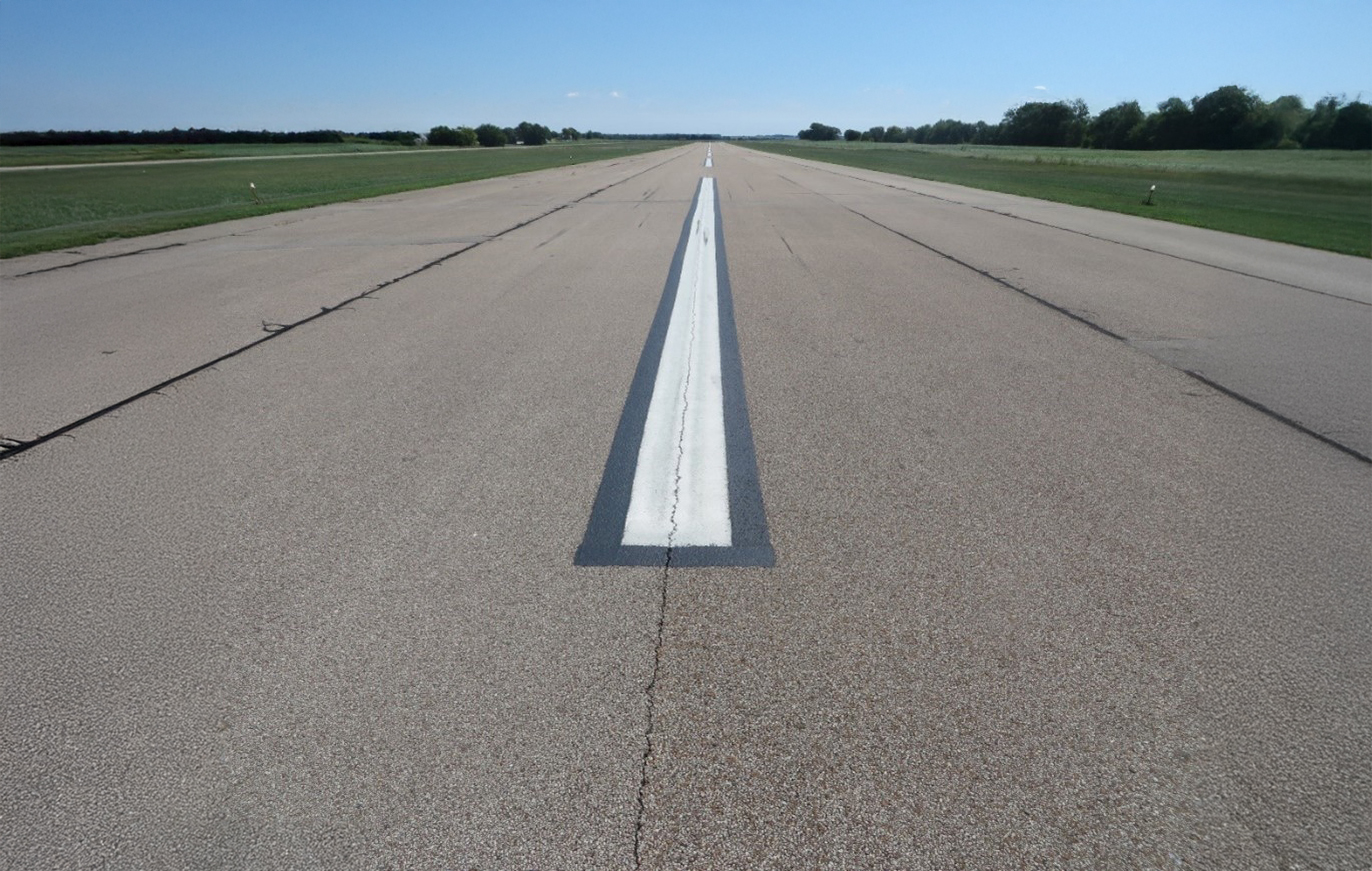
Longitudinal joints continue to be a source of early deterioration in airfield pavements, despite longstanding construction specifications and industry best practices. To address these concerns, a study was initiated through the Airport Asphalt Pavement Technology Program (AAPTP) — a partnership between the Federal Aviation Administration (FAA) and the National Asphalt Pavement Association (NAPA) — to identify strategies for improving the construction, maintenance, and rehabilitation of longitudinal joints for airfield pavements. NCAT teamed with Iowa State University and Applied Pavement Technologies, Inc. to perform the research.
The research effort culminated in a three-volume series that documents the literature review, field evaluations, and practitioner guidance for joint maintenance. These volumes offer insight into why longitudinal joints fail prematurely, how FAA specifications attempt to mitigate these issues, and what emerging techniques show the greatest promise for improving durability and safety. This article summarizes the findings and recommendations, serving as a practical reference for airport engineers, contractors, and pavement managers.
Challenges of airfield longitudinal joints
Longitudinal joints are formed during the construction of asphalt pavements as parallel lanes of hot mix asphalt are paved and compacted. Due to the wide pavement widths of runways, taxiways, and aprons, airport pavements have many more longitudinal joints than highway pavements. The first paved lane’s edges typically have substantially lower density due to the lack of lateral support. As a result, longitudinal joints tend to have higher air voids and higher permeability compared to the rest of the pavement mat. These characteristics lead to faster aging, moisture infiltration, raveling, and ultimately, cracking.
For airfields, these types of deterioration present serious operational risks. Raveling at longitudinal joints can generate foreign object debris (FOD), which poses a hazard to aircraft engines. Additionally, premature joint distress compromises structural capacity and reduces the pavement’s service life, leading to increased maintenance costs and operational disruptions.
FAA specifications for longitudinal joints
FAA Advisory Circular AC 150/5370-10H requires that longitudinal joints be cut back up to 3 inches to expose a clean vertical face and that a tack coat must be applied before placing the adjacent lane. Additionally, contractors are required to meet a Percent Within Limits joint density requirement with a minimum specification limit of 90.5% of the Theoretical Maximum Density (TMD). Contractors may use joint heaters to improve adhesion and compaction of the cold joint before paving. Despite combining method and end-result specifications, achieving durable joints remains challenging.
Scope of the study
The AAPTP study aimed to identify better materials, construction methods, and maintenance strategies for longitudinal joints in airfield pavements.
The final deliverables were organized into three volumes:
Volume 1:
State of the Practice and Innovative Materials and Methods
Volume 2:
Field Performance Evaluations of Longitudinal Joints
Volume 3:
Best Practices Manual for Construction and Maintenance
Volume 1
This volume provides an in-depth literature review of joint performance issues, past research, current FAA and highway agency practices, and new technologies designed to improve joint durability. Like FAA, recent surveys indicate that nearly half of the state highway agencies have adopted joint density specifications to encourage high-quality joint construction. Although most of these highway agencies feel that overall joint performance has improved somewhat over the past decade, there continues to be interest in identifying better methods and materials to eliminate persistent performance issues. This volume describes popular joint construction methods and materials, including:
• Butt, Notched Wedge, and Maryland Joints:
Alternative joint geometries designed to increase density and bonding.
• Joint Adhesives: Hot-applied polymerized asphalt applied to cold joint faces to improve waterproofing and bond strength.
• Joint Heaters: Infrared heaters that reheat the cold lane edge to improve compaction when placing the adjacent lane.
• Void-Reducing Asphalt Membranes (VRAM):
A highly polymer-modified asphalt membrane applied beneath the joint that migrates upward during paving to fill voids and reduce permeability from the bottom up.
• Fog Seals, Rapid Penetrating Emulsions (RPE), and Rejuvenating Seals: Surface-applied treatments that improve joint waterproofing, restore aged binder properties, and
reduce permeability.
Volume 2
This volume documents site inspections and performance evaluations of VRAM installations on roadways and airfields.
The purpose of the field evaluations was to determine if VRAM could be used in place of the cutback joint requirement for airfield pavements.
Six existing VRAM projects were inspected, including three highways and three airports.
Notable findings include:
• U.S. Highway 51 in Decatur, IL (2002)
After 20 years, VRAM sections had significantly higher Pavement Condition Index (PCI) values (21 vs. 7 for the control section constructed with a butt joint), fewer cracks, and more intact core samples.
• Pekin Municipal Airport, IL (2019)
First known VRAM application at an airport. Pavement joints remained in excellent condition with minimal cracking after four years.
• Coles County Memorial Airport, IL (2021) VRAM-treated taxiway showed very low levels of distress two years after placement.
However, for several other highway projects, density and permeability testing were limited by joint deterioration or maintenance activities (e.g., crack sealing) that confounded data interpretation.
Overall, the inspections of existing projects did not provide sufficient evidence that VRAM joints performed equal to or better than cutback joints.
Therefore, three new projects were documented to establish baseline conditions for future, long-term monitoring:
• Central Kentucky Regional Airport, KY
Echelon paving with VRAM on a chip-sealed surface; no issues observed during construction.
• Huntsville Executive Airport, AL
Test sections included successful installations of VRAM-only, RPE-only, a combination VRAP+RPE joint, and a control cutback joint.
• Moton Field Municipal Airport, Tuskegee, AL The most comprehensive test site, including various combinations of VRAM, cutback, butt joints, and RPE treatments. This project provides the ideal field experiment to evaluate the long-term performance of alternative joint treatments.
Volume 2 demonstrates that VRAM and RPE can be successfully applied in airport environments and that their performance merits continued monitoring and adoption consideration. Additional projects, like the Moton Field experiment, are strongly recommended in climates with frequent freeze-thaw cycles.
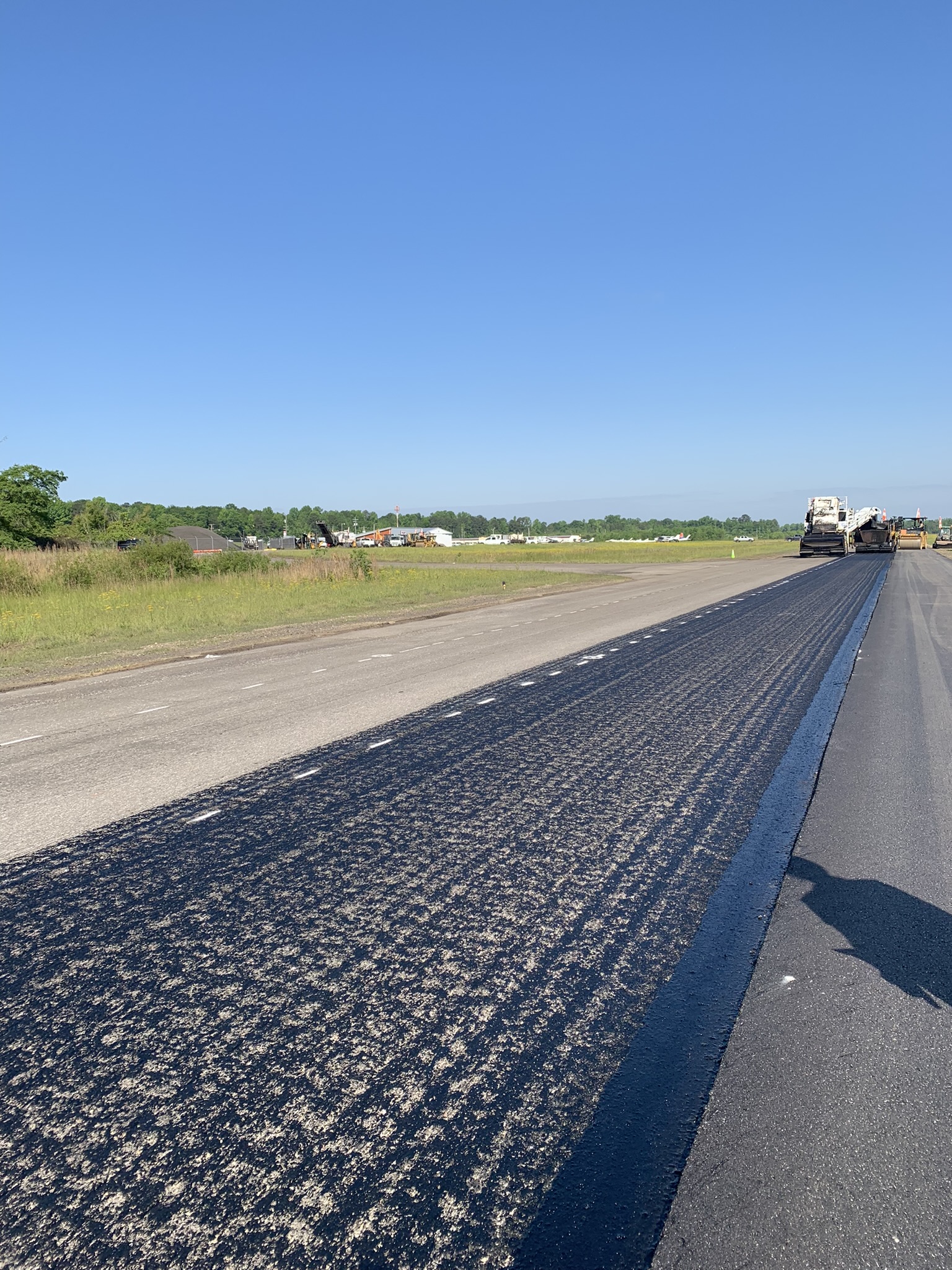
Moton Field Municipal Airport tack coat and VRAM with paving, Tuskegee, AL.
Volume 3
This volume provides a practitioner-focused guidebook on best practices for longitudinal joint construction and maintenance for airfield asphalt pavements. Key construction requirements and recommendations include:
• Echelon Paving: Closely staged paving operations that eliminate cold joints and unsupported
edges during compaction are preferred whenever feasible.
• Joint Offset: Stagger joints by at least one foot between lifts to avoid vertical weak planes within the pavement cross-section.
• Cut-back Joint Requirement: Any longitudinal joint left exposed for more than four hours and has a surface temperature below 175°F shall be cut back at least three inches.
• Joint Preparation: Uniformly apply the specified tack coat to the clean, dry vertical face of the cutback joint.
• Minimize Segregation: Use industry best practices to prevent mixture segregation during haul truck loading, material transfer, and paver operations — including the use of remixing material transfer vehicles.
• Joint Compaction: Target 92.5% of TMD or higher, with minimal variability along the joint.
• Joint Heating: Infrared joint heaters may be used to improve adhesion and density, especially for cold joints.
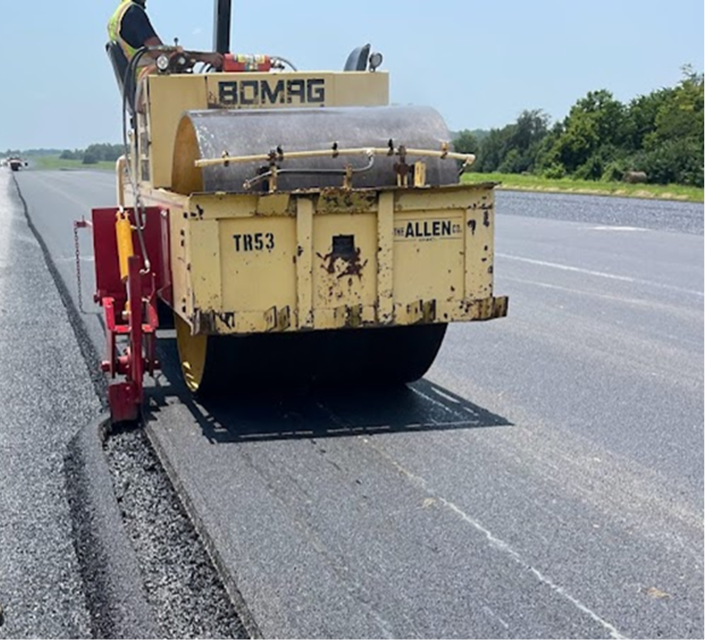
Cutting back the unconfined edge of a new pavement layer.
Maintenance methods for longitudinal joints should be selected based on crack severity and joint condition:
• Crack Sealing: For low-severity cracks (0.25–1 inch wide), clean, route, and seal with FAA-approved materials.
• Partial-Depth Repair: For moderate severity, remove a 2-foot-wide section, tack, and replace with HMA.
• Full-Depth Repair: For severe cracks or structural failure, remove and reconstruct the full pavement section.
• Slot Patching and Mastic Seals: Effective for wide or severely deteriorated joints, though mastic use requires a Modification of Standards (MOS).
• Surface Treatments: Apply rejuvenators, fog seals, or penetrating sealers to slow oxidation and reduce permeability.
Volume 3 also highlights emerging technologies and emphasizes the importance of routine PCI assessments to better capture longitudinal joint performance, which is currently classified under the “longitudinal and transverse cracking” distress.
The guidebook also stresses the need to adapt practices to local conditions and highlights the value of proactive monitoring and timely intervention. Well-built and well-maintained joints remain critical to extending pavement life and ensuring airfield performance.
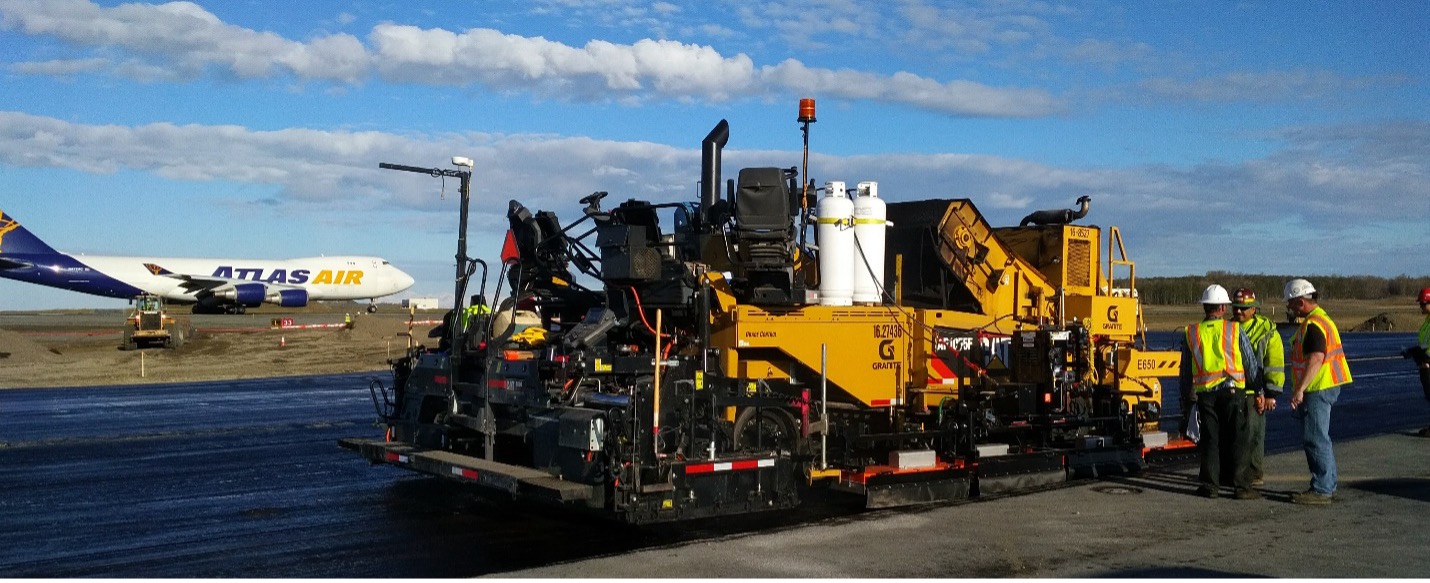
Paving an airport taxiway with a joint heater attached to the paver.
Conclusion and implementation outlook
Despite strict FAA requirements for joint construction, longitudinal joint distresses remain a weak link in airfield pavement performance. The study reviewed past research and field experiments to identify materials and construction practices that could improve longitudinal joint performance.
Technologies like VRAM, RPE, joint adhesives, and infrared heating provide promise — but further long-term evaluations are needed to make conclusive determinations of their benefits. Volume 3’s Best Practices Manual offers an actionable resource for stakeholders seeking to implement these innovations.
As airport authorities seek to improve reliability, safety, and life-cycle cost effectiveness, focusing attention on longitudinal joints is both necessary and timely. The findings and deliverables from this AAPTP study are available for download and provide an essential knowledge base for industry practitioners.

Contact Randy West for more information about this research.