- Spring 2026
How do Specimen Preparation Variables Impact BMD Test Results?
Virginia's Department of Transportation (VDOT) is currently implementing Balanced Mix Design (BMD) for dense-graded surface mixtures with unmodified binders. VDOT is currently using the IDEAL-CT (or IDT-CT), Asphalt Pavement Analyzer (APA), and Cantabro tests for BMD, and is also implementing the high-temperature indirect tension test (IDT-HT) as a simpler surrogate rutting test for the APA. With the implementation of BMD, VDOT has focused on reducing the variability of BMD test results.
This bears the obvious question: how do we improve the repeatability (i.e., within-lab variability) and reproducibility (i.e., lab-to-lab comparisons) for BMD test results? During the 2024 paving season, approximately 39% of CT Index test results had variability exceeding the single-operator coefficient of variation (COV) threshold of 18.3%.
Experience at NCAT and the Virginia Transportation Research Council (VTRC) has shown that specimen preparation practices significantly impact BMD test results and variability, particularly for CT Index.
These observations led to VTRC funded research study and joint NCAT and VTRC research effort to examine specimen preparation variables affecting BMD testing.
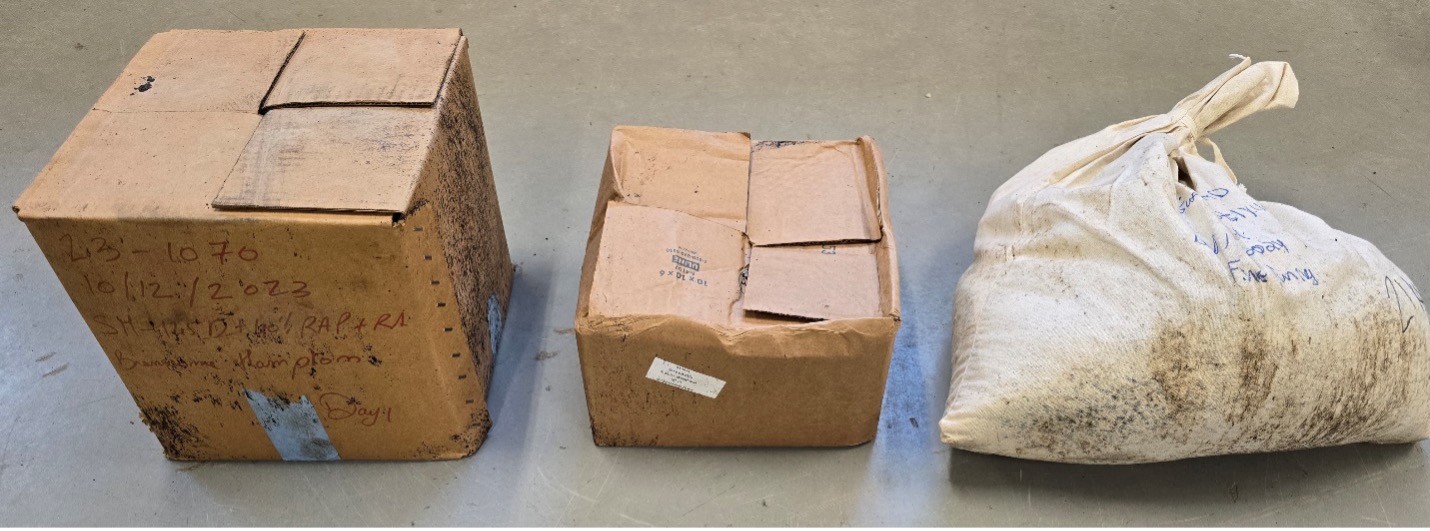
Figure 1a. Loose plant mixture samples in various sized containers
Study approach
The study was split into two phases – a ruggedness study followed by a fine-tuning study. The ruggedness study, conducted in accordance with ASTM C1067-20, evaluated multiple factors that could impact the results of the selected test method. Factors that influence BMD test results include practices for handling a loose mixture sample or an individual mixture specimen prior to compaction. A sample refers to plant-produced mixtures in various containers (Figure 1a), while a specimen (Figure 1b and 1c) refers to individual pans of loose mix after splitting or individual compacted test specimens.
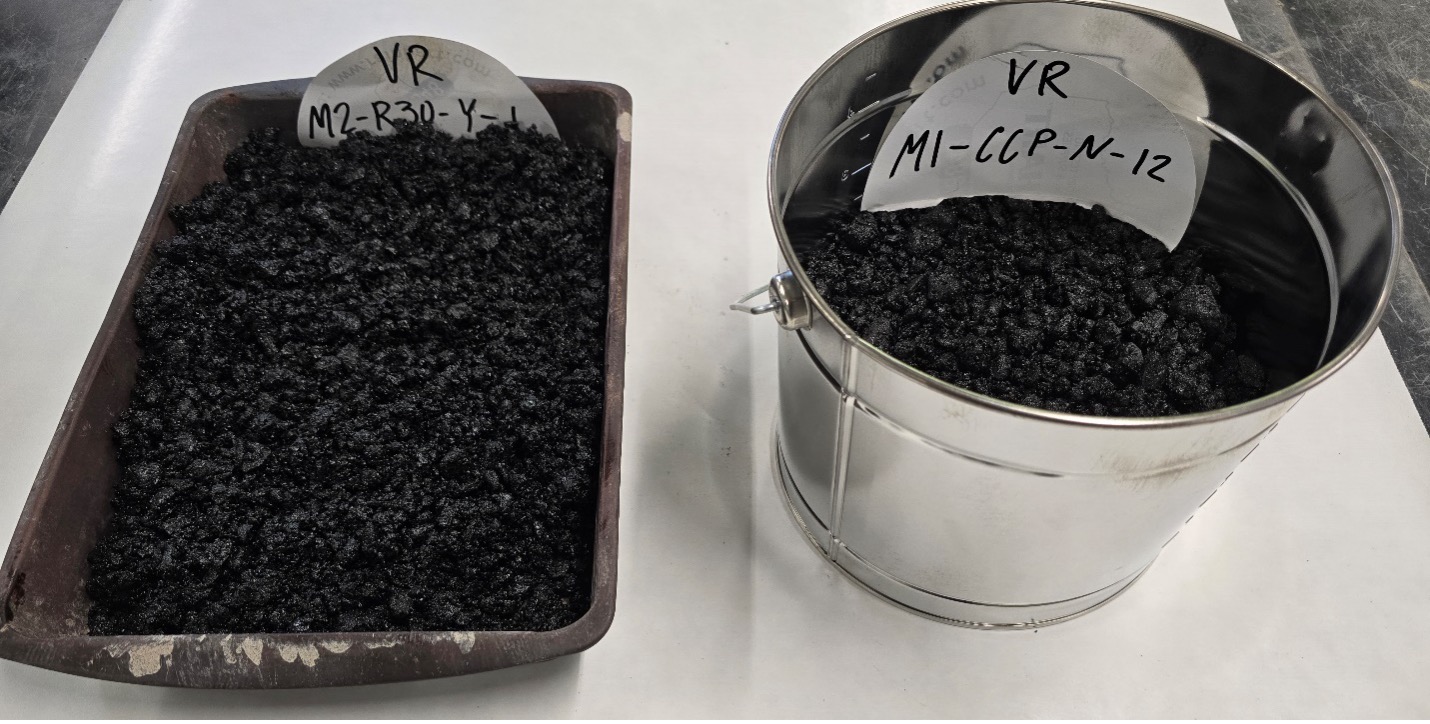
Figure 1b. Different individual specimen pans – 9”x13” pan (left) and metal pail (right)

Figure 1c. Compacted BMD test specimens
Prior to the ruggedness study, 22 potentially significant specimen preparation factors were identified and listed in a survey sent to the research panel, VDOT district staff, and asphalt contractors. Based on the survey responses, seven factors were selected for the ruggedness evaluation of both the IDEAL-CT and IDT-HT test methods. Factors related to both the mixture sample (splitting practices and heating times), and individual specimens (pan size, re-heating times, and re-heating practices) were evaluated. Five plant-produced mixtures were sampled in Virginia and sent to NCAT for the ruggedness evaluation.
Figure 2 shows the results of all eight different combinations or determinations (D1, D2, etc.), of the selected specimen preparation factors for a single mix. The VDOT BMD minimum CT Index of 70 for re-heated mixtures during production is also shown on this plot. For this mix, differing combinations of sample and specimen handling procedures produced CT Index results that ranged from marginally failing to significantly passing.
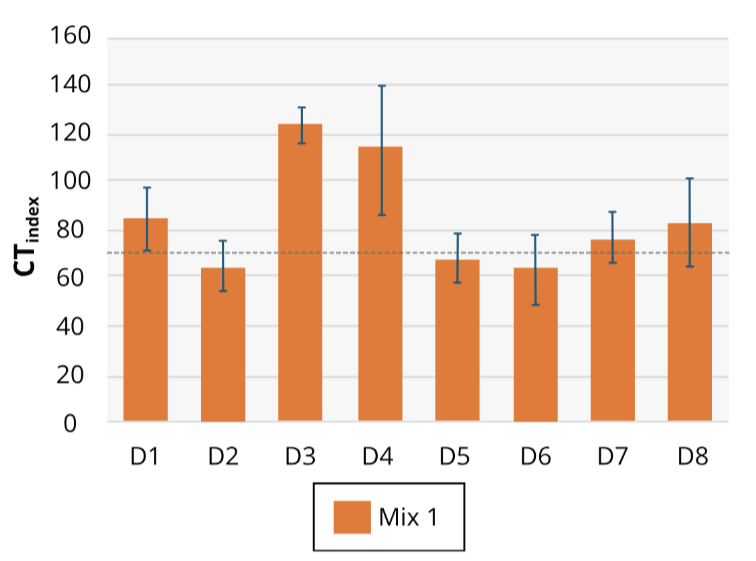
Figure 2. Ruggedness study – Effect of specimen prep variables – CT Index – Mix 1
The mix was the same for all eight determinations, but how it was handled in the laboratory had a significant impact on the final test result. This figure illustrates the importance of uniform specimen preparation practices for BMD. A similar analysis was performed on four other mixtures, and the effects of the different specimen preparation procedures were analyzed and ranked according to their impact.
Fine-tuning specimen preparation
Following the ruggedness study, the research team selected three variables to further refine practitioner guidance for specific specimen preparation variables.
The first fine-tuning variable was mixture specimen heating time and container type. For this evaluation, three additional plant-produced mixtures were sampled in three different containers commonly used in Virginia – 'large' boxes (10" x 10" x 10"), 'small' boxes (10" x 10" x 6"), and canvas bags (Figure 1a).
These containers were re-heated for three different times: 2.5 ± 0.5 hrs, 4.0 ± 0.5 hrs, and 5.5 ± 0.5 hrs. This evaluation showed that the mix in canvas bags heats more rapidly than in the boxes, leading to statistically lower cracking test results and statistically higher rutting test results at the maximum heating time of 5.5 hours. The research team recommended a maximum of 4.0 hours of heating time for containers because of this evaluation.
The second fine-tuning variable was the mixture thickness in specimen pans and whether to cover them with aluminum foil during re-heating. Figure 1b shows a mixture pan commonly used at NCAT (9” x 13”) and a metal pail commonly used by Virginia contractors for re-heating mix. The pans had a mixture thickness for BMD specimens of approximately 1 inch, while the mixture thickness in the pails was closer to 2 inches.
This evaluation showed that foil covering had a limited impact on the test results when the specimens were re-heated to compaction temperature, but it significantly increased the time required to re-heat specimens to the compaction temperature. The research team recommended using containers with a uniform mixture thickness between 1 and 2 inches and not covering specimens with aluminum foil as a result.
The last fine-tuning variable was the time to reheat the loose mixture specimens in the oven before compaction. Specimens were re-heated in individual pans for 45±15 minutes, 90±15 minutes, and 135±15 minutes prior to compaction. Specimens re-heated for 45 minutes were well short of the target compaction temperature, but showed no issues compacting to density in the gyratory compactor for the three mixtures tested.
Additional heating time lowered the CT Index and increased the IDT-HT tensile strength, as expected.
Based on this evaluation, the research team recommended verifying that specimens have reached compaction temperature prior to compaction and not to leave them in the oven for more than 45 minutes at the compaction temperature.
Implementation and next steps
Full details and results of this study are published as VTRC Final Report 26-R22 Ruggedness Study of Specimen Preparation and Fine-Tuning of Test Methods for IDT-CT and IDT-HT Test. The recommendations from this study were considered by VDOT for an upcoming Virginia Test Method (VTM) that will provide uniform guidance on preparing specimens for Balanced Mix Design. It is anticipated that the implementation of uniform specimen preparation practices will help reduce testing variability and assist BMD implementation in the state of Virginia.

Contact Adam Taylor for more information about this research.