- Spring 2026
Mitigating Plastic Flow and Delamination in High-Stress Pavement Applications
Performance thresholds for pavement shear failure
Asphalt pavements at locations subjected to high shear stress, such as intersections, bus stops, terminal aprons, and high-speed runway exits, are particularly vulnerable to premature distress. Braking, acceleration, and turning generate excessive thrust or concentrated shear stresses near the pavement surface and at layer interfaces. Under these conditions, pavements may fail due to plastic flow within the surface mixture or delamination at the interface. These distresses often initiate as surface shoving and can progress rapidly to cracking (Figure 1), or middle-up cracking, sometimes within months of construction.
A recent study funded by the Airport Asphalt Pavement Technology Program (AAPTP) established performance-based criteria to address various failure mechanisms (Wang et al., 2025a). This research was led by Rutgers University with support from NCAT and Arizona State University.
Although the study primarily focused on airfield pavements, its underlying framework and findings are applicable to a wide range of heavy-duty asphalt applications.

Figure 1. Photo of slippage cracking
Development of performance thresholds
The study utilized the shear stress ratio (SSR) as an indicator of failure potential, defined as the ratio of applied shear stress to the available shear strength at a specific location in the pavement. Based on the Mohr–Coulomb failure theory, shear strength depends on normal stress, cohesion, and friction angle. An SSR value approaching 1.0 indicates that the material is close to its failure limit, while lower values indicate a greater margin of safety.
To quantify SSR under realistic loading conditions, the researchers at Rutgers developed a semi-analytical finite element method (SAFEM) to simulate pavement responses to moving aircraft loads, including free rolling, full braking, elevated tire pressure, and takeoff weight.
The model captured normal and shear stress distributions in the near-surface region and at the layer interface, with full braking producing the most critical stress state.
SAFEM was validated using a 3D finite element model and field strain measurements from HVS-A testing and Newark Liberty International Airport (Cook et al., 2016; Wang et al., 2025b). Monotonic triaxial shear strength tests for asphalt mixtures and direct shear tests for layer interfaces were conducted to define Mohr-Coulomb failure envelopes. Figure 2 shows the conditions of the asphalt specimens after these tests.
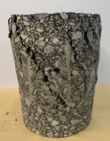
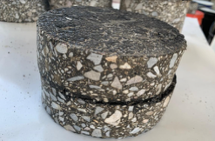
Figure 2. Photos of specimens after (a) triaxial shear strength test and (b) interface shear test
The failure envelopes provide the necessary material properties to compute SSR under various stress states when combined with modeled pavement stresses. SSR values were estimated to reach approximately 0.86 in the surface layer and 0.94 at the interface under simulated loading conditions.
Although these values are below 1.0 and do not imply immediate failure from a single load, repeated loading can cause progressive damage and ultimately lead to failure at lower SSR levels. Therefore, cyclic testing was conducted to establish SSR thresholds for fatigue-induced failure.
For the surface mixture, triaxial repeated-load permanent deformation (RLPD) testing was performed on three airfield mixtures across multiple stress states and temperatures. Flow number (FN) – defined as
the cycle at which tertiary (i.e., plastic) flow initiates – was measured for a range of SSR values.
The relationship between FN and SSR followed a power-law trend (R² = 0.85) with a distinct bi-linear transition (Figure 3). Above SSR ≈ 0.70, FN decreased sharply, indicating a high susceptibility to rapid shear deformation under relatively few load cycles. This transition point was therefore proposed as the threshold for mitigating shear flow in the surface layer.
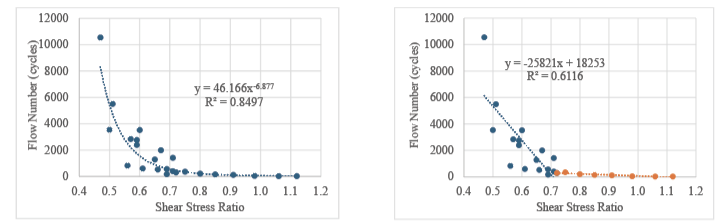
Figure 3. Relationship between Flow Number and Shear Stress Ratio: (a) power fitting; (b) bi-linear fitting
For the layer interface, a similar rationale applies. While the SSR values do not reach 1.0, repeated loading can still lead to fatigue failure at the interface. A newly developed interface shear fatigue test was conducted to evaluate fatigue resistance under repeated shear loading. This cyclic test differs from the monotonic direct shear test, which only measures initial interface shear strength (ISS). Cyclic fatigue failure was determined using the shear displacement corresponding to monotonic ISS failure (Bairgi et al. 2025). Across various mixtures, interface conditions, and test temperatures, fatigue life (Nf) demonstrated a strong power-law relationship with SSR (R² = 0.92).
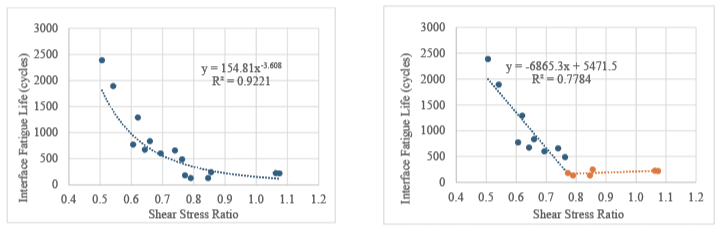
Figure 4. Correlation between Shear Fatigue Life and Shear Stress Ratio: (a) power fitting; (b) bi-linear fitting
Bi-linear analysis identified an SSR of approximately 0.76 as a critical transition point, above which fatigue life drops to around 200 cycles, indicating a high risk of interface failure.
Two performance tests proposed for specifications
With SSR thresholds established, the corresponding required shear strength values were calculated from modeled pavement stress states. Two practical tests were proposed for implementation in specifications:
1. High-Temperature Indirect Tensile Strength (HT-IDT) is proposed for evaluating the surface mixture. Specimens are conditioned in a water bath for one hour and tested at 50 mm/min using a standard loading frame with no specialized equipment. The test is rapid and suited for mix design and production testing. This test was selected as HT-IDT strength showed a good correlation with cohesive strength (R² = 0.90), the Mohr–Coulomb parameter governing shear resistance, whereas Asphalt Pavement Analyzer (APA) rut depth exhibited a weaker correlation (R² = 0.48). This indicates that HT-IDT more directly captures the material property controlling shear failure. Based on the proposed SSR threshold of 0.70 and the computed stress states, the proposed minimum HT-IDT strength values are:
• 45 psi for P-404 mixtures
(fine-graded mixes with a lower friction angle).
• 29 psi for P-401 mixtures (coarser-graded mixes with a higher friction angle).
The lower threshold for P-401 reflects its higher friction angle (approximately 32° compared to 22° for P-404), which provides greater shear resistance per unit
of cohesion.
2. Interface Shear Strength (ISS) measured by a direct shear test at a loading rate of 2.54 mm/min, without normal force, is proposed for evaluating the interface bond. The proposed minimum ISS for field cores is 17 psi (without normal force).
This threshold was derived from the SSR = 0.76 criterion applied to interface stress states under full braking. The required ISS exhibited limited sensitivity to variations in SSR threshold and friction angle within the tested ranges.
Both HT-IDT and ISS thresholds are temperature-dependent and should be evaluated at the critical high temperature corresponding to the pavement surface or interface depth for a given project location. A machine learning model was developed in the study using publicly available climate data to estimate these temperatures without requiring measured pavement temperatures.
As a guideline, testing should be conducted at temperatures corresponding to the 95th or 99th percentile of near-surface pavement temperatures during summer.
Overlay thickness: A critical but often overlooked variable
Overlay thickness is a critical, yet often overlooked, factor in preventing interface delamination. Modeling shows interface stresses are highly sensitive to surface layer thickness. For a 2-inch overlay, common in
mill-and-fill rehabilitation, interface stresses under full braking may approach the failure envelope, especially at high temperatures.
Increasing thickness from 2 to 3 inches significantly reduces failure risk. A thicker layer increases interface depth, reduces shear stress, and lowers temperature – typically by 3 to 5°C – resulting in higher shear resistance and reduced SSR. Therefore, a minimum thickness of 3 inches is proposed to provide adequate performance in high-stress locations. While improved mixtures and tack coat can help, thickness remains an effective means of preventing interface shear failure.
Implications for heavy-duty applications
The study framework extends beyond airfields to heavy-duty asphalt applications such as truck intersections, port terminal aprons, and intermodal yards, where high shear forces during braking, acceleration, and turning create similar critical loading conditions.
For these locations, three performance criteria should be applied together: surface mixtures should meet minimum HT-IDT strength at site-specific high temperatures, ISS should be no less than 17 psi, and overlay thickness should be 3 inches or greater to minimize interface delamination. These criteria are based on laboratory testing and pavement modeling, with field validation recommended to refine thresholds under real-world conditions.

Contact Nam Tran for more information about this research.