- Spring 2026
Development of a Solvent-Free Framework for Characterizing RAP Binder PG
A solvent-free approach to RAP binder PG estimation
As the asphalt pavement industry continues to increase the use of reclaimed asphalt pavement (RAP), understanding RAP properties has become increasingly critical, particularly because these properties can vary substantially depending on source material and aging condition, thereby influencing the performance of asphalt mixtures. Current RAP characterization practices primarily focus on asphalt content and aggregate gradation, which are essential inputs for volumetric mix design.
Limitations of current RAP binder characterization
However, for high-RAP mixtures, additional characterization of the RAP binder performance grade (PG) is often required to guide the appropriate selection of virgin binders and the use of recycling agents. This process involves solvent extraction and recovery of the RAP binder, followed by dynamic shear rheometer (DSR) and bending beam rheometer (BBR) testing. While technically effective, this approach presents practical challenges, including environmental and health concerns associated with chemical solvents and the limited availability of specialized equipment in most asphalt mix design and quality control labs.
Motivated by these challenges, researchers at NCAT and the Virginia Transportation Research Council (VTRC) developed a solvent‑free framework for characterizing RAP binder PG as part of an NCHRP Innovations Deserving Exploratory Analysis (IDEA) project. As illustrated in Figure 1 on the next page, the framework involves preparing gyratory-compacted specimens from the field RAP sample and three re‑mixed samples. These re-mixed samples are produced by combining postignition RAP aggregates, recovered from ignition furnace testing conducted at 427°C with asphalt binders of known PG at the same asphalt content as the field RAP. Both the field RAP and re‑mixed samples are then evaluated using the Indirect Tensile Asphalt Cracking Test (IDEAL‑CT) and the High‑Temperature Indirect Tensile Strength
(HT‑IDT) test.
These tests were selected over other candidate methods because of their sensitivity to RAP binder stiffness and their ability to differentiate laboratory‑prepared artificial RAP samples spanning a wide range of PG values evaluated in the project. Finally, differences in IDEAL-CT and HT-IDT results between the field and re-mixed samples are used to estimate the PG of the field RAP binder.
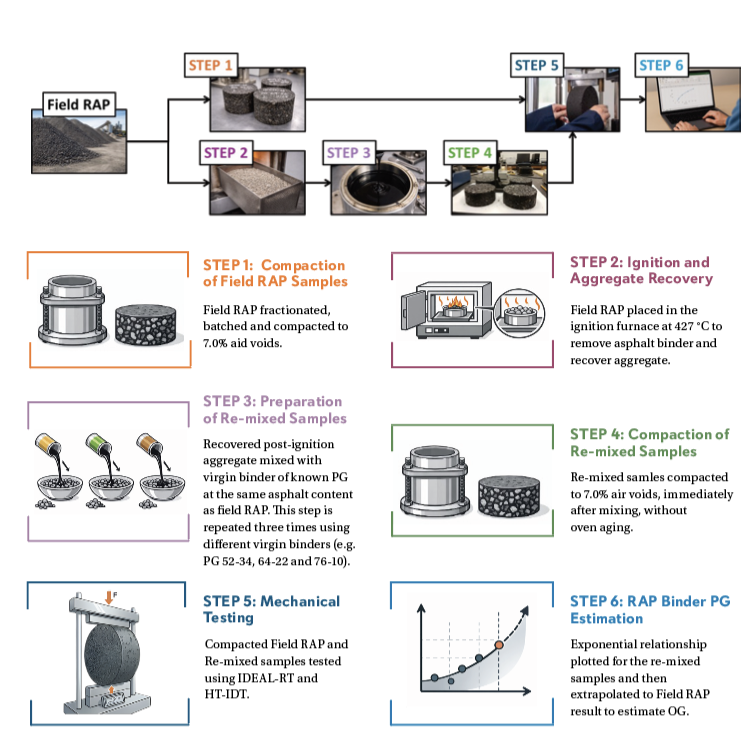
Figure 1. Workflow for Solvent-Free RAP Binder PG Estimation Framework.
(Images and graphics courtsey of Liz Valenca, PhD student at NCAT)
Framework evaluation and results
The framework was evaluated using three distinct field RAP sources. For two of the sources, the estimated continuous PG values were highly accurate, with errors ranging from 0 to 7°C. For the third source, estimation errors ranged from 8 to 13°C across the high-, intermediate-, and low‑temperature grades. Overall, these results demonstrate strong promise for the framework in establishing RAP binder PG without solvent extraction and recovery, while also highlighting the need for further refinement.
NCAT and VTRC researchers are continuing efforts to refine the framework and validate its applicability across a broader range of RAP sources. Follow-up research will evaluate the framework’s sensitivity to variations in re-mixed RAP samples produced using different asphalt binder sources and grades, including roofing asphalt. Additional efforts will focus on preparing re-mixed samples that more closely replicate the aggregate absorption and surface coating characteristics of field RAP.
Opportunities to reduce the number of re-mixed samples will also be explored to simplify the testing procedure and improve its practicality for widespread implementation. Ultimately, the framework aims to provide a solvent-free approach for use in both mix design and QC laboratories, with faster turnaround than traditional methods. Follow-up work will include a user-friendly RAP binder PG estimation tool and a draft AASHTO test method to support adoption by DOTs, contractors, and commercial laboratories.

Contact Fan Yin for more information about this research.