- Fall 2026
Mitigating the Effects of Asphalt Binder Absorption
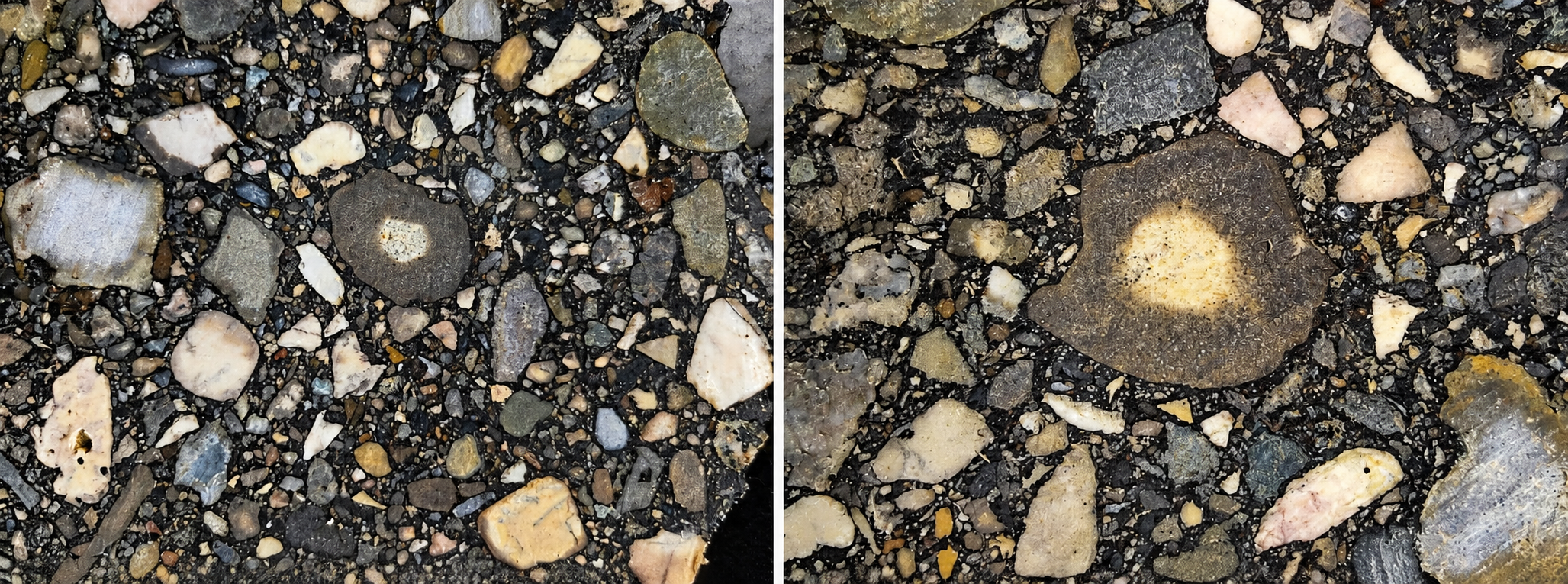
Absorptive aggregates can affect long-term pavement performance.
When aggregates absorb asphalt binder during production, storage, and hauling, mix designers typically add more binder until the mixture meets the Superpave volumetric requirements. However, this approach does not guarantee durable pavement. Variability in storage time and haul distance can lead to different areas of the same project being either binder-rich or binder-deficient. The consequences could include premature cracking or rutting, shortened service life, and increased maintenance costs. Balanced Mix Design (BMD) aims to prevent or reduce these problems before the mixture reaches the road.
A study conducted by NCAT and funded by the Consortium for Asphalt Pavement Research and Implementation (CAPRI) aimed to measure the impact of highly absorptive aggregates on a mixture’s resistance to cracking and rutting. Additionally, the study examined whether three commonly available technologies: warm-mix asphalt (WMA) additive with reduced temperature, polymer modified asphalt (PMA), and dry hydrated lime could help mitigate absorption and its negative effects.
First, the team compared mixtures with two types of aggregates: one with low water absorption (0.86%) and another with high water absorption (2.94%). The mixtures had similar CTindex values under unaged conditions, allowing the research team to observe how performance differences between the two mixes changed as absorption and binder aging increased. Three mitigation strategies were then evaluated using the highly absorptive mixture: a chemical WMA additive used with reduced production and compaction temperatures; SBS polymer modification using a PG 76-22 binder; and addition of 1% dry hydrated lime.
Cracking resistance, measured using the IDEAL-CT method, was assessed under three conditions: unaged, short-term aged, and long-term aged. Additionally, rutting was evaluated using the IDEAL-RT, and moisture and rutting resistance were evaluated using the Hamburg Wheel Tracking Test (HWTT) under unaged and short-term-aged conditions, when rutting is most likely to occur in the real world. The low-absorption mix design was tested using only the unmodified binder, while the high-absorption mix design was tested with both the unmodified binder and the three commonly available technologies mentioned above.
Effect of additives on absorption
Binder absorption (Pba) increased with aging across all mixture and treatment combinations, indicating that the effective binder content decreased. This effect was most pronounced in the untreated high absorption mix. All three mitigation strategies effectively reduced absorption relative to the untreated high-absorption mixture. Among these, WMA, combined with lower production temperatures, resulted in the lowest binder absorption during short-term aging. Both polymer modification and hydrated lime were also effective in maintaining lower absorption levels over the long term.
Effect of additives on cracking resistance
The test results for both unaged and short-term-aged asphalt mixtures indicate that the three mitigation strategies help the CTIndex of the high-absorption mixture. This improvement surpassed the performance of both the untreated high-absorption mixture and the low-absorption mixture, with polymer modification yielding the best results.
The results for long-term-aged mixtures showed a different trend: the low-absorption mixture yielded the highest CTIndex of 55.3. In comparison, polymer modification and the addition of hydrated lime improved the CTIndex of the aged high-absorption mixture only to approximately 29.5 and 29.7, respectively. The untreated mixture had a CTIndex of 19.8.
These findings have significant practical implications. A mixture that seems optimized after short-term laboratory aging or immediately after plant production may still underperform as it ages. Therefore, it is important to evaluate mixtures after long-term aging to accurately assess their long-term performance in service.
Regarding the long-term aging results of the WMA mixture, the long-term aging protocol used for all mixtures was 120°C for 20 hours. However, this aging temperature was higher than the mixing and short-term aging temperature for the WMA (115.6°C), whereas the mixing and short-term aging temperatures for the other mixtures were 135°C. Further testing is needed to evaluate the effects of a long-term aging procedure on absorptive WMA mixtures at a lower temperature and over a longer duration.
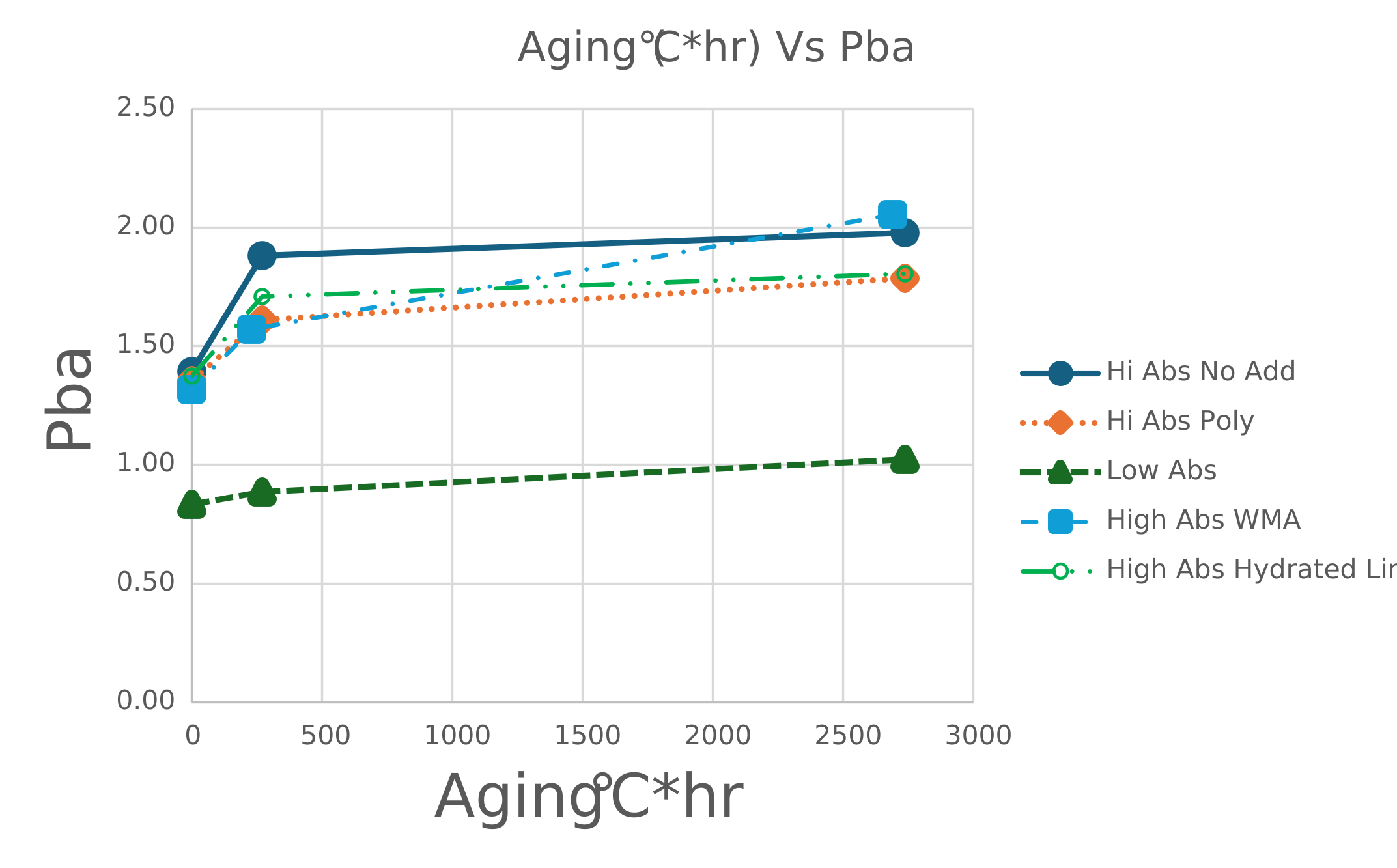
Figure 1.
Binder absorption increased with aging in every mixture; the
high-absorption aggregate absorbed more binder faster than the low-absorption aggregate at every stage.
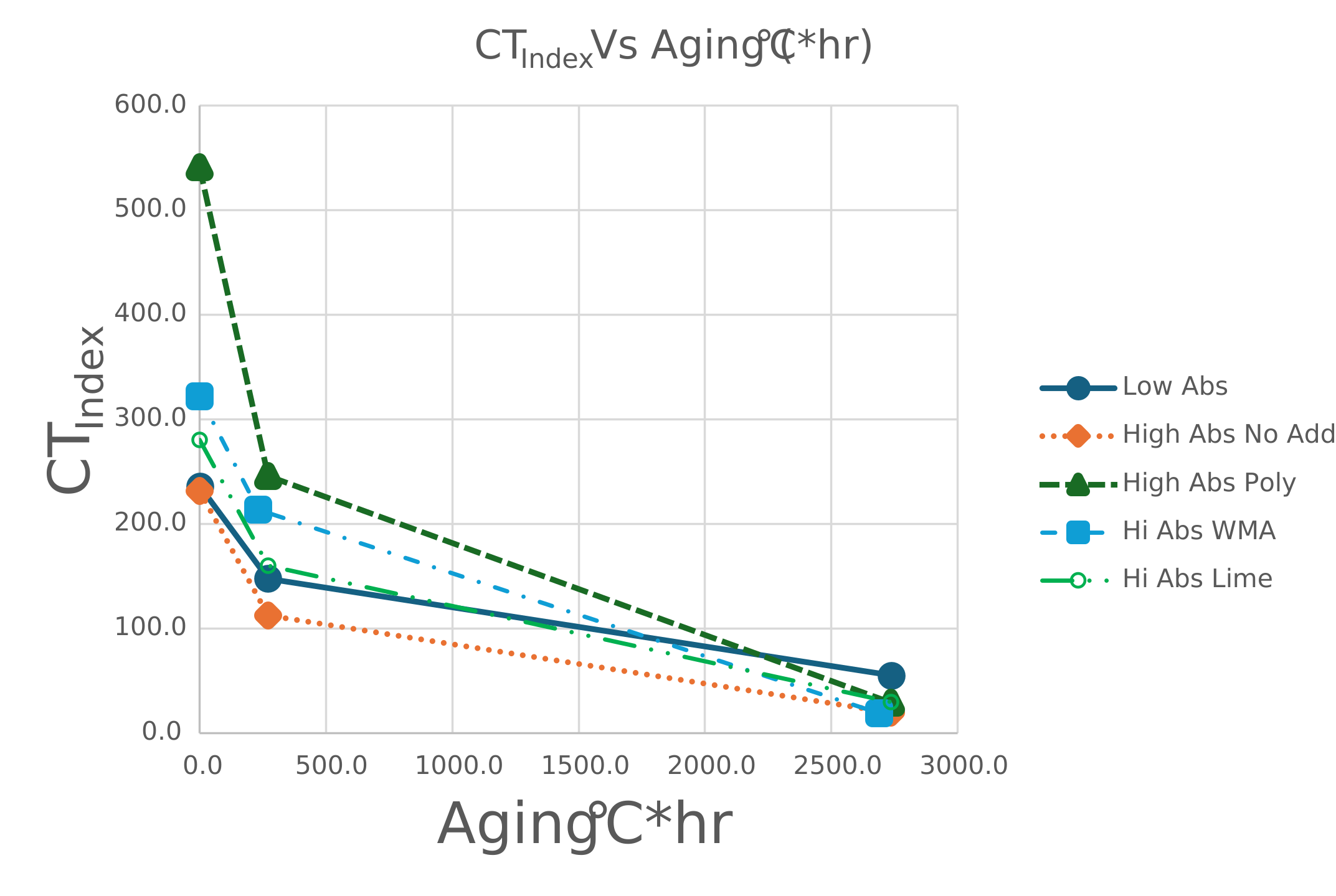
Figure 2.
CTIndex by aging condition. Mitigation strategies outperformed the low-absorption mixture when unaged and short-term aged, but the low-absorption aggregate showed better cracking resistance after
long-term aging.
Rutting resistance: Polymer modificationstands alone
Polymer modification was the only strategy that consistently improved rutting resistance. It raised the RTIndex of the high-absorption mixture from 30.6 when unaged to 48.0 – surpassing the low-absorption mixture’s RTIndex of 41.1 – and reached 75.6 after short-term aging, well above all other mixtures tested.
For HWTT results, the polymer-modified mixture withstood 15,550 passes before reaching 12.5 mm of rutting, which is more than double the 7,100 passes achieved by the untreated high-absorption mixture. Warm Mix Asphalt (WMA) and hydrated lime showed mixed results and did not consistently improve HWTT performance.
However, it is important to note that the poor performance observed in the HWTT for this study was primarily due to moisture-induced damage or stripping related to the specific aggregate source tested. While the overall trend of polymer modification outperforming alternatives is likely to hold for other absorptive aggregates, the specific numbers may vary.
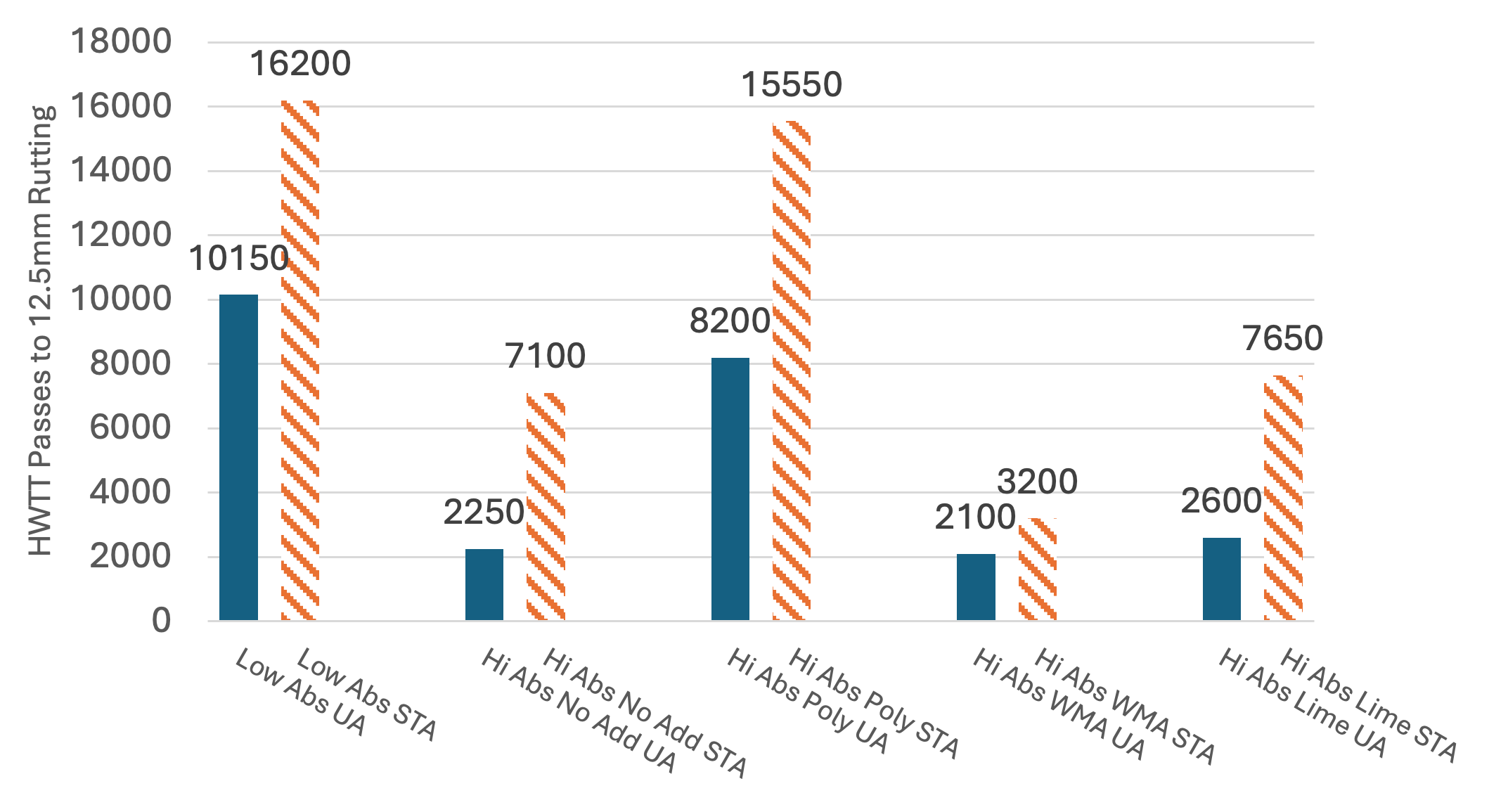
Figure 3.
HWTT passes to a 12.5mm rut depth by mixture. Polymer modification produced the most passes before reaching a 12.5 mm rut depth among the treatments tested.