- Fall 2026
Getting Asphalt Temperature Right
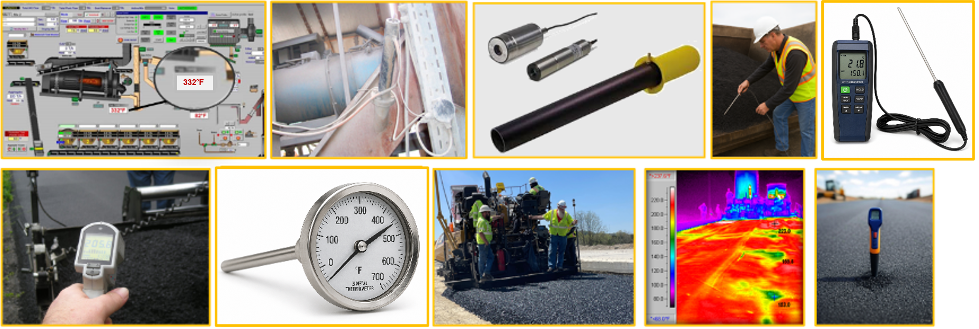
Figure 1. A wide range of tools are used to capture asphalt mixture temperature from production to placement.
A single temperature measurement can affect whether an asphalt load is accepted, whether a crew has enough time to compact the mat, whether a warm mix asphalt incentive is earned, and, most importantly, whether workers take an unnecessary risk to obtain it. Yet the measurement may represent different physical quantities depending on the instrument, location, and technique. For a measurement with direct consequences for safety, payment, and pavement performance, temperature has too often been treated as a simple field check (Figure 1).
Asphalt temperature controls binder viscosity throughout production and construction. Excessive heat can accelerate binder aging, degrade polymer modification, and increase drain-down risk in open-graded and stone-matrix asphalt mixtures. Too little heat can limit coating and shorten the compaction window, increasing the likelihood of low density, permeability, and premature deterioration. Lower production temperatures with warm mix technologies can also reduce fuel use, emissions, fumes, and worker heat exposure, but those benefits depend on reliable measurements and quality safeguards.
A familiar measurement with an unfamiliar gap
Current national standards have not fully kept pace with the equipment now used at plants and paving sites.
A handheld infrared thermometer measures the exposed surface of the mixture. A contact probe measures bulk temperature at the point of insertion. A fixed plant sensor may be located at the mixer discharge, drag conveyor, silo, or loadout. Each reading is useful, but the values are not interchangeable. When a specification does not identify the instrument, measurement type, or location that governs, a temperature limit can produce inconsistent decisions rather than consistent process and quality control.
The safety question is equally important. Obtaining a contact measurement from a haul vehicle can place an inspector near active traffic in the work zone, hot material, moving equipment, and an elevated truck body. Respondents to a recent industry survey identified the paver hopper and haul truck at the roadway as among the highest-risk measurement locations. A technically sound requirement must therefore define not only how to measure temperature, but also how to obtain the reading without creating avoidable exposure.
NAPA brings the issue into focus
Recognizing the need for a national, implementable approach, the National Asphalt Pavement Association (NAPA) sponsored NCAT Report 26-03, Recommended Asphalt Mix Temperature Specifications for Paving Projects.
NAPA's Project Economics Committee (PEC) provided expertise and input, while member contractors, suppliers, and State Asphalt Pavement Associations contributed practical perspectives on plant controls, field measurements, worker safety, quality assurance, and acceptance risk.
The research combined a review of the American Assoication of State Highway and Transportation Officials (AASHTO) and Advancing Standards Transforming Markets (ASTM) standards, published literature, and selected state specifications with surveys of 29 state transportation agencies and 23 State Asphalt Pavement Associations. Eight contractor and four plant manufacturer interviews, along with field evidence from the NCAT Test Track, helped connect written requirements to daily practice.
These findings did not point to a lack of technology. Suitable contact probes, resistance temperature detectors, fixed infrared pyrometers, handheld infrared thermometers, electronic plant records, and ASTM verification methods already exist. The missing piece was a common specification framework for instrument performance, calibration and verification, surface versus bulk measurements, safe access, electronic records, and the response to a failed device.
Turning findings into standards-ready language
The project translated those findings into proposed revisions to two widely used AASHTO documents.
M 156:
The proposed changes to Standard Specification for Requirements for Mixing Plants for Hot-Mixed, Hot-Laid Bituminous Paving Mixtures, strengthen the production side of the temperature measurement chain. The proposed “redline” revisions define acceptable fixed contact and noncontact monitoring systems; require producers to document each monitoring point and its intended use; and establish a designated reporting point when temperature data support agency documentation, acceptance, or incentive payment.
The M 156 language also requires time-stamped electronic records at intervals no longer than 10 minutes during production, verification before seasonal use and after conditions that could affect accuracy, traceable documentation, a response when equipment fails verification, and safe access for inspection and maintenance. It recognizes that process-control and loadout temperatures may differ due to plant conditions, so the contract should specify which location governs compliance.
R 97:
Currently, there is no national standard specifically for measuring asphalt mix temperatures. AASHTO R 97 is the standard for sampling asphalt mixtures. This study proposed revisions to R 97 to address temperature measurements made when asphalt mixture samples are obtained.
The proposed revisions establish a minimum accuracy requirement for digital contact and infrared thermometers, require recording the time, location, instrument, measurement type, and infrared emissivity setting, when applicable, and clarify the relationship between surface and bulk temperature. When both methods are used at the same location, the contact measurement serves as the reference for bulk temperature; an infrared reading remains appropriate when the requirement explicitly concerns surface temperature.
R 97 also makes safety explicit. Personnel should not climb onto a loaded haul vehicle to obtain a measurement or sample unless a fixed platform or another approved access system meets applicable safety requirements. The practice identifies safer alternatives, including measuring the sample immediately after collection, using a designed truck-side access point, or taking a noncontact reading from a safe ground-level position.
Devices used for documentation or acceptance would require regular verification, with failed devices removed from service until corrected and reverified.
AASHTO COMP provides the bridge to practice
Research can identify a problem and propose a solution, but national implementation depends on a credible consensus process. The AASHTO Committee on Materials and Pavements (COMP) provides that link by bringing state DOT technical experts together to develop and maintain materials specifications, test methods, and recommended practices. Technical Section 2c, Asphalt-Aggregate Mixtures, is the appropriate committee for reviewing the proposed M 156 and R 97 changes, testing them against agency needs, and advancing ballot-ready language.
At the August 2026 AASHTO COMP meeting in Richmond, VA., NCAT presented the study's findings and proposed updates. TS 2c supported the recommendations and agreed to advance the redline revisions for section review in fall 2026. TS 2c Chair Allen Myers of the Kentucky Transportation Cabinet described the recommendations as clear and thoughtful ,and thanked NAPA and NCAT for contributing practical solutions to the standards process.
TS 2c's support does not mark the final publication of revised standards. It does mark an important transition: the research recommendations have been accepted for advancement, and the detailed redlines will enter AASHTO's formal technical review process.
A clearer number, a better decision
The practical outcome is straightforward. A producer should know which plant sensor supports process control and which point supplies the official record. An inspector should know whether a specification calls for surface or bulk temperature and should not have to accept unnecessary risk to obtain the measurement. An agency should be able to trace a result to a verified instrument and a documented location. When temperature data affects acceptance or incentives, both parties should work from the same evidence.
This effort shows how industry leadership, applied research, AASHTO COMP members, and AASHTO standards process can work together.