
Subteams
Plant Biology
Dr. Yongsig Kim and his team are studying a wild tomato plant called Solanum pennellii, which can handle cold weather and drought better than the cultivated tomato. They're comparing it to the regular tomato plant (Solanum lycopersicum). S. pennellii responds differently to cold temperatures, and scientists want to find out why. To do this, they're using special tomato plants that are a mix of S. pennellii and regular tomato. They're looking for specific parts of the DNA that make these plants better at handling temperature changes. Instead of exposing them to sudden cold, they're gradually changing the temperature in a controlled environment to mimic real growing conditions.
They're also measuring the efficiency of photosynthesis to see how well these plants grow under different temperatures. They're using advanced technology at Michigan State University to do this. They'll pick the best-performing plants and analyze their genes to find out what makes them resilient to temperature changes. Then, they plan to use genetic editing to make regular tomato plants more like the resilient ones. These improved plants will be tested in both controlled chambers and real greenhouse conditions in the last year of the project.
At the University of Florida, Dr. Germán Sandoya aims to develop lettuce crops that can withstand high temperatures, which is important for sustainable food production in a changing climate. He will focus on lettuce varieties that have shown resistance to heat-related issues like bolting and tipburn when grown in warmer outdoor conditions. He will conduct experiments in controlled environments (greenhouses and growth rooms) to identify heat-tolerant lettuce varieties, collect data on their growth and heat-related traits, and study their energy efficiency.
In the second phase, he plans to cross the most heat-tolerant lettuce varieties with high-quality lettuce lines in a breeding program to create even more heat-tolerant lettuce varieties.
The expected outcomes are the development of heat-tolerant lettuce varieties suitable for greenhouse production and an improved understanding of breeding heat-tolerant lettuce for controlled environment agriculture. They acknowledge that not all heat-tolerant varieties identified in outdoor conditions may perform well in greenhouses, but he is open to exploring additional germplasm resources if needed.
Dr. Neha Potnis at the Auburn University will be testing microorganisms living with plants and how they play a crucial role in enhancing plant growth and resilience to various stresses. The Potnis lab has collected a diverse set of bacteria associated with tomato plants, focusing on different tomato varieties and locations. They are testing these bacteria to see how they affect plant growth and their ability to withstand temperature fluctuations. The goal is to identify which microorganisms or combinations of them can help tomato and lettuce plants tolerate temperature changes. They are using different methods, including removing individual microorganisms from the community to understand their impact and passing the microbe communities through plants exposed to temperature fluctuations to identify the ones that improve plant growth and resilience. The expected outcome is to find microorganisms that contribute to plant resilience to temperature fluctuations, and these will be further tested in larger greenhouse experiments. Possible challenges include difficulties in cultivating some microorganisms and potential trade-offs between stress tolerance and susceptibility to pathogens in plants. However, they are also testing these microbial cocktails for their ability to reduce pathogen infections in plants.
Greenhouse Production
Dr. Daniel Well and his team at Auburn University are planning to use greenhouses as a means to extend the growing season for crops rather than relying on year-round climate control. They hypothesize that this approach will significantly reduce energy demand without compromising crop yields. Their research will involve conducting side-by-side experiments in multiple greenhouses at Auburn University (AU) and Tuskegee University (TU).
In one set of greenhouses, they will follow conventional practices, growing tomatoes from the end of summer to late spring, with temperature set points maintained for optimal yields. In the other set of greenhouses, they will plant tomatoes and lettuce on a seasonal basis, such as tomatoes in the fall, lettuce in the winter, and tomatoes again in the spring, adjusting thermostat settings for each crop. The team will closely monitor plant yields and energy consumption, sharing this data with a greenhouse modeling team. They will also collect various operational parameters, including energy consumption for ventilation, heating, and cooling, crop yields, water usage, and indoor/outdoor climate conditions (e.g., air temperature, relative humidity, light intensity).
Additionally, they will explore the concept of polyculturing within greenhouses, where more sensitive crops are planted on the intake side and more resilient crops on the exhaust side to make the most of natural climate variations within the greenhouse. Crops to be tested include potatoes, bell peppers, cucumbers, and spinach.
The expected outcomes of these activities will provide a comprehensive dataset for greenhouse energy and crop modeling, life cycle assessment, and economic evaluation. They anticipate lower energy usage with the seasonal cropping approach, although it may come at the cost of not having year-round produce availability.
The main challenge they anticipate is obtaining a sufficient number of greenhouses for an extended study, although they have access to multiple greenhouses and are constructing a new facility as part of the Transformation Garden project.
Dr. Desmond Mortley's research aims to optimize year-round crop production by addressing light-related challenges. He will investigate using shade cloth in the summer and supplemental lighting in the winter, sharing the data with Dr. Zhang's greenhouse modeling team. Daily light integrals (DLI) will be monitored to ensure ideal levels for lettuce and tomatoes.
Despite concerns about energy efficiency, supplemental lighting in winter may have minimal energy impact since excess light is converted to heat. Collaborating with the modeling team, they will assess how controlled lighting affects carbon emissions and crop yields.
Expected outcomes include insights into supplemental lighting's positive effects on winter plant growth and its minor impact on overall energy use. This research carries low risk and focuses on quantifying these effects for crop and greenhouse models.
This last objective, occurring in years 3-4 of the project, is inherently open-ended and dependent on the work of other research subteams. Dr. Wells and Dr. Mortley will be working together to conduct experiments that are especially geared toward novelty in plant cultivars and microbial cocktails. The team will conduct production trials using 1) new plant varieties developed by Co-PIs Kim and/or Sandoya and 2) microbial cocktails developed by Potnis, proven successful in smaller-scale trials. All these new varieties and strains will be compared to control plots using commercial varieties with no amendments.
In addition, they will run experiments with wastewater and waste CO2 from the energy and wastewater subteams. Wells and Higgins will collaborate to test the effects of aquaculture digests on hydroponic plant production, comparing performance to conventional aquaponics and hydroponics with nutrient solution as a control. Wells and Blersch will also collaborate to assess the impact of adding periphyton amendments to plant substrates. Preliminary data from Wells suggests that adding aquaculture solids to substrate hydroponic culture benefits plants, contrary to conventional wisdom. They hypothesize that these solids release essential micronutrients through rhizosphere bacteria, potentially improving plant yields and avoiding micronutrient deficiencies. Finally, they will conduct growth chamber studies using CO2 sources designed to mimic gases from the gasification heat and power system and from the aquaculture solids aerobic digestion system. The digestion system will operate in the same growth chamber as the plants, with a temperature and lighting profile designed to replicate greenhouse conditions to the maximum extent possible. The expected outcomes include expanded nutrient sources for plants, leading to increased production efficiency from the same nutrient inputs, whether from fish production or chemical fertilizers. These activities will provide valuable data for greenhouse and crop modeling, benefiting from the expertise of Co-PIs Zhang and Shelia.
Economics
The economics team at TU, led by Drs. Chen and Diabate, will work to quantify the economic impacts of interventions on producers and understand consumer behavior. This knowledge is essential for promoting sustainable consumer and producer behavior.
Dr. Chen will assess consumer perceptions and their willingness to pay for low-carbon Controlled Environment Agriculture (CEA) commodities. The study will gauge consumer preferences accurately, considering different product attributes and price levels. Sociodemographic data will be collected to analyze willingness to pay among different demographic groups.
The aim is to provide insights into consumers' willingness to pay for low-carbon commodities, aiding policymakers and producers in promoting sustainable consumption.
Dr. Chen and Dr. Diabate will develop enterprise budgets for CEA under different technological and managerial practices. These budgets will help small farmers understand the financial implications of their production choices, including income, costs, benefit-cost ratios, and break-even points. The budgets will be based on real-time prices and data from greenhouse trials and modeling.
The goal is to create and share enterprise budget samples for tomato and lettuce production, offering financial insights to small farms and rural communities interested in adopting greenhouse technology. Challenges include assessing real perceptions in a hypothetical market and accounting for price variations across regions
Faculty members Dr. Marghitu and Dr. Cline will lead the development of learning modules using augmented reality (AR) and virtual reality (VR) to educate K12 students on Controlled Environment Agriculture (CEA) topics. These modules, aligned with Next Generation Science Standards (NGSS), will cover various subjects relevant to CEA and related careers in agriculture and food sciences. The capstone module will simulate a virtual greenhouse, allowing students to engage in activities like managing greenhouse systems and learning about the financial aspects of CEA entrepreneurship. These modules will be gamified and utilize a dynamic stochastic gaming probabilistic concept.
Additionally, informal learning modules will be available for adult learners interested in CEA production. All materials will adhere to relevant guidelines and accessibility standards.
The impact of these modules will be assessed through surveys and feedback from high school students and teachers. In Year 4, the online modules will be made available nationally, with usage data and feedback collection.
Dr. Cline and Dr. Hunter will engage regional high schools in CEA education, involving students in hands-on experience operating CEA systems. These programs will benefit the future food and agriculture workforce in the Southeast. The impact on students will be assessed through educational evaluations embedded within the learning modules
The research findings and best practices in Controlled Environment Agriculture (CEA) will be disseminated to current and future producers through extensive extension and educational activities. The project aims to benefit specialty crop producers in Alabama and Florida, especially targeting underserved and disadvantaged farms. Faculty members from AU, TU, and UF will leverage their extension systems to share new project insights and support growers in enhancing their revenue and regional food systems.
The University of Florida's Small Farms Academy will improve CEA programming, focusing on enhancing greenhouse production workshops to incorporate the latest research outcomes, thereby benefiting greenhouse vegetable growers and prospective growers in Florida and Alabama.
The training of extension agents in CEA best practices and low-carbon strategies is crucial. In-service training will be provided through in-person and virtual formats to equip extension agents with the knowledge and skills needed to assist growers effectively.
The development of extension outreach documents and resources that communicate CEA best practices and low-carbon strategies is essential. Existing literature and resources will be updated with the latest research findings and low-carbon strategies. A webinar series will be developed, and materials will be made accessible to the public through platforms like YouTube. Assessments will track knowledge gained and changes in behavior among recipients.
Additionally, the project aims to educate and cultivate the next generation of CEA producers. Online learning modules, gamified content, and virtual greenhouses will be created, targeting middle and high school students and entrepreneurs interested in CEA production. These educational efforts will address labor shortages in the horticulture industry and engage regional ag science programs, using augmented reality and virtual reality for interactive learning experiences.
The research team, spearheaded by Dr. Zhang at UF, is dedicated to developing energy-efficient greenhouse models and control strategies. They aim to optimize climate control while minimizing energy consumption's impact on crop yields. Meanwhile, Dr. Higgins at AU focuses on sustainability modeling, conducting life cycle assessments (LCA) to enhance climate control efficiency in Controlled Environment Agriculture (CEA).
The project involves evaluating greenhouse designs and natural ventilation methods in the southern US, with a focus on improving climate uniformity and energy efficiency. They aim to develop CFD models, ventilation zone maps, and shading strategies to reduce greenhouse temperatures while maintaining light levels.
Additionally, dynamic crop models for lettuce and tomatoes are being developed by Shelia, which will improve yield predictions through a combination of conventional mathematical methods (CM) and machine learning (ML).
Dr. Zhang is working on creating a decision support tool that integrates crop and energy models using AI techniques for dynamic climate control and optimized crop yield.
Dr. Higgins conducts life cycle assessments (LCAs) on various CEA production scenarios to quantify their environmental impacts, particularly focusing on carbon footprints.
The project collaborates to address potential data dependencies and uncertainties, ensuring a well-rounded approach to improving CEA practices and sustainability.
Energy and Wastewater
In their research, Drs. Adhikari and Jahromi are at the forefront of the effort to utilize bioenergy from crop residues and waste for greenhouse climate control, to reduce carbon emissions. Specifically, they are exploring the gasification of waste from greenhouse-produced tomatoes and lettuce to provide energy for heating and cooling. This approach leverages existing gasification infrastructure and is expected to achieve over 90% greenhouse gas reduction compared to traditional coal-based technology. The team is actively collecting and characterizing crop residues, working closely with Co-PI Zhang to ensure the system meets greenhouse climate control requirements effectively.
Additionally, Higgins is focused on developing an advanced wastewater treatment system designed for efficient nutrient transformation and pathogen control, particularly for CEA irrigation. This system incorporates an innovative algal-bacterial nitrifying reactor and UV disinfection to purify wastewater streams. The project extends to include aquaculture sludge from a biofloc aquaponics system, with a focus on pathogen reduction at every stage of treatment. CO2 emissions will be closely monitored for potential recycling opportunities. The expected outcome is a more sustainable CEA with reduced freshwater usage, fertilizer consumption, and lower greenhouse gas emissions.
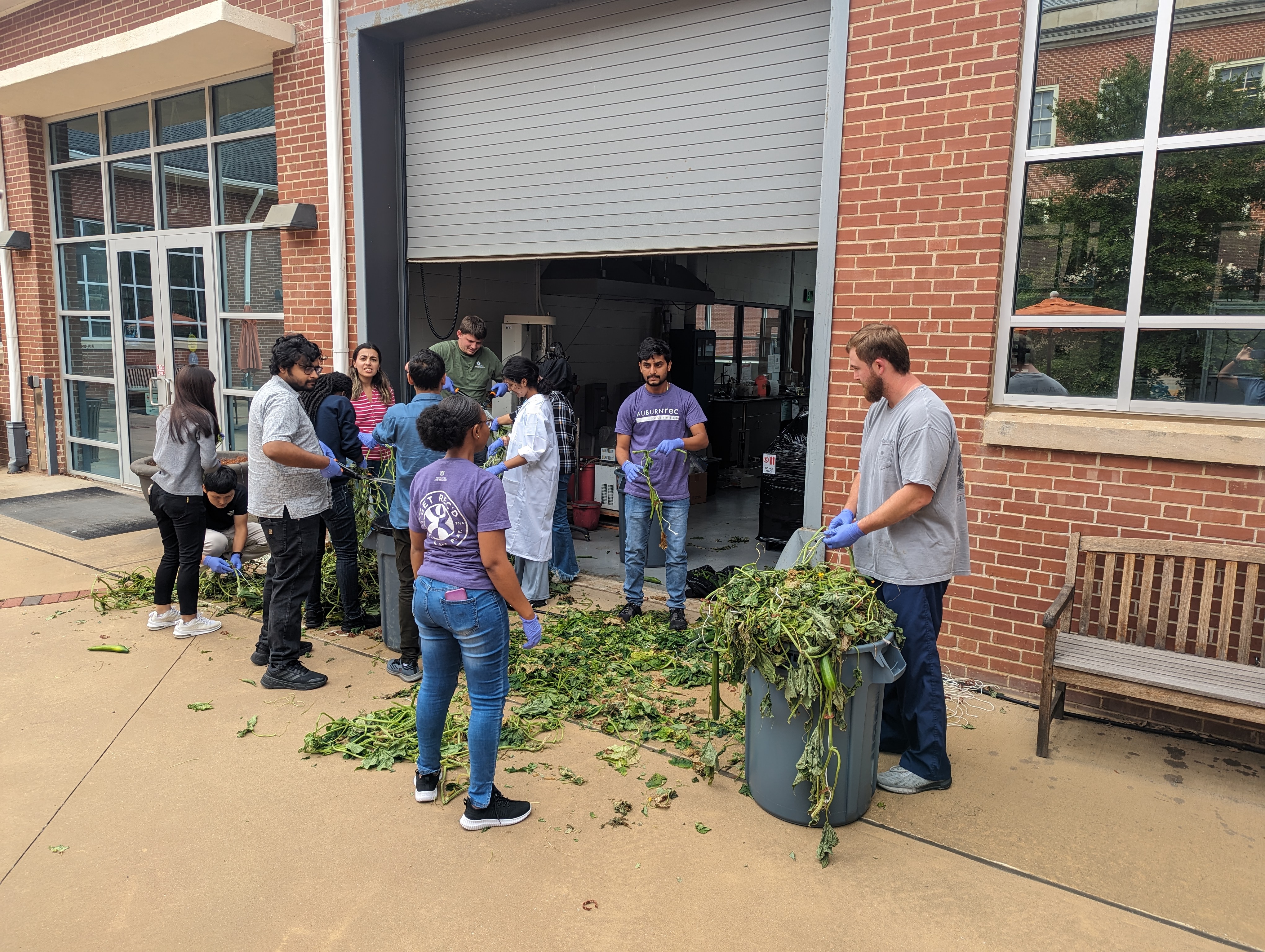
Dr. Blersch's research is centered on the development of periphyton systems designed to recover excess nutrients from hydroponic plant production systems. These systems utilize a diverse community of algae to absorb surplus nitrogen and phosphorous, which can then be repurposed as soil amendments or for the production of other valuable bioproducts. The project involves experiments at both laboratory and pilot scales, exploring various strains of periphyton algae and optimizing growth conditions. The goal is to achieve nearly complete recovery of wasted nutrients, ultimately enhancing plant productivity. While this experiment carries a higher risk due to temperature sensitivity, strategies such as temperature-controlled experiments will be employed to address potential challenges. Overall, these research endeavors collectively aim to advance sustainable practices within Controlled Environment Agriculture, fostering environmental responsibility and resource efficiency.
