|
Processing of Refractory Metal Single Crystals. Refractory alloys possess high strength at elevated temperature important for many advanced engineering systems. The absence of grain boundaries in the single crystalline structure further enhances
the high temperature properties in these materials. Research supported by the Department of Defense in partnership with private industry has concentrated on the processing of refractory alloy single crystals for aerospace applications. Initial studies have focussed on the use of electron beam zone melting to process the crystals. We are now seeking
low temperature methodologies based on a chemical vapor deposition approach.
|
|
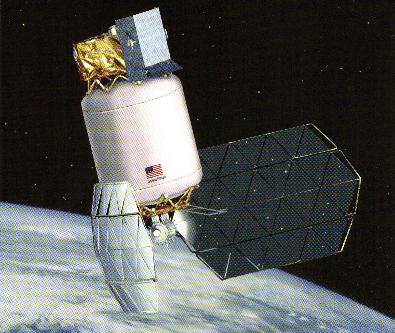
Materials for Power Generation and Propulsion in Space. Auburn University is part of a consortium with the Air Force and a group of industrial partners including Boeing an General Atomics to develop the next generation power and propulsion system for space based on
solar energy. We are developing high temperature carbide coatings for graphite which serves as an energy storage medium. In addition, we are using our single crystal technology to process single crystalline rhenium for direct thermal to electric power conversion based on the thermionic process.
|
|
Carbon-Carbon Composite for Impact Protection. This project funded by the Department of Energy examines the feasibility of using carbon-carbon composites to improve the high temperature impact characteristics. These composites possess winding configurations specifically designed for
impact resistance. It is anticipated that this material will be used for the general purpose heat source employed for deep space probes.
|
|
Intermetallic Compounds. We are working with Oak Ridge National Laboratory (Lockheed Martin Energy Systems)
looking for new ways to improve the mechanical properties of Mo-Si intermetallics by controlling their microstructure. Graduate students from Auburn University are assigned to conduct their research at Oak Ridge National Laboratory in this partnership program.
|
|
Ni-Ti-Hf Shape Memory Alloys. We are working with scientists from Johnson Controls to develop
ternary shape memory alloys based on Ni, Ti and Hf. The shape memory effect is controlled by both the composition as well as thermomechanical treatment. Early effort concentrated on bulk processing. Our emphasis has shifted in recent years to
thin film materials.
|
|
Science Education. We have a joint program with Professor William Baird of Auburn's College of Education to improve the way we educate our future K-12 science teachers. The National Science Foundation has provided funding for us to develop
resource materials and teaching methods to enhance science education. A course was developed with equal emphasis on content and teaching methods (jointly taught by Professors Zee and Baird). Resource materials in printed and electronic formats (Web and CD) are being developed.
|