

The Alabama Center for Paper and Bioresource Engineering, which is hosted within the Department of Chemical Engineering, has a complete, controlled-conditioned, wet-test laboratory for chemically and physically evaluating pulp and paper. The center also has a pilot sized microfluidizer capable of producing both micro and nanofibrillated cellulose. Their research covers fundamental and applied research focused on industry needs, with emphasis on decarbonization and integrated biorefining.
Current research projects include:
- Decarbonization New additives in kraft pulping
- Enzyme/deep eutectic solvent enhanced kraft pulping to reduce its carbon intensity
- Data-driven soft sensors for entrained air measurement and its application for brownstock lstock washer control
- Non-evaporative drying of porous materials using thermo-responsive polymers
- Process and techno-economic analysis of CO 2 capture
- Reuse paper machine white water in bleaching
- Implementation of near-neutral chlorine dioxide brightening technology
- Integrated biorefining Valorization of paper mill sludge Vitrimers from lignin Engineering novel cellulose nanocrystal films
Processing, characterization, and valorization of soybean hull \ The center also offers a range of research services to the pulp and paper and allied industries which may involve students from our program to get experience in these industry aligned research and testing projects.
- M Parit and Z. Jiang, (2023). “Cellulose nanocrystal films: effect of electrolyte and lignin addition on self‑assembly, optical, and mechanical properties”, Cellulose, https://doi.org/10.1007/s10570-023-05464-6.
- J Li, NE Alamdari, B Aksoy, M Parit and Z Jiang, (2023). “Integrated enzyme hydrolysis assisted cellulose nanofibril (CNF) fabrication: A sustainable approach to paper mill sludge (PMS) management”, Chemosphere, 334:138966.
- A Parkhi, D Young, S Cremaschi and Z Jiang, (2023). “Carbon dioxide capture from the Kraft mill limekiln: process and techno-economic analysis”. Discover Chemical Engineering, 3 (1):8
- Y Ma, N Guo, X Li, Z Jiang, D Zhang, L Guo, Y Wang, (2023). “Development of an efficient recombinant protein expression system in Clostridium saccharoperbutylacetonicum based on the bacteriophage T7 system”, ACS Synthetic Biology, 12(10):3092–3105
- A More, T Elder, N Pajer, DS Argyropoulos and Z Jiang, (2022). “Novel and Integrated Process for the Valorization of Kraft Lignin to Produce Lignin-Containing Vitrimers”, ACS Omega, 8 (1): 1097-1108
- A Parkhi, S Cremaschi and Z Jiang (2022). “Techno-economic analysis of CO2 capture from pulp and paper mill limekiln”, IFAC-PapersOnLine, 55 (7), 284-291
- JM Kim, A Mazumder, J Li and Z Jiang, BS Beckingham, (2022). “Impact of PEGMA on transport and co-transport of methanol and acetate in PEGDA-AMPS cation exchange membranes”, Journal of Membrane Science, 642, 119950.
- B Aksoy, M Yildirim-Aksoy, Z Jiang and B Beck, (2022). “Novel animal feed binder from soybean hulls-evaluation of binding properties”. Animal Feed Science and Technology, 288(14):115292.
- M Parit, H Du, X Zhang and Z Jiang, (2022). “Flexible, Transparent, UV-Protecting, Water-Resistant Nanocomposite Films Based on Polyvinyl Alcohol and Kraft Lignin-Grafted Cellulose Nanofibers”, ACS Applied Polymer Materials, 4 (5):3587-3597
- H Du, M Zhang, K Liu, M Parit, Z Jiang, X Zhang, B Li and C Si, (2022). “Conductive PEDOT: PSS/cellulose nanofibril paper electrodes for flexible supercapacitors with superior areal capacitance and cycling stability”, Chemical Engineering Journal, 428:131994
- A More, T Elder and Z Jiang, (2021), “Towards a new understanding of the retro-aldol reaction for oxidative conversion of lignin to aromatic aldehydes and acids”, International Journal of Biological Macromolecules, 183(31), 1505-1513.
- J Li, S Shi, Y Wan. and Z Jiang, (2021), “Integrated Production of Optically Pure L-Lactic Acid from Paper Mill Sludge by Simultaneous Saccharification and Co-Fermentation (SSCF)”, Waste Management, 129(5), 35-46.
- H Du, M Parit, K Liu, M Zhang, Z Jiang, TS Huang, X Zhang and C Si (2021). “Engineering cellulose nanopaper with water resistant, antibacterial, and improved barrier properties by impregnation of chitosan and the followed halogenation”, Carbohydrate Polymers, 27, 118372.
- H Du, M Parit, K Liu, M Zhang, Z Jiang, TS Huang, X Zhang and C S, (2021). “Multifunctional Cellulose Nanopaper with Superior Water-Resistant, Conductive, and Antibacterial Properties Functionalized with Chitosan and Polypyrrole”, ACS Applied Materials & Interfaces, 13(27), 32115-32125.
- H Du, M Zhang, K Liu, M Parit, Z Jiang, X Zhang, C Si and B Li, (2021). “Conductive PEDOT: PSS/Cellulose Nanofibril Paper Electrodes for Flexible Supercapacitors with Superior Areal Capacitance and Cycling Stability”, Chemical Engineering Journal, 428, 131994.
- Zhou, B, Wang, Y., Jiang, Z., Salam, A. and Li, K., 2021, “How do xylanase and hot acid stages differ at enhancing elemental chlorine-free bleaching of hardwood kraft pulp?”, Journal of Wood Chemistry and Technology. https://doi.org/10.1080/02773813.2021.1938130.
- Maria C. Iglesia, Fatima Hamade, Burak Aksoy, Zhihua Jiang, Virginia A. Davis and Maria S. Peresin (2021), “Comparison Between CNFs from Wood and Soybean Hulls with Different Chemical Composition”, BioResources, 16(3), 4831-4845.
- More, A., Elder, T. and Jiang, Z. (2021). “A review of lignin hydrogen peroxide oxidation chemistry with emphasis on aromatic aldehydes and acids”, Holzforschung, https://doi.org/10.1515/hf-2020-0165.
- Alamdari, N.E., Aksoy B, Aksoy M., Beck B.H. and Jiang Z., (2020). “A Novel Paper-Based and pH-Sensitive Intelligent Detector in Meat and Seafood Packaging”, Talanta, 224:121913. (75%)
- Parit, M. and Jiang, Z., (2020). “Towards Lignin Derived Thermoplastic Polymers”. International Journal of Biological Macromolecules, 165:3180.
- Parit M., Du H., Zhang X., Prather C., Adams M. and Jiang Z., (2020). “Polypyrrole and Cellulose Nanofiber Based Composite Films with Improved Physical and Electrical Properties for Electromagnetic Shielding Applications”, Carbohydrate Polymers, 240:116304.
- Du, H., Parit, M., Wu, M., Che, X., Wang, Y., Zhang, M., Wang, R., Zhang, X., Jiang, Z. and Lib, B., (2020). “Sustainable Valorization of Paper Mill Sludge into Cellulose Nanofibrils and Cellulose Nanopaper”, Journal of Hazardous Materials, 400:123106.
- Dobyns, B.M., Lim, J.M., Li, J., Jiang, Z. and Beckingham, B.S., (2020). “Multicomponent Transport of Alcohols in Nafion 117 Measured by In Situ ATR FTIR Spectroscopy”, Polymer, 209:123046.
- Miao C., Du H., Parit M., Jiang Z., Tippur H.V., Zhang Y., Liu Z., Li L. and Wang. R., (2020). “Superior Crack Initiation and Growth Characteristics of Cellulose Nanopaper”, Cellulose, 27(6):3319-3334.
- Geleynse S., Jiang Z., Brandt K., Garcia-Perez M., Wolcott M. and Zhang X., (2020). “Pulp Mill Integration with Alcohol-to-Jet Conversion Technology”, Fuel Processing Technology, 207:106338.
- Cao X, Liang L., Chen Z., Guo L., Jiang Z., Tang F., Yun Y. and Wang, Y., (2020). “Co-Valorization of Paper Mill Sludge and Corn Steep Liquor for Enhanced n-Butanol Production with Clostridium Tyrobutyricum Δcat1::adhE2”, Bioresource Technology, 296:122347.
- Iglesias, M.C., Shivyari, N., Norris, A., Martin-Sampedro, R., Eugenio, M.E., Lahtinen, P., Auad, M.L., Elder. T. Jiang, Z., Frazier, C.E. and Peresin, M.S., (2020). “The effect of residual lignin on the rheological properties of cellulose nanofibril suspensions”, Journal of Wood Chemistry and Technology, 40(6), 370-381.
- Iglesias M.C., Gomez-Maldonado D., Via B.K., Jiang Z. and Peresin, M.S., (2019). “Comparison of kraft and Sulfite Pulping Processes and Their Effects on Cellulose Fibers and Nanofibrillated Cellulose Properties: A Review”, Forest Products Journal, 70(1):10-21.
- Parit M., Saha P., Davis A.V. and Jiang Z., (2018). “Transparent and Homogenous Cellulose Nanocrystal/Lignin UV Protection Films”, ACS Omega, 3:10679-10691. DOI: 10.1021/acsomega.8b01345
- Parit M., Aksoy B. and Jiang Z., (2018). “Towards Standardization of Laboratory Preparation Procedure for Uniform Cellulose Nanopapers”, Cellulose, 25(5):2915-2924.
- Acharjee T.C, Jiang Z., Haynes R.D. and Lee Y.Y., (2017). “Evaluation of Chlorine Dioxide as a Supplementary Pretreatment Reagent for Lignocellulosic Biomass”, Bioresource Technology, 2017, 244(1):1049-1054.
- Acharjee T.C., Guan W., Lee Y.Y. and Jiang, Z., (2017). “Production of Lactic acid from Mixed Feed of Paper Sludge and Help Hurd by Simultaneous Saccharification and Co-Fermentation”, Journal of Science & Technology for Forest Products and Processes, 6(4):29-36
Patents
- Aksoy B., Jiang Z., Aksoy M., Beck B., “Animal feed binders derived from pectin-and protein-containing feedstock”, US Patent 11,582,990
- Jiang, Z. and Aksoy, B., “Phenols as additives in kraft pulping”, US Patent 11,390,990
- Aksoy B., Jiang Z., Aksoy M., Beck B. and Navid, E.A., “Matrices for detecting volatile organic compounds”, US Patent 11,536,666.
- Lehrburger, E., Laskar, D.D., Jiang, Z., Li, J., Lee, Y-Y., and Cullinan, H.T., “Apparatus and process for treatment of biomass for on-site cellulolytic enzyme production to manufacture fuels and chemicals”, US Patent 11,542,532.
- Jiang Z. and Parit M., Transparent and Homogenous Cellulose Nanocrystal-Lignin UV Protection Films, US Patent No. 10,829,602 B2.
Graduate Students

Shoumik Sadaf | LinkedIn Profile | szs0264@auburn.edu
Ph.D. Candidate, Advised by Dr. Zhihua Jiang
Integrated electro-coagulation: A novel approach for the separation and valorization of lignin
This research aims to establish an integrated and sustainable electrocoagulation process for separating and valorizing the lignin from the black liquor after the kraft pulping process. Experiments have been conducted to study the performances of different electrodes, i.e., aluminum and iron. It has been observed that with iron electrodes, the lignin removal efficiency from black liquor was 91%, much higher than the conventional methods. Also, electro-coagulated lignin from the electrocoagulation of black liquor was used to directly synthesize Magnetic Mesoporous Activated Carbon (MMAC) through carbonization. In the future, a detailed feasibility analysis of the integrated electrocoagulation process in the pulp and paper industry will be conducted. The properties of the different electro-coagulated lignins will be thoroughly characterized by various techniques, and these lignins will be evaluated for higher-value applications.
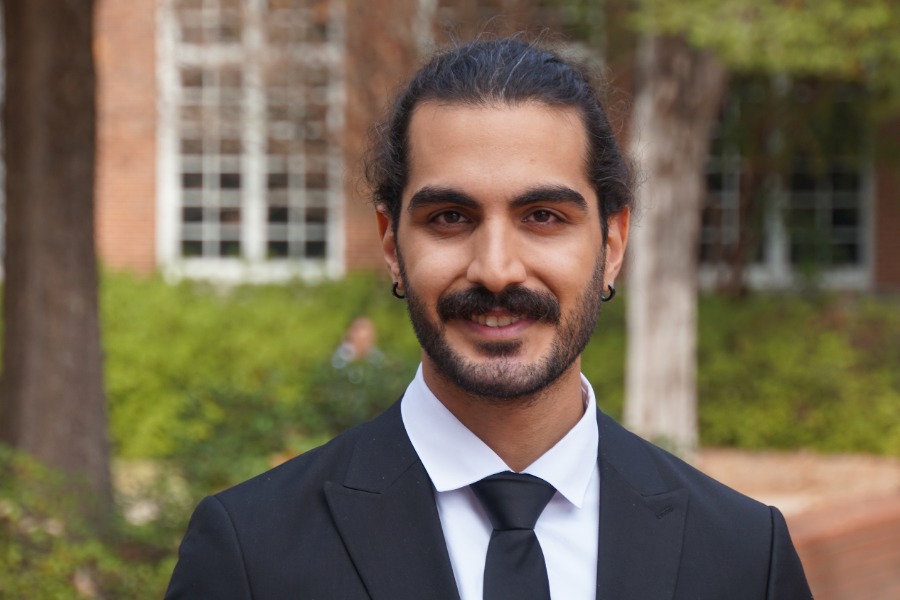
Erfan Hosseini | LinkedIn Profile | ezh0061@auburn.edu
Ph.D. Candidate, Advised by Drs. Selen Cremaschi and Zhihua Jiang
Pulp and paper sludge valorization: A Comprehensive techno-economic and life cycle assessment for enhanced methane production
This research aims to establish a cost-effective and eco-friendly process for valorizing pulp and paper sludge (PPS) through anaerobic digestion (AD) for biogas production. It focuses on optimizing the process modeling using Techno-Economic Analysis (TEA) and Life Cycle Assessment (LCA) methods, with an emphasis on methane yield and efficiency. We have conducted a preliminary TEA for three scenarios of PPS anaerobic digestion: A) the base case, B) sludge AD with alkaline pretreatment using green liquor dregs (GLD), and C) co-digestion with food waste. It was found that scenario C) is the most economically viable option.
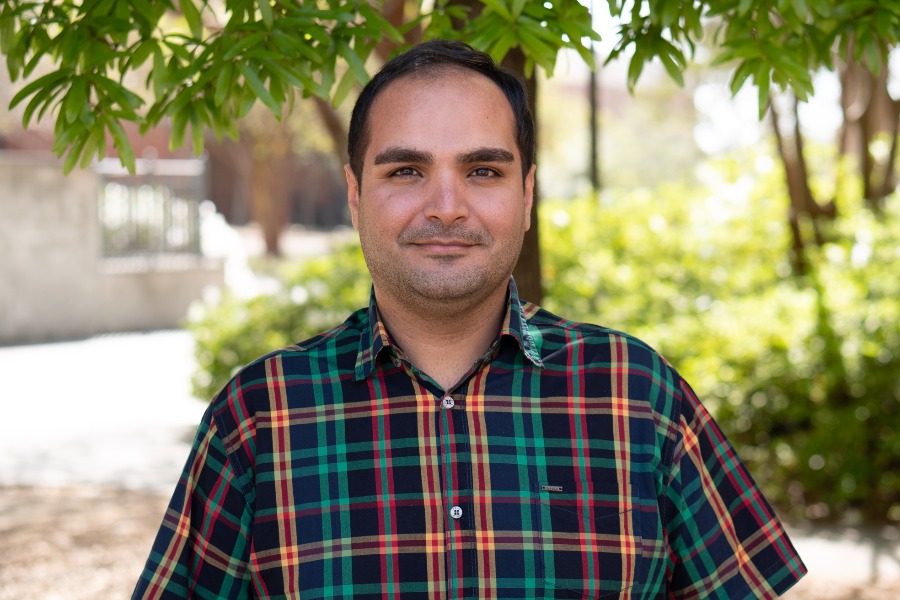
Mohammad Saber Bay | LinkedIn Profile | mzb0196@auburn.edu
Ph.D. Candidate, Advised by Dr. Zhihua Jiang
Engineering high-performance cellulose fiber and bioplastic composites with enhanced biodegradability tailored for packaging applications
This research focuses on developing sustainable packaging materials by incorporating cellulose fibers and a green plasticizer into a polylactic acid (PLA) matrix, aiming to produce a 100% biobased plastic for a greener future. So far, composites have been successfully prepared and tested, showing improved tensile and flexural strength compared to neat PLA. Ongoing work includes evaluating the biodegradability, thermophysical properties, and barrier performance of these materials to assess their suitability for real-world packaging applications. In addition, as a separate project, the production of lactic acid via bacterial fermentation—used as the main feedstock for PLA—has also been examined.

Morteza Taghavi Kouzehkanan | LinkedIn Profile | szt0077@auburn.edu
Ph.D. Candidate, Advised by Drs. Tae-Sik Oh and Zhihua Jiang
Spray dried biomaterials for pollutants separation from gas and liquid phase: Adsorption equilibrium, kinetics, and thermodynamics study
This research aims to produce hollow carbon spheres (HCSs) from kraft lignin and use this material to remove pollutants from both gas and liquid phases. We have synthesized HCSs by spray drying lignin-KOH solution. Raman spectroscopy test showed that the relative ratio of the intensity of the D (disordered carbon) band to the G (graphitized carbon) band increased with the rising carbonization temperature. This result was in agreement with the XRD and BET results, which also showed that the samples have more porous and disordered structures at higher temperatures. Continuous fixed-bed adsorption tests for removing methylene blue from wastewater were conducted using HCSs, and the breakthrough curves for three different initial concentrations of MB were achieved. The data points fit the Thomas model very well at all concentrations, indicating that continuous adsorption follows the Langmuir model and second-order kinetics; this agrees with the batch experiment results. Also, the highest adsorption capacity for continuous fixed-bed adsorption was 628 mg g-1.
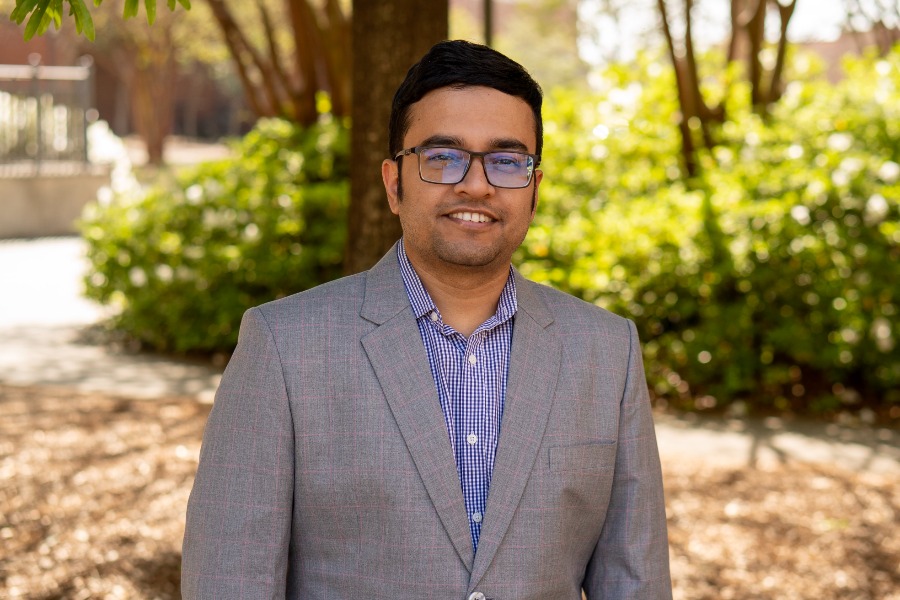
Yasir Arafat Siddiki | LinkedIn Profile | szs0345@auburn.edu
Ph.D. Candidate, Advised by Drs. Zhihua Jiang and Mario Eden
Novel Pulping/Bleaching and Integrated Biorefining Technologies to Improve Efficiency and Reduce Carbon Footprint
This research focuses on enhancing process efficiency and environmental sustainability in the pulp and paper industries through an integrated approach. As part of our ongoing research, we have investigated the role of a novel additive (2,4-Xylenol) in kraft pulping using a state-of-the-art M/K laboratory batch digester and mill-environment (unscreened) wood chips and demonstrated that this novel additive significantly enhances delignification selectivity, recording a relative yield gain of 3.7% with only 0.5 wt.% additive dosage. This increased selectivity has potential industrial benefits in terms of additional pulp production, lower cooking and bleaching chemicals consumption, energy savings, and so on. Future initiatives will focus on cost-effective isolation and reuse of these phenolic additives from spent cooking liquor and on analyzing the structural features of the isolated lignins using advanced tools to gain insights into the reaction mechanism. As part of our ongoing research into lignin applications, we have developed a novel method for modifying lignin in black liquor from alkaline pulping through phenolation. We have synthesized phenolated lignins using conventional oil baths and microwave heating methods and characterized them using NMR (31P and 2D HSQC) and GPC Our preliminary results indicate that the phenolation of lignin in black liquor at a lower lignin to phenol ratio results in a more than threefold increase in H-unit content. Future applications of this modified lignin include its use as a recyclable vitrimer and as an asphalt bio binder. The outcomes of these technological advancements will be systematically evaluated through life cycle assessment (LCA) to delineate their environmental advantages relative to conventional practices.

Ali Molaei Aghdam | LinkedIn Profile | azm0382@auburn.edu
Ph.D. Candidate, Advised by Dr. Zhihua Jiang
Conversion of carbon dioxide in flue gas from the pulp and paper industry to ethylene via electrochemical and thermochemical methods
This project aims to develop efficient and sustainable methods for converting carbon dioxide (CO?) into valuable products using both electrochemical and thermochemical approaches. Our strategy involves a two-step process: in the first stage, CO? is converted to carbon monoxide (CO), which can then be used as an intermediate for the synthesis of higher-value products such as ethylene. In the thermochemical process, we achieved a CO? conversion rate of approximately 85% at temperatures up to 800?°C by treating biochar with potassium-based compounds to enhance its surface area and catalytic activity. In contrast, the electrochemical method demonstrated superior performance, with copper-based cathodes achieving over 90% efficiency in converting CO? to CO.

Chukwuma Nwanazoba | LinkedIn Profile | ccn0020@auburn.edu
Ph.D. Candidate, Advised by Drs. Selen Cremaschi and Zhihua Jiang
Process and Techno-Economic Analysis of CO2 Capture in the Pulp and Paper Industry
This research, with a focus on achieving net-zero emissions, delves into the design and optimization of the CO? capture process and its analysis from technical, economic, and life cycle perspectives. We are performing preliminary research and process simulations of carbon capture via the chemical absorption process using monoethanolamine (MEA) as the solvent in Aspen Plus using both hypothetical and actual mill data.

Habeeb Kayode Sodiq | LinkedIn Profile | hks0026@auburn.edu
Graduate Research Assistant, Advised by Drs. Zhihua Jiang and Xinyu Zhang
Sustainable valorization of paper mill sludge (PMS) into low-cost esterified fibrillated cellulose fibers (EFCFs) tailored for composites production.
This research aims to develop an innovative approach adaptable to commercial-scale operations to produce low-cost esterified fibrillated cellulose fibers EFCFs from PMS and use them to reduce/replace the demand for bioplastics and petroleum-based plastics. We are working on using formic acid together with sulfuric acid (as a catalyst) to produce EFCFs from PMS.
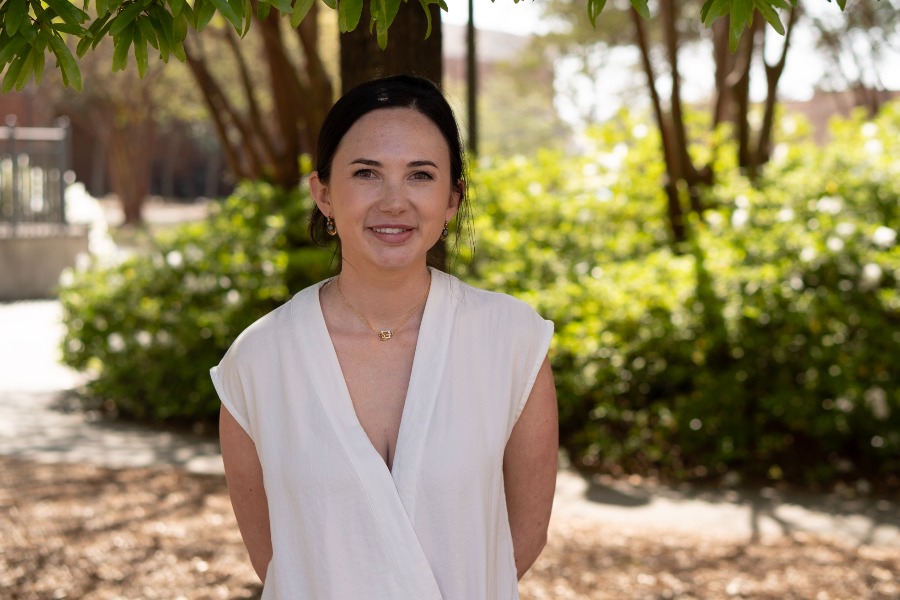
Madison Shelley | LinkedIn Profile | mms0071@auburn.edu
Graduate Research Assistant, Advised by Dr. Zhihua Jiang
Novel pretreatment method for hydrogels created by polyphenol-activated crosslinking of cellulose fiber on spent waste from beverage production
This research focuses on the development of a biodegradable and cost-effective polymer derived from hydrogel matrices synthesized using waste grain biomass. Over the past year, efforts have been concentrated on elucidating and optimizing the bonding mechanisms within the hydrogel structure. Subsequent phases of the project will involve comprehensive mechanical property characterization to identify the most viable application pathways prior to implementing further structural modifications.

Hunter Black | LinkedIn Profile | hwb0022@auburn.edu
Graduate Research Assistant, Advised by Dr. Zhihua Jiang
New Perspectives and Enhancement of Soybean Hulls as Functional Binders and Other Value-Added Applications
This research aims for a full biomass utilization of soybean hull (SBH) as an animal feed pellet binder using dilute acid treatment under agitation and elevated temperature for production. When incorporating the binder at a 2% addition into aquatic floating feed pellets, the water recovery of pellets increased to over 75% compared to around 64% for commercial aquatic feed binders (i.e. wheat gluten and corn starch). This increase in water stability can be attributed to better binding between the soybean hull binder and the other constituents present within the feed pellet matrix. While the previous work has shown that the SBH binder outperforms other commercial binders in terms of water stability, determining the mechanism of binding to further optimize the production is the main aim for future work on this project. We plan to do this through a thorough chemical analysis and developing a novel binder testing method to allow for quick and easy “binding capability” comparisons between binder batches at different operating conditions.

Gregory Emmanuel Idun | LinkedIn Profile | gzi0006@auburn.edu
Graduate Research Assistant, Advised by Dr. Zhihua Jiang
Microwave Assisted Biodiesel Production from Crude Tall Oil (CTO)
This research investigates the kinetics of biodiesel production from crude tall oil (CTO) via microwave-assisted transesterification, using a microwave reactor coupled with an in-situ Raman spectrophotometer. CTO, a low-cost, lignocellulosic by-product of the pulp and paper industry, was employed as a sustainable non-edible feedstock. By integrating real-time Raman monitoring into the microwave reactor system, the study offers a unique platform to track the evolution of key functional groups (e.g., ester C=O at ~1740 cm?¹) and quantify reaction progress without interrupting the process. The time-resolved Raman spectra reveal kinetic trends, catalyst activity profiles, and ester formation dynamics. This work advances the understanding of fast, efficient, and green biodiesel synthesis while demonstrating the value of spectroscopic integration for real-time reaction control in biofuel production.