Auburn Engineering trio recognized by National Safety Council
Published: Sep 29, 2026 2:30 PM
By Joe McAdory
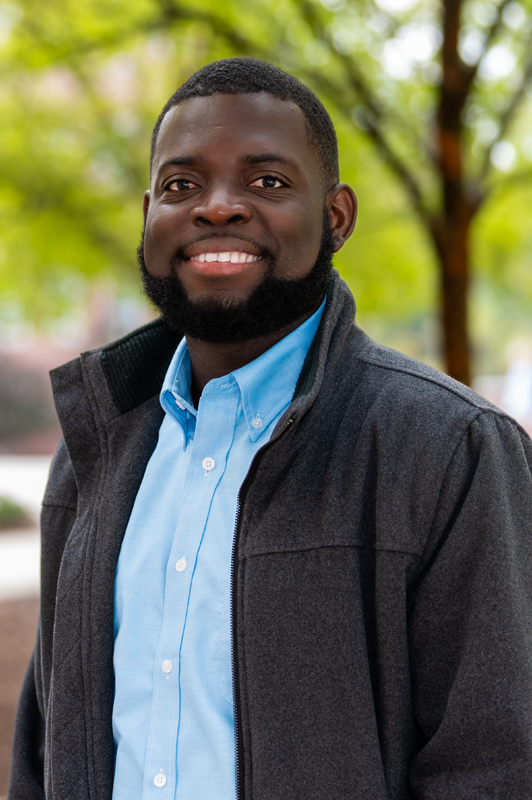
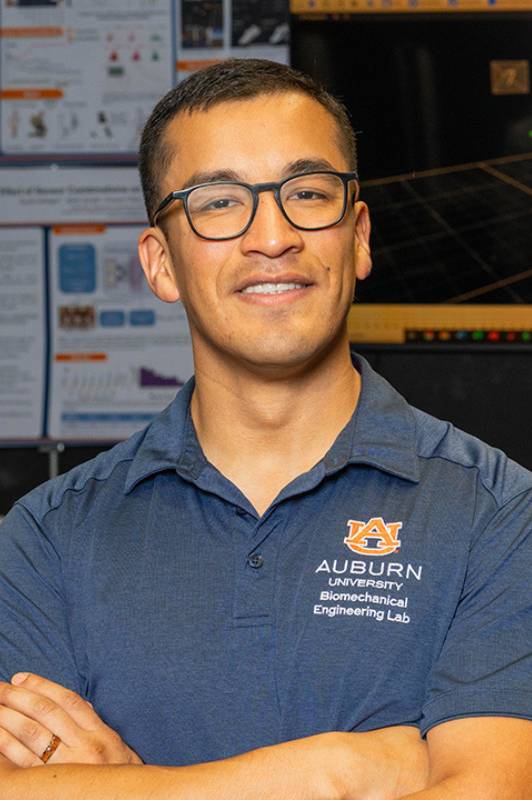
 From left, Emmanuel Winful, Mia King and Ivan Nail-Ulloa.
Three Auburn Engineers, Emmanuel Winful, Ivan Nail-Ulloa and Mia King, were recently honored by the National Safety Council (NSC).
Winful, the college’s health and safety manager, and Nail-Ulloa, assistant research professor in the Department of Mechanical Engineering, were among 41 professionals selected to the NSC’s Rising Stars of Safety 2026 Cohort. The award recognizes safety professionals under age 40 who demonstrate strong safety leadership, measurable impact and a commitment to improving workplace safety.
King, a junior in mechanical engineering and honors student, was one of 14 students nationwide awarded the organization’s Safety for All scholarship.
“Safe engineering is good engineering,” said Emmanuel Winful. “In a high-performing organization, safety, quality and operations are interconnected and safety is considered a sign of operational excellence. This perspective also applies to research and development.
“As Auburn Engineering expands its research portfolio, our partners and funding agencies trust us to handle these high-stakes projects responsibly and deliver results without adverse effects.”
Winful was instrumental in the development, and success, of Auburn Engineering’s Peer Safety Champion program, a collective effort by the college’s Safety Council, lab safety liaisons, department safety champions and student organizations.
“It works because it puts safety directly in the hands of the people closest to the research and college activities,” said Winful, who also earned the Campus Safety, Health and Environmental Management Association’s (CSHEMA) 2024 Innovation Award for “Safety Culture for a Large School”. “Instead of relying solely on one person to manage safety for all, we are equipping champions with the knowledge and skills to lead hazard assessments for new experiments or projects. We create opportunities for discussion, remove friction around compliance, encourage open dialogue about project hazards, and directly contribute to a team-based effort toward safe engineering.”
Winful said the award demonstrated that shifting from a traditional “safety police” approach to a collaborative, knowledge and skill-building strategy is effective.
“I view it as a recognition of the collective efforts at the Samuel Ginn College of Engineering in building a safety-oriented culture through research, teaching and outreach,” he said. “By empowering individuals with the right tools to manage risks, engineering excellence naturally follows.”
Nail-Ulloa, who specializes in ergonomics and biomechanics, has worked in automotive manufacturing, food production, utilities and health care, where workers are often assessed using task variables such as repetitions, load weight, reach distance or perceived exertion.
“Over time, we realized practitioners also needed a way to see risk across an entire operation,” he said.
So he developed ErgoTools, which combines fatigue-based risk assessment tools for the lower back, shoulders and distal extremities, and PLOT (Plant Layout Organizational Tool), an ongoing safety initiative designed to make fatigue-failure-based ergonomic assessment more accessible.
Using these tools, available online at no cost, practitioners can perform assessments, upload a plant layout, place workers or jobs on the map, and create a risk heat map that is easier to communicate to management. They can also help identify operational issues, such as physically demanding jobs that may contribute to bottlenecks, quality problems or uneven workload distribution.
“Because the underlying models are based on physical exposures rather than a specific industry, the tools are largely industry-agnostic,” said Nail-Ulloa, who added that both tools grew out of the Auburn University Biomechanical Engineering Laboratory, in collaboration with the Department of Industrial and Systems Engineering. “They can be applied in manufacturing, food processing, warehousing, utilities, healthcare, construction and many other settings.”
King is an undergraduate research fellow developing the project, “The Application of Fatigue Failure Tools in Analyzing Physical Risk Factors in Food Processing.” Her study, under the guidance of Ulloa and utilizing PLOT, will help identify physical risk factors, determine ways to mitigate them and ultimately reduce workplace injuries and musculoskeletal disorders.
“This was one of the first research opportunities I became involved in during my freshman year, and being part of such a long-term project has allowed me to gain a deeper understanding of the research process while contributing to work with real-world impact,” said King, who worked as a biomechanics intern this past summer at the Offenburg University of Applied Sciences in Germany.
The NSC Safety for All Scholarship supports students from diverse backgrounds pursuing education and careers in occupational health and safety, the skilled trades, healthcare, engineering, technology and other related fields, with a shared commitment to advancing safety and preventing harm.
“I am incredibly grateful for the Safety for All Scholarship,” King said. “It gave me the opportunity to attend my first conference, become certified through the NSC First Aid Training Course and network with influential professionals in ergonomics and safety. Also, the scholarship I received opened several opportunities for me to pursue my interest in biomechanical research.”
Media Contact: , jem0040@auburn.edu, 334.844.3447