NCAT brings asphalt pavement expertise to Thunderhill Raceway Park
Published: Aug 25, 2026 8:00 AM
By Allison Killingsworth
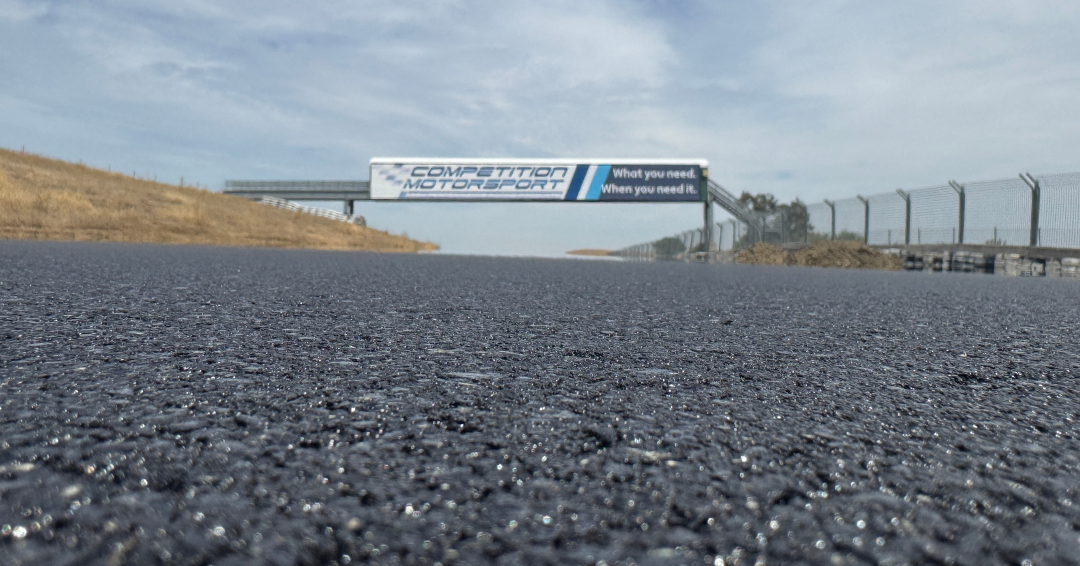 The newly reconstructed East Course at Thunderhill Raceway Park, where NCAT helped develop an asphalt pavement designed to meet the demands of high-speed racing.
Four decades of asphalt pavement research have taken the National Center for Asphalt Technology (NCAT) at Auburn University to roads across the country. This time, the road happens to have a finish line.
NCAT has built its reputation on advancing the performance and durability of asphalt pavements. At the heart of that work is its 1.7-mile Test Track, a full-scale proving ground that has tested experimental pavements under accelerated heavy truck traffic for 26 years. NCAT is now applying that expertise to a different kind of track.
NCAT recently joined the full reconstruction of the East Course at Thunderhill Raceway Park in Northern California, serving as the material specialist. The project marks NCAT’s return to large-scale racetrack paving work after more than 20 years and brings its research and engineering experience to the unique demands of a high-speed racing surface.
Thunderhill Raceway Park in Willows, California, hosts automobile and motorcycle racing on a configurable road course known for its turns and elevation changes. The facility is also home to the annual 25 Hours of Thunderhill endurance race.
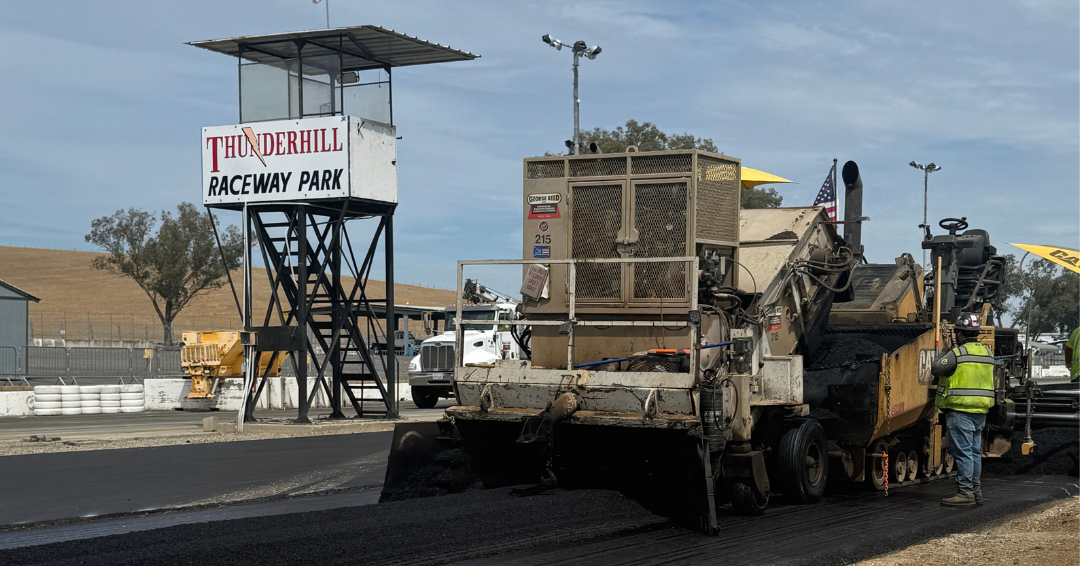
NCAT research engineer Graham Hurley joined the project during early discussions around the reconstruction. Hurley worked alongside Ben Bowers, the McCartney-Chase Highway Engineering Distinguished Associate Professor in Auburn University’s Department of Civil and Environmental Engineering and an NCAT researcher, to develop project specifications and review mixture designs. The team also recommended the pavement structure and provided technical support throughout construction.
Hurley’s racetrack paving experience and Bowers’ research background made for a natural combination. Having worked with Thunderhill president Matt Busby on projects at New Orleans Motorsports Park and the National Corvette Museum Motorsports Park in Bowling Green, Kentucky, Hurley brought firsthand knowledge of what it takes to design and pave a racing surface. Bowers complemented that experience with a research perspective, helping the team explore and determine how the new approaches could work in practice at Thunderhill.
“Racing surfaces present a different set of challenges than traditional roadways,” Hurley said. “Permanent deformation, or rutting, typically isn’t the primary concern. Racecar tires create significant lateral shear forces, so we needed a surface mixture capable of withstanding them and providing long-term performance.
When you’re designing for racecars instead of highway traffic, it gives pavement performance a whole new meaning.”
Designing for the racetrack
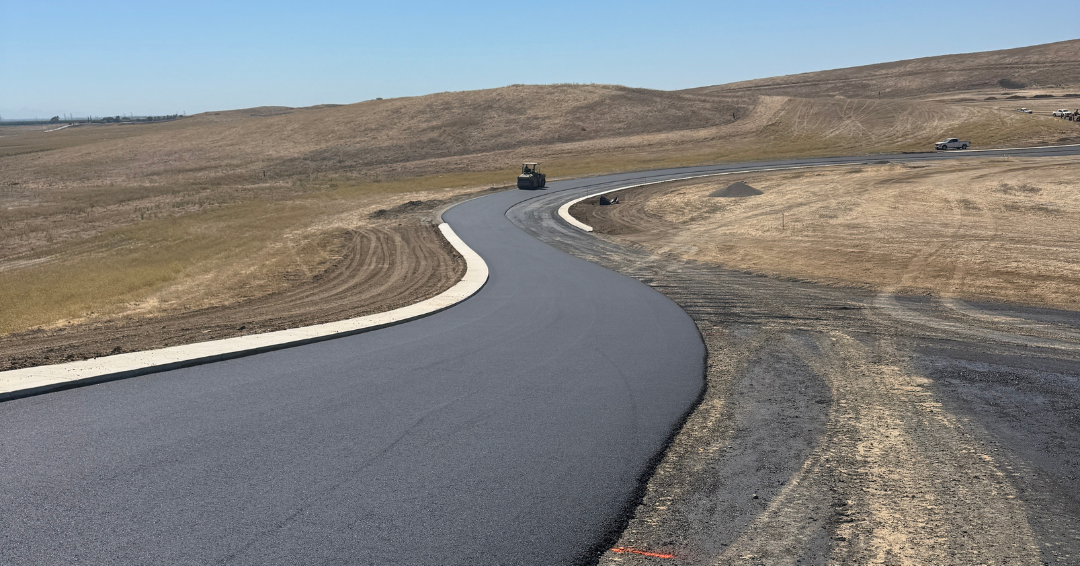
The reconstructed pavement uses a 5-inch, three-layer asphalt system consisting of a 2-inch base course followed by 1.5-inch leveling and surface courses.
Developing the pavement structure required the NCAT team to balance new approaches with solutions that could work during construction and minimize risk on a racing surface.
“One thing NCAT brings to the table is knowledge of outside-the-box solutions while also understanding that they need to be implementable and relatively low-risk,” Bowers said.
One of those discussions centered on reducing the potential for reflective cracking from the underlying stabilized aggregate base. NCAT initially proposed a reflective-cracking relief layer in the base, which led the project team to consider several approaches and ultimately incorporate something Hurley had not used on his previous racetrack projects: fiber-reinforced asphalt.
The team used FORTA-FI fibers in the base course to improve cracking resistance. NCAT evaluated the mixture using the indirect tensile asphalt cracking test, or IDEAL-CT, which produces a cracking tolerance index known as CTIndex.
Testing produced an average CTIndex of approximately 115 for the base mixture, indicating high resistance to cracking. The wearing course produced an average CTIndex of 538, which Hurley attributed in part to the highly polymer-modified PG 82-22 binder. Hurley had used the binder on previous racing facilities in Southern California and knew its ability to withstand the lateral shear forces generated by racecars.
With racecars traveling at high speeds and sitting close to the pavement surface, even small irregularities can matter. NCAT helped establish a stringent smoothness specification of less than 12 inches per mile for the racing surface.
In practical terms, these results give the team greater confidence in the asphalt pavement’s longevity. The combination of the fiber-reinforced base and a smooth, crack-resistant surface creates an asphalt pavement structure designed to keep the track performing well lap after lap.
Putting the design into practice
NCAT’s work continued as paving began. During construction, the team monitored asphalt mixture production and placement, evaluated quality assurance data for compliance with project specifications and tracked mixture temperature and density.
Maintaining the appropriate mixture temperature helps paving crews achieve the target density, an important factor in long-term pavement performance. NCAT also served as a technical resource for the paving team, providing recommendations as conditions and questions arose in the field.
“It’s the ultimate example of teamwork,” Hurley said. “We’re evaluating the data and making sure the specifications are being met, but we’re also there to work with the contractor and provide recommendations during paving.”
For Hurley and Bowers, the project also carries a personal connection. Both are racing fans, giving them an opportunity to combine an interest outside of work with their pavement expertise.
“Graham and I are both huge race fans, so for us this is a bit of a passion project where we get to blend our hobby with our expertise,” Bowers said. “To be able to do that is pretty remarkable.”
Established in 1986 through a partnership between Auburn University and the National Asphalt Pavement Association’s Research and Education Foundation, NCAT addresses the nation’s pavement infrastructure needs through practical research, technology development and education. The center’s work supports state departments of transportation, industry partners and agencies nationwide in advancing safe, durable and sustainable asphalt pavements.
For more information about NCAT and its research initiatives, visit ncat.us.
Media Contact: , alk0049@auburn.edu, 334.332.5052