NCAT researchers join NSF-funded BRIDGES Engine to explore plant-based asphalt materials
Published: Jul 14, 2026 1:30 PM
By Allison Killingsworth
 NCAT researchers will evaluate plant-derived lignin from crops as a potential renewable component in asphalt pavements.
The National Center for Asphalt Technology (NCAT) at Auburn University will help explore a new generation of sustainable asphalt materials as part of the National Science Foundation’s (NSF) Biobased Rural Innovation for Domestic Growth and Economic Security (BRIDGES) Engine, a regional initiative that will receive up to $160 million over the next 10 years.
Led by the HudsonAlpha Institute for Biotechnology, along with Auburn University, the University of Tennessee, Volkswagen Group of America and AGgrow Tech LLC, the BRIDGES Engine brings together 85 partners from industry, government and academia to strengthen rural economies across Alabama and Tennessee through biobased manufacturing.
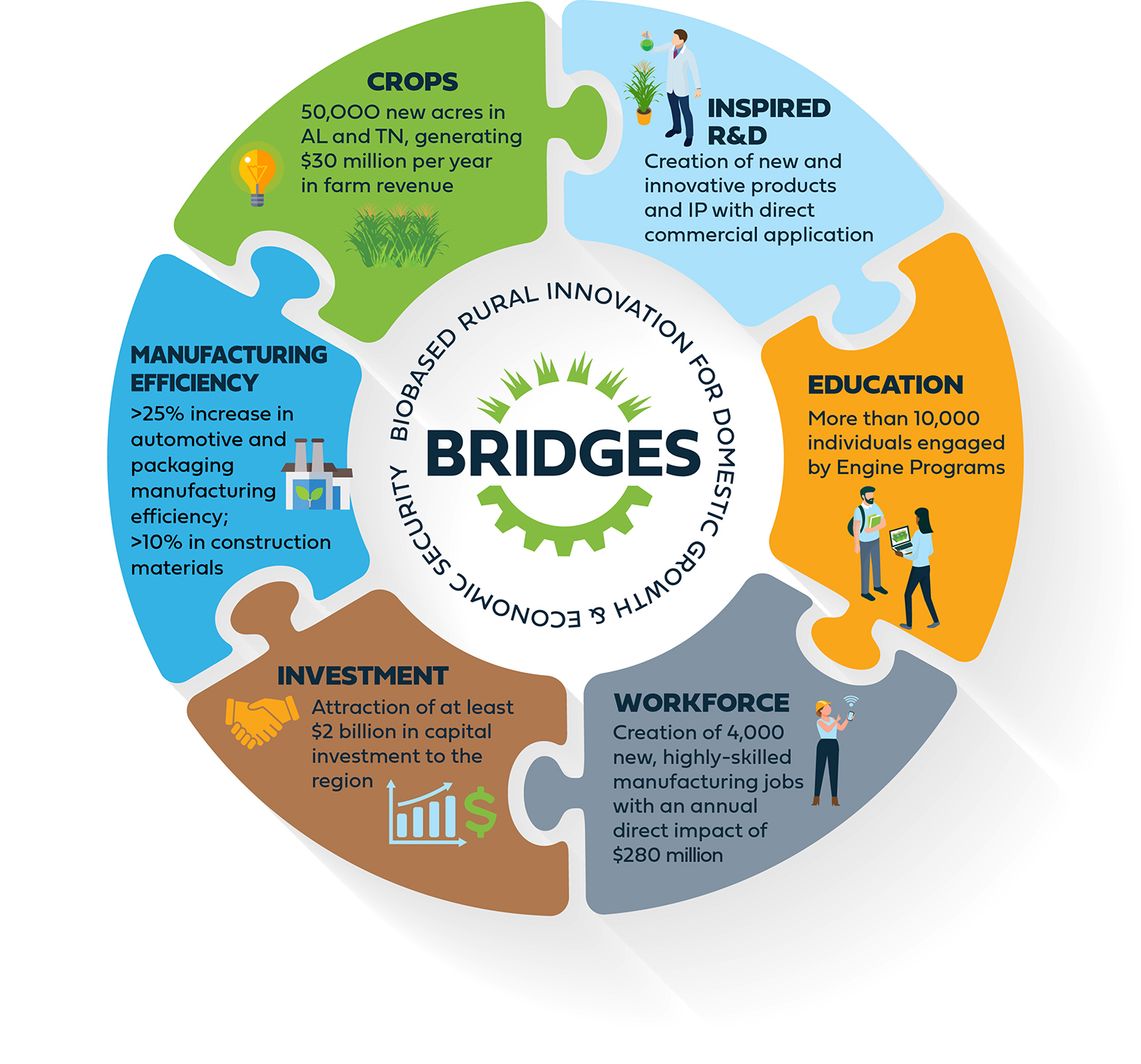
The initiative aims to create new markets for perennial fiber crops such as switchgrass and miscanthus by transforming them into high-value products for the automotive, construction and packaging industries. By establishing 50,000 acres of switchgrass and miscanthus crops across Alabama and Tennessee, the BRIDGES Engine aims to generate an estimated $30 million in annual farm revenue, attract approximately $2 billion in private investment and create more than 4,000 high-skilled jobs.
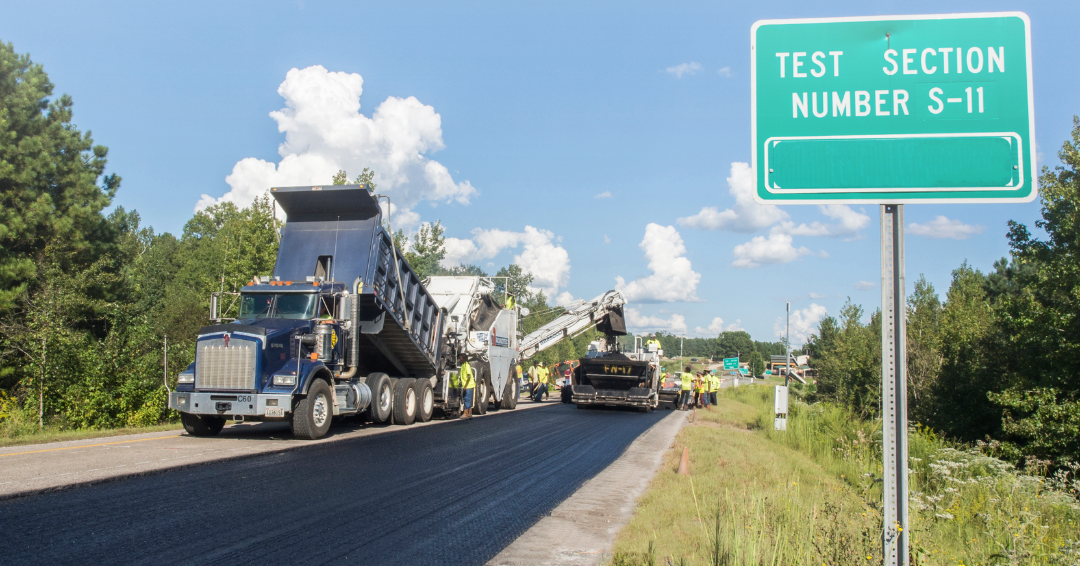
NCAT’s role in the initiative will focus on construction applications by evaluating whether lignin, a naturally occurring material extracted from those crops, can partially replace traditional petroleum-based asphalt binders. The center’s expertise in asphalt materials research and technology implementation makes it uniquely qualified to lead that effort.
NCAT brings four decades of leadership in asphalt materials research and a proven record of translating laboratory innovations into practice. Its world-class testing facilities, including the 1.7-mile Test Track, where emerging pavement technologies are evaluated under real-world traffic conditions, and its close collaboration with state departments of transportation and industry partners, provide the ideal environment for advancing bio-based asphalt technologies from concept to implementation.
“We will evaluate whether plant-derived lignin can serve as a sustainable alternative to a portion of conventional asphalt binder while maintaining the performance required for durable pavements,” said Chen Chen, assistant research professor at NCAT and principal investigator for the center’s portion of the project.
During the first phase of the project, NCAT researchers will identify promising lignin fractions, evaluate their compatibility with asphalt binders and test bio-modified asphalt mixtures for cracking resistance, rutting performance and moisture durability. They will also study how lignin’s chemical properties influence pavement performance to identify the most effective formulations.
“If successful, this research could reduce reliance on petroleum-based materials while creating new opportunities for farmers and strengthening domestic supply chains,” Chen said.
Randy West, NCAT director, serves as co-principal investigator for the center’s work on the initiative, with Samantha Dixon, assistant research engineer, supporting.
“NCAT has always focused on turning research into practical solutions,” said West. “The benefits of this initiative could extend well beyond the roadway, helping transportation agencies identify sustainable materials that meet the performance demands of modern pavements while supporting domestic manufacturing and rural economic growth.”
The broader BRIDGES initiative will also explore biobased materials for automotive components and packaging applications.
Established in 1986 through a partnership between Auburn University and the National Asphalt Pavement Association’s Research and Education Foundation, NCAT addresses the nation’s pavement infrastructure needs through practical research, technology development and education. The center’s work supports state departments of transportation, industry partners and agencies nationwide in advancing safe, durable and sustainable asphalt pavements.
For more information about NCAT and its research programs, visit ncat.us.
Additional information about the BRIDGES Engine is available at bridgesengine.org.
Media Contact: , alk0049@auburn.edu, 334.332.5052