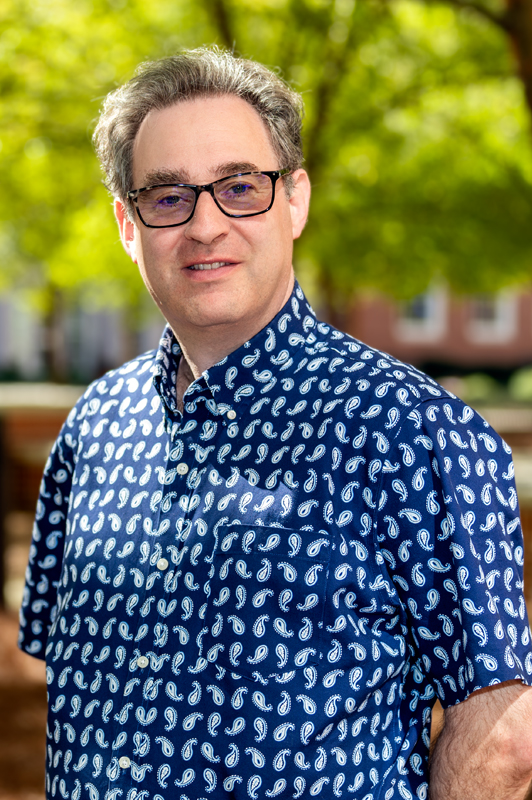
Doctoral student in CSSE advances protein design research, awarded trip to premier international conference
Published: Jul 30, 2026 3:00 PM
By Joe McAdory
 Maria Victoria Liendro attended the Genetic and Evolutionary Computation Conference July 13-17 in San Jose, Costa Rica.
Maria Victoria Liendro is applying computer science to help design better proteins, leveraging evolutionary algorithms to solve biological challenges.
Through simulations that mimic natural evolution, the first-year doctoral student in the Department of Computer Science and Software Engineering (CSSE) computationally evaluates thousands of potential protein variations to identify the most promising candidates for laboratory testing.
The desired outcome: turn thousands of possible protein designs into a handful most likely to succeed before they reach the lab, accelerating protein development while reducing experimental costs.
“This has been done in wet labs (traditional biotech laboratories) for decades, but now computers can accelerate that process through simulation, making it much faster and more efficient,” said Liendro, a member of the Evolutionary Algorithms Simulating Molecular Evolution (EASME) team in Auburn University’s interdisciplinary Biomimetic Artificial Intelligence Research (BioAl) Group.
“We use evolutionary algorithms to identify promising proteins before they reach the lab, helping reduce the amount of testing that's needed,” she added.
Evolutionary algorithms are a powerful type of AI inspired by natural evolution, genetics and population dynamics, which iteratively update a population of trial solutions to a given problem. They are proficient at solving a variety of real-world problem classes and naturally lend themselves to simulating biological evolution.
Her ideas were on display internationally two weeks ago.
Liendro was awarded an Association for Computing Machinery Women in Computing (ACM-W) scholarship to attend the 2026 Genetic and Evolutionary Computation Conference (GECCO 2026), July 13-17 in San Jose, Costa Rica. The ACM Special Interest Group on Genetic and Evolutionary Computation (SIGEVO) provided complimentary conference registration.
GECCO is a premier international gathering for researchers, showcasing advances in areas such as genetic algorithms, evolutionary machine learning, swarm intelligence, optimization, genetic programming and search-based software engineering.
“At GECCO, I had the opportunity to learn how the research community moves and what new issues are emerging in the field,” Liendro said. “I also learned new validation techniques, made valuable connections and met researchers from around the world. That kind of interaction is incredibly important. I may even begin a collaboration with someone I met at the conference, and I think that's one of the biggest benefits of attending events like this.”
SIGEVO also assigned Liendro a mentor for GECCO 2026, renowned computer scientist and University of Stirling Professor Gabriela Ochoa.
“Mentoring early-career scholars like Victoria is deeply rewarding — their energy and enthusiasm are infectious,” Ochoa said. “As a Latin American woman in computer science myself, I know how vital visible role models are in demonstrating that contributing to research on an international stage is within reach. Although my work focuses on the foundations of evolutionary computation, these applications in biotechnology are inspiring and carry meaningful benefits for society. I hope we can collaborate to understand how the search spaces of protein design are structured, which could lead to improved methods. She represents the bright and relevant future of our field.”
Daniel Tauritz, Liendro’s doctoral advisor and the COLSA Endowed Professor in CSSE who also serves as the university’s director for national laboratory relationships, said conferences like GECCO were “perfect for early career researchers with tremendous potential.”
“GECCO is one of the world's premier conferences for evolutionary computation, bringing together many of the field's leading researchers, innovators and emerging scholars,” he said. “Opportunities like this allow students to engage directly with new ideas, learn where the discipline is headed and build professional relationships that can shape the rest of their careers.
“Having Victoria represent Auburn in Costa Rica highlights the quality of research taking place within the EASME team and demonstrates that our students are contributing to conversations at the forefront of computational science. Victoria has a remarkable future ahead of her, and I am excited to see the impact she will make as both a researcher and a leader in this field.”
Liendro's path to computational biology began long before she arrived at Auburn.
As an undergraduate studying biomedical engineering at Universidad Nacional de Cordoba in Argentina, she was drawn to biological sciences and the quantitative nature of engineering and mathematics.
“I loved biology and the human body, but I also was very fond of engineering and math,” Liendro said. “When I was doing my degree, we were learning how to program a little bit, and I liked it. I started doing that a little bit on my own, and then I got an internship at the European Bioinformatics Institute. With that, I realized I really liked this side of research that is called bioinformatics.”
A field that combines biology, computing and data analysis, bioinformatics opened the door to new possibilities. The experience sparked a desire to deepen her computer science expertise and eventually led her to graduate studies at Auburn, where she received a master’s degree in data engineering in 2025.
“I started working as a bioinformatician, and then I felt like I needed more computer science knowledge,” Liendro said. “That's when I applied for the master's. With all the knowledge here from Auburn and my background in biomedical engineering, that's how I reached this weird area that I work on right now.”
Today, that "weird area" sits at the intersection of computer science, biology and artificial intelligence, where Liendro uses computational tools to tackle complex biological problems. The opportunity to blend multiple disciplines is one of the aspects of research she finds most rewarding.
“I think it's the potential of doing something that has never been done,” Liendro said. “It's the idea that there is no path to go. You can grab all the information you have and build something new.”
Media Contact: , jem0040@auburn.edu, 334.844.3447