Interdisciplinary project awarded $600K to improve STEM education in rural Alabama middle schools
Published: Jun 9, 2026 11:00 AM
By Joe McAdory
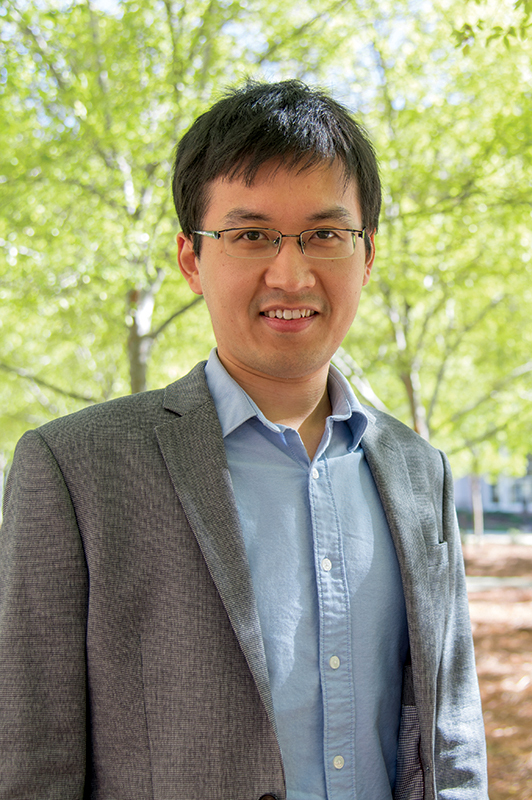
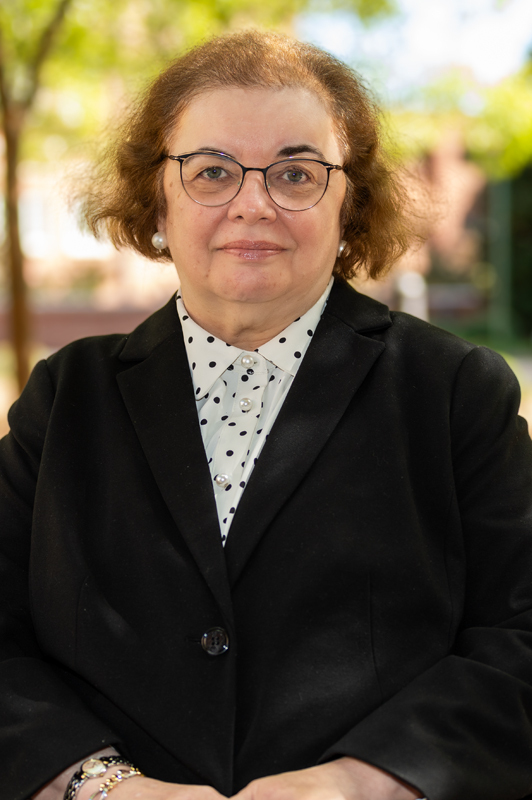
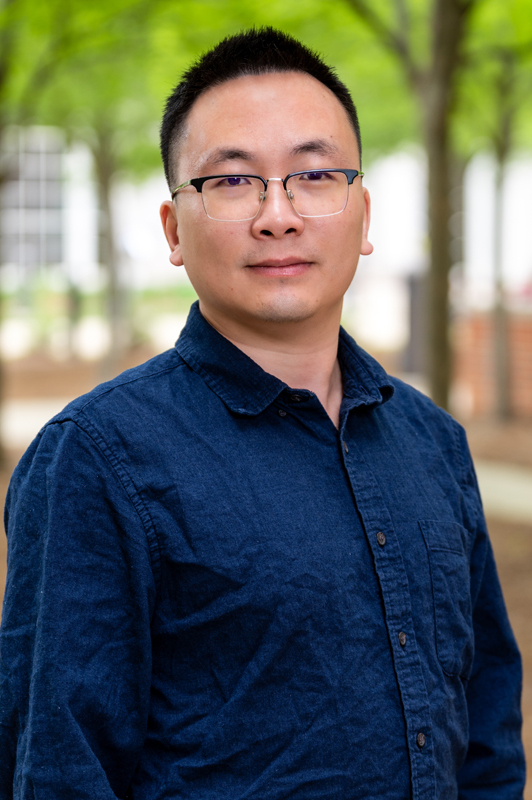
 Faculty involved on the project include, top row (from left), Daniela Marghitu from the Department of Computer Science and Software Engineering and Chih-hsuan Wang from the College of Education, and bottom row (from left), Bosen Lian from the Department of Electrical and Computer Engineering, Xiaowen Gong from the Department of Electrical and Computer Engineering and Melody Russell from the College of Education.
Rural Alabama schools often struggle to bring emerging technologies into the classroom. An interdisciplinary team from the Samuel Ginn College of Engineering and the College of Education is working to solve that problem.
Their initiative, “Research Experience for Teachers (RET): Project Based Learning for Rural Alabama STEM Middle School Teachers in Artificial Intelligence, Machine Learning and Robotics,” will provide 24 seventh- and eighth-grade educators with research and training experiences in artificial intelligence (AI), machine learning (ML) and robotics over three summers (2027–2029) and is supported by a renewed three year, $600,000 National Science Foundation (NSF) grant.
“Students need to be provided with opportunities to learn about these cutting-edge technologies,” said Xiaowen Gong, associate professor in the Department of Electrical and Computer Engineering (ECE) who serves as the project’s principal investigator. “Without giving middle-school teachers the preparation and the confidence to teach these subjects, their students simply won’t have access to them. That’s why this work is important.”
Ninety-two percent of rural Alabama middle schools are classified as Title I and are among the most impacted.
“We realized that there's a strong demand for STEM education in Alabama as many students are underserved,” Gong said. “They really need to be provided with this opportunity.”
Gong is joined by co-principal investigators Bosen Lian, assistant professor in ECE; Daniela Marghitu, director of the Laboratory for Education and Assistive Technology in the Department of Computer Science and Software Engineering; Melody Russell, professor of science education in the College of Education; and Chih-hsuan Wang, professor of educational research, measurement and assessment in the College of Education.
“Multidisciplinary expertise is a main aspect of this project,” Gong said. “My experience is in AI, machine learning and networking, in general. Dr. Lian’s expertise is in robotics. Dr. Marghitu is an expert in machine learning, AI, robotics, and she brings a wealth of experience in computer science education, especially for K-12 students. My colleagues from the College of Education are experts in STEM education. Dr. Russell's expertise is in science education for K-12 students, while Dr. Wang's expertise is in assessment of education technologies.”
Teachers will work directly with Auburn’s smart humanoid and mobile robots during the summer program, gaining experience with platforms that can hear, speak and respond to voice commands using state-of-the-art AI tools.
The original RET was awarded to Auburn by the NSF in 2022, and Gong said those experiences allowed for enhancement opportunities.
“To reflect the most recent advances in the fast-growing areas of AI/ML and robotics, we will make substantial updates to research projects and research platforms of summer programs in the proposed project, by taking into account the state of the art in the fields,” Gong said. “In particular, we will add new research projects that involve the latest technologies including generative AI, large language model, agentic AI and humanoid robots. Second, teacher leaders will make substantial contributions in development and implementation of participating in teachers’ RET lesson plans.”
To promote dissemination of outcomes of the project, teachers involved are encouraged to attend online virtual conferences in academic year follow-up, particularly NSF RET virtual poster sessions, which Gong said are much more convenient for teachers to participate in than in-person conferences.
“We hope this project will improve the content knowledge for students and teachers in underserved areas of Alabama through the development of innovative curriculum modules based on cutting-edge technologies,” Gong said. “This will not replace their existing curriculum, but we hope it will spark an interest in STEM-related education and inspire students to pursue this avenue as a career or education focus.”
Media Contact: , jem0040@auburn.edu, 334.844.3447