ICAMS to launch statewide satellite model to expand advanced manufacturing access across Alabama
Published: Mar 23, 2026 1:25 PM
By Dustin Duncan
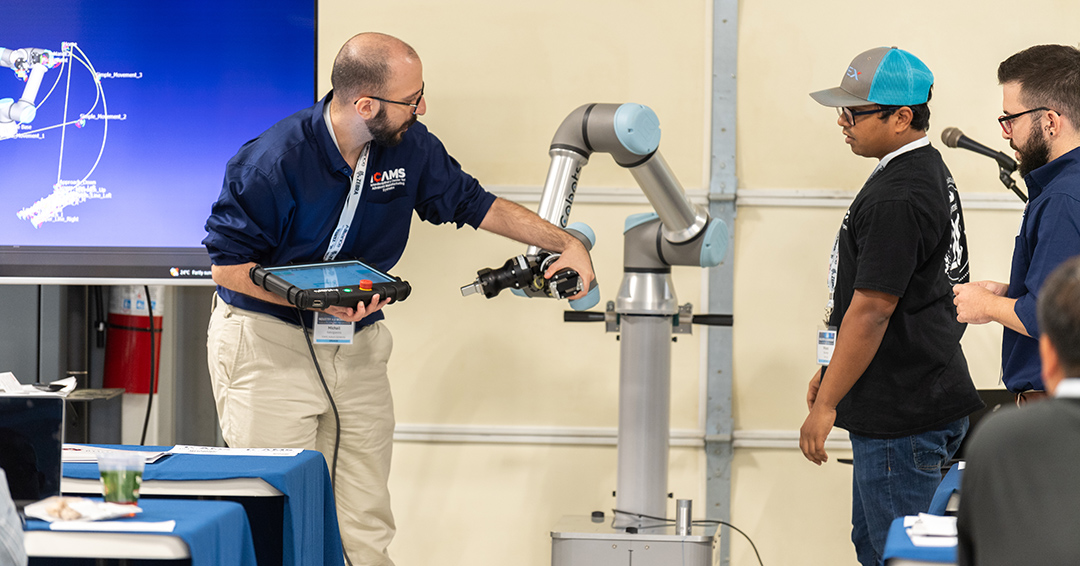 An ICAMS researcher demonstrates advanced manufacturing technology, highlighting real-time data integration and machine connectivity.
The Interdisciplinary Center for Advanced Manufacturing Systems (ICAMS) at Auburn University is expanding its mission to break down barriers for small- and medium-sized manufacturers — by bringing advanced manufacturing technologies closer to home.
Greg Harris, director of ICAMS, housed within the Samuel Ginn College of Engineering’s Department of Industrial and Systems Engineering, says demonstration alone is no longer enough.
On Auburn’s campus, ICAMS operates as a demonstration and research facility where connected machines stream live data across digital dashboards. Sensors detect vibration before equipment fails, and engineers model production systems virtually before parts are cut.
“We can inform companies,” Harris said. “But that’s not the same as touching them.”
That distinction anchors a new $8.3 million proposal to expand ICAMS’ reach across Alabama. Rather than building costly permanent extensions, the center is proposing a partnership-based “satellite ICAMS” model embedded within the Alabama Community College System — bringing advanced manufacturing technologies closer to small- and medium-sized manufacturers statewide.
Because the center is based in East Alabama, consistent engagement with manufacturers across the state can be difficult.
“A manufacturer in Jackson County, Alabama, for example, is unlikely to shut down operations for a multi-day trip to Auburn,” said Greg Purdy, associate professor of industrial and systems engineering and principal investigator on the project. “That same company, however, may visit a community college facility 20 minutes away.”
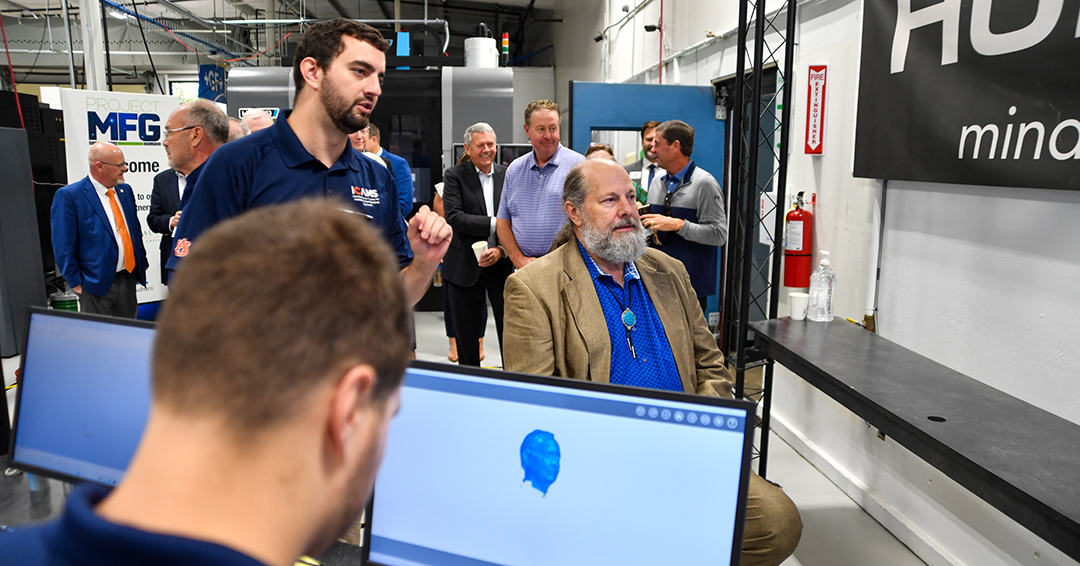
The proposal leverages that practical reality. Rather than building new facilities, ICAMS will help equip existing community college manufacturing programs with sensor packages and connected machine systems similar to those used at ICAMS. Live dashboards will display real-time production data, and instructors will be trained to explain what the information means and how it translates into day-to-day operational decisions.
The goal is to make advanced manufacturing technology visible — and accessible — where local manufacturers already have relationships.
The model also creates a technical advantage. Community college training labs run machines constantly, generating diverse, real-world production data. That data will flow back to ICAMS, where machine learning researchers analyze it to develop predictive models and decision-support tools.
The information can include early detection of abnormal vibration signaling bearing wear before a machine fails — insight many smaller manufacturers lack the capacity to generate on their own.
When local companies see these systems in action and decide to move forward, ICAMS assembles the appropriate level of support — from senior design teams to research engineers and faculty specialists to guide and assist.
The proposal outlines several initiatives focused on workforce development and strengthening manufacturing capability across the state.
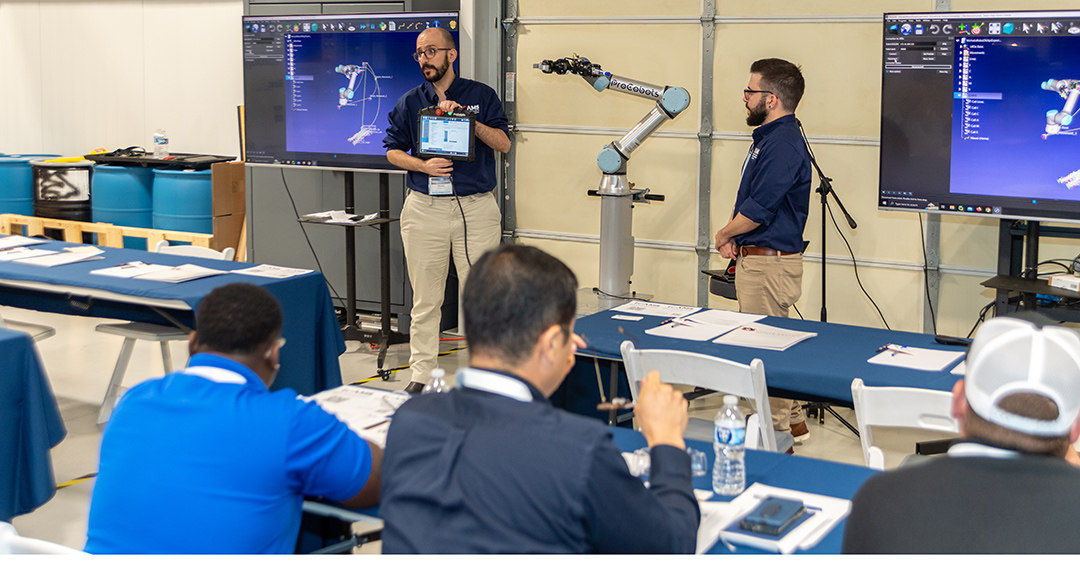
On the workforce side, the plan formalizes the community college satellite model while expanding Industry 4.0 curriculum and internship pathways. It also strengthens a pipeline of future manufacturing leaders, building on partnerships such as Southern Union State Community College and extending outreach into middle and high schools.
Another focus is a more subtle challenge: trust.
“We can’t throw a bunch of AI out there and expect manufacturers to blindly trust it or even know how to use it effectively,” Purdy said.
Purdy said experienced operators do not automatically trust digital systems layered onto machines they have run for decades. For that reason, the proposal emphasizes human-centered manufacturing adoption — studying how workers interact with new tools and developing training protocols that bridge skills gaps.
The remaining initiatives focus on strengthening industrial capability itself.
One centers on adapting digital twin technologies for practical use by small- and medium-sized manufacturers, moving beyond buzzwords to measurable business value. Another supports adoption of model-based enterprise practices, helping companies better integrate design, manufacturing and inspection processes. A third focuses on secure, adaptable data collection and analytics systems, enabling manufacturers to make more informed decisions while addressing cybersecurity concerns.
The three-year project is supported by the Department of War, which aligns the funding with priorities in industrial modernization and workforce resilience.
Harris said the objective is not simply brand recognition or statewide visibility. The measure of success is whether manufacturers remain competitive — and in business — because they adopted tools and processes they otherwise would not have implemented.
“If successful, the hub-and-spoke model could be replicated beyond Alabama, positioning the state as a national leader in linking workforce development with digital manufacturing modernization,” he said.
Media Contact: , dzd0065@auburn.edu, 334-844-2326