Engineers Without Borders’ March 28 Water Cycle supports annual outreach projects in Guatemala and Bolivia
Published: Jan 16, 2026 9:00 AM
By Joe McAdory
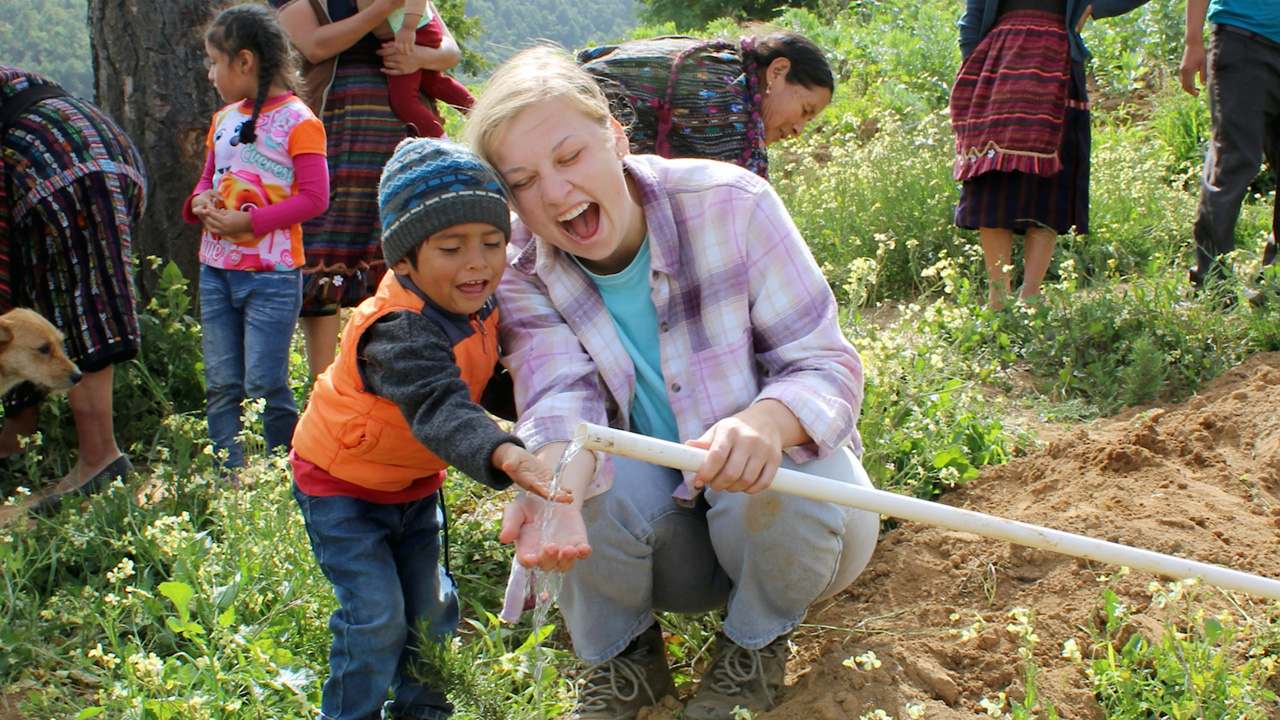 Anna Grace Peel, a recent bioprocess engineering graduate, previously served on EWB-Auburn teams that brought reliable access to potable water to villagers in Guatemala.
Want to put your cycling miles toward something bigger? Auburn University’s Engineers Without Borders (EWB) chapter will host its fifth-annual Water Cycle on March 28, a gravel ride starting at Pioneer Park in Loachapoka that raises funds for annual student projects to expand potable water access and support agricultural irrigation in communities in Guatemala and Bolivia.
Water Cycle participants will take part in a race designed to be accessible and well supported. Riders can choose from 15-, 30- or 60-mile gravel routes, with distances intended to accommodate recreational cyclists as well as more experienced riders. Registration fees vary by distance, with shorter routes priced for casual participants and longer routes structured for competitive riders.
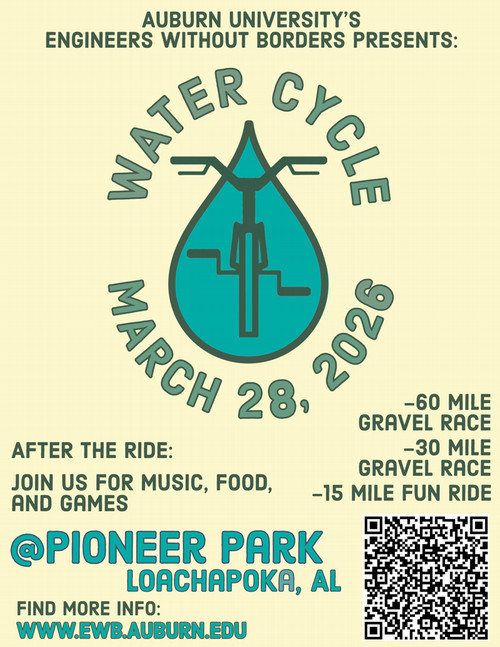
All registered riders receive an event T-shirt and access to fully supported courses that include clearly marked routes, aid stations with food and hydration, mechanical assistance and SAG vehicles — support-and-gear vehicles that assist riders who experience mechanical issues or cannot finish the course. Following the race, participants are invited to a post-ride gathering featuring food, music and games.
For registration information, visit: https://support.ewb-usa.org/event/auburn-university-chapter-water-cycle-2026/e731340/register/new/select-tickets
Both projects supported by the event are multi-year commitments that require students to travel abroad each spring and summer to work directly with communities on the design and construction of permanent water infrastructure.
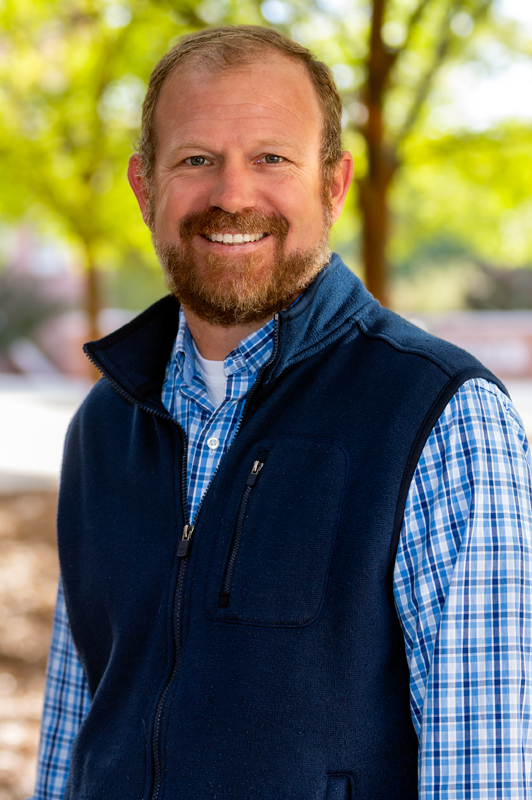
“When we arrive at a community in Guatemala or Bolivia, or wherever we’re working, we’re there to work side by side with the villagers and find out what their needs are,” said Christian Brodbeck, EWB-Auburn chapter advisor and the college’s director of engineering research operations. “Then we use our talents, which are different than their talents, to develop a solution that addresses those needs.”
Funds raised through the Water Cycle are directed primarily toward the materials and labor required to build those solutions. These include constructing reinforced concrete water storage tanks, installing miles of PVC distribution pipeline, and assembling valves and water meters needed to deliver safe, reliable water. Funds also support transporting materials to remote sites and hiring local masons and plumbers to oversee construction and ensure systems are built correctly.
This May in Parramos Grande, Guatemala, Auburn Engineers Without Borders will complete the final phase of a multi-year potable water project designed to deliver clean, running water directly to homes. During earlier phases, students completed initial construction and conducted additional assessments needed to finalize the system design. This spring, the team will install an additional water storage tank, pressure-break infrastructure and approximately eight miles of pipeline, ultimately connecting 177 homes to the system.
In Quesimpico, Bolivia, this August, a second Auburn Engineers Without Borders team will continue work on an irrigation system designed to support local agriculture. Building on a large water storage tank constructed in 2025, students will focus on installing distribution piping to deliver water to more than 20 agricultural fields, allowing farmers to irrigate their land more consistently and effectively.
“At the end of the day, we’re all people and we all have the same needs,” Brodbeck said. “We’re just so much more fortunate here in the U.S. that we don’t think about some of the basic needs that sometimes aren’t available to other communities.”
Media Contact: , jem0040@auburn.edu, 334.844.3447