

Engineering alumnus reflects on Auburn as a ‘lifeline’ to American Dream
Published: Dec 19, 2025 9:00 AM
By Nicholas Bowman
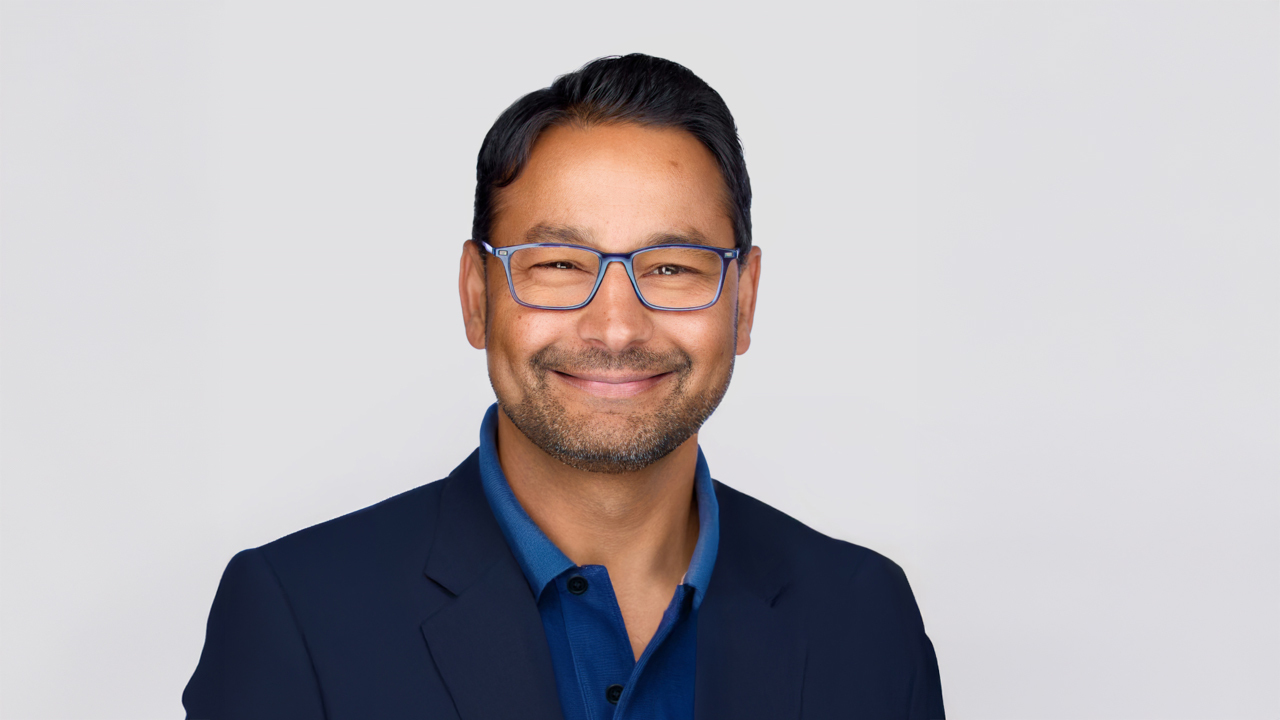 T.G. Ganeshan
“Why are you here?”
It wasn’t the question Thirunellai G. Ganeshan flew halfway around the world to hear. He liked the next one even less: “Did you not get our letter?”
He was standing in an office doorway in Charlottesville, Virginia. Across the threshold sat the professor who was supposed to be his employer — and his reason for being in the United States.
That question was the unpleasant end of what had been a crash landing into the country. Two days before, Ganeshan had touched down in Washington Dulles International Airport after 22 hours of travel from his native India. It was fall 1993. He was 20 years old.
Ganeshan, who goes by the initials TG even among friends and family in India, received his bachelor’s degree in aerospace engineering from the prestigious Indian Institute of Technology, the country’s top engineering school.
After graduating, he was accepted as a master’s research assistant at the University of Virginia in Charlottesville. Ganeshan was going to be working on a Department of Defense-funded aerospace project between UVA and NASA.
Ganeshan packed two large bags for the trip and enough cash to last him until he would get paid as a graduate assistant. By the time he cleared baggage claim at Dulles, it was close to 6 p.m. in Washington, D.C.
The internet was still in its infancy. Amazon would not be created for another year. There was no TripAdvisor, no easy way to get local news and no way for foreigners to get quick advice about traveling in a new country.
Ganeshan had a rough idea of where the nearest Greyhound bus station was relative to the airport, so once he got his bags, he started walking the most direct route.
He was mugged on his way to the bus station. Two men threatened him and demanded money.
“They didn’t have any interest in the bags that I had, so I just gave them the cash that I had,” Ganeshan said. “Luckily, I had traveler’s checks, and I was able to use that to get to the Greyhound and get to Charlottesville.
“That was day one.”
Cold Calls
Thirty years later, in November 2025, Ganeshan spoke to Auburn Engineering over video from his office in Texas, where he’s the chief financial officer for Machinify.
The company builds payment processing software that leverages artificial intelligence to prevent fraud in medical billing and respond to the massive complexity of the health care system. In October 2025, Machinify announced that it had completed a purchase of Performant Healthcare Inc., a Florida-based health care technology company focused on fraud prevention.
The deal was for approximately $670 million. It combined Machinify’s AI assets with Performant Healthcare’s expertise with health care auditing and recovery.
Going through that entire experience has shaped my philosophy on life — in terms of not giving up, of persisting and looking for solutions — T.G. Ganeshan
Ganeshan’s come a long way from that doorway in Charlottesville. And, in a roundabout way, it’s because of Hurricane Andrew.
While he had secured his master’s assistantship at UVA to begin in 1993, the program was being funded by the Department of Defense and NASA.
The Cold War was only freshly over — reducing the immediate need for defense research. Hurricane Andrew had devastated swaths of the Gulf Coast in August 1992, and between when Ganeshan had been accepted into the program and when he set off for his new home, the funding for his project had been diverted to relief efforts.
The letter that UVA sent to his home in India had never reached him, so he set out in August 1993 for a graduate position that didn’t exist.
He had arrived in a city he knew nothing about, had been robbed on the way there, and had no job and no way to pay for the education he had been planning on.
“My future was essentially looking pretty dark,” he said.
He was told to come back in a day or two, and in the meantime was staying at UVA’s International Student Center, which offered short-term housing for new international students.
When Ganeshan returned to the aerospace program, he was told the university would cover his tuition for one semester, but he would have to pay the rest of his way — fees, room and board and the rest.
Being on a student visa, he could only work on campus.
“And so I had three jobs within campus to just support my living,” he said. “And then I started knowing that I did not have a future at the University of Virginia.”
He began making cold calls. Ganeshan would get back on Greyhound buses and travel to universities on the East Coast where he had friends. During the day, he would roam the halls of their engineering colleges and departments, knocking on doors, sharing his resume and asking for a graduate position.
He was striking out.
It was the end fall semester, and he had not secured a position. Time was whittling down, and he had a week left until he was out at UVA.
“In fact, I didn't even have the money to go back to India,” Ganeshan said. “So I don’t know what I would have done, really.”
Meanwhile, on the Plains, a mechanical engineering professor named Daniel Mackowski was busy researching how light scatters in the atmosphere. He was in the home stretch of a paper exploring how light interacts with complex particles like clouds, soot smoke and pollution — useful data for the growing satellite-dependent tech industry.
And he had another opening for a graduate teaching assistant.
The professor remembered what he called a, “Hello, how can I help you?” moment earlier that semester, where a young student from India had come knocking on his door in Ross Hall, then the home of the department.
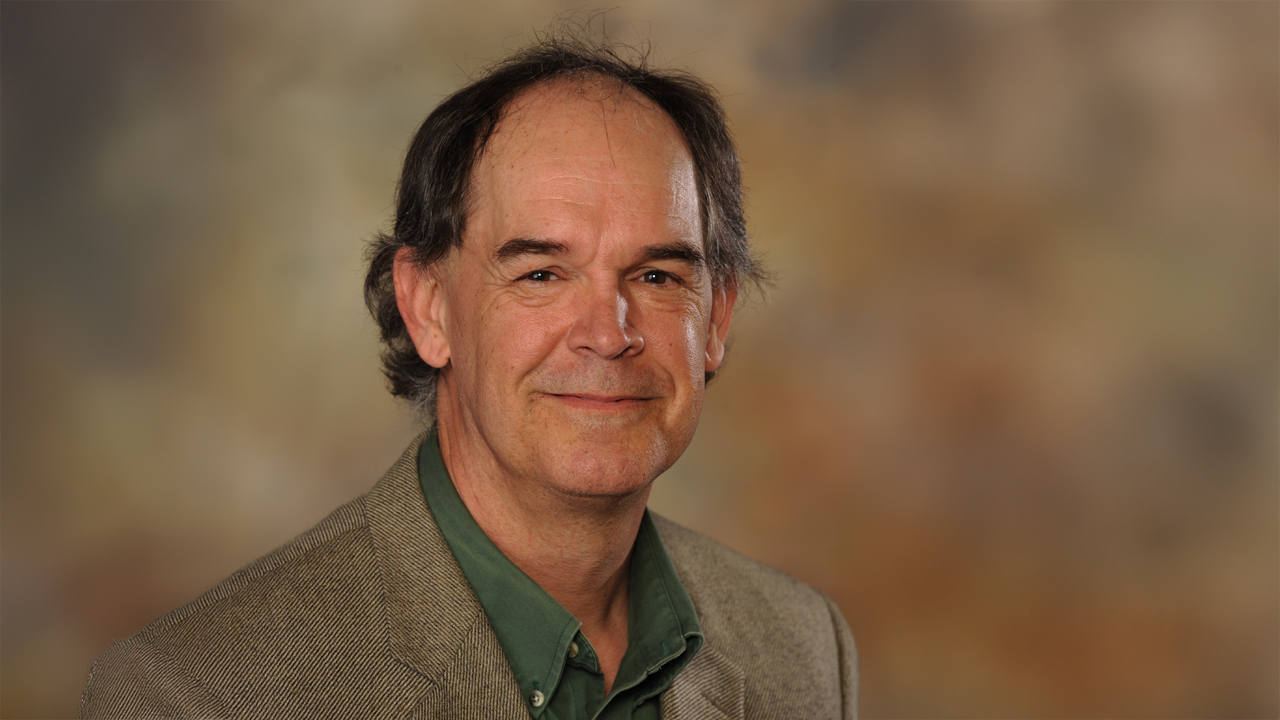
He introduced himself — TG was his name — dropped off his resume and asked for a position as a GTA.
Mackowski sent him an offer letter dated Dec. 14, 1993, for a position with Auburn University. He’d be paid a stipend of $694.98 a month.
“That was sort of my,” Ganeshan paused, laughing, “let's call it a lifeline.”
Keeping Curious
The university and community were a refuge for Ganeshan after a rough start in the United States. It took just the one visit to know there was something special about the Plains.
“I really liked the school — how small, how isolated it was, especially after getting mugged,” Ganeshan said. “I went to Georgia Tech and was shocked” because it was in the middle of Atlanta.
He said he loved “how safe Auburn was. How friendly people were. Even all the professors were very, very friendly. They appreciated me coming over. It was just a really pleasant visit.”
Ganeshan’s early 20s were formative years, going through what he called the “bottom point, in terms of adversity” in his life, and then pulling himself out of it to find a place in Auburn.
And Auburn’s engineering program provided not just the lifeline he needed, but the education he would need again and again in the future.
“Going through that entire experience has shaped my philosophy on life — in terms of not giving up, of persisting and looking for solutions,” Ganeshan said. “I would say all the engineering training really helped me in business in terms of solving very unstructured problems. Looking at testing various hypotheses and figuring out what solution works.”
Auburn set him off on the right foot, and asking the right questions — curiosity would end up being the push that kept him climbing in his career.
He worked first for El Paso Energy after graduating, which led to positions in natural gas well development. After a couple of years in gas, his interest grew in the business side of his industry and entered the MBA program at the University of Texas.
He finished his MBA program and jumped into the finance world — starting an executive development program at Anheuser-Busch that led to finance positions with SeaWorld, Hilton Worldwide and, most recently, in the health care sector.
Prior to joining Machinify, he was CFO for Innovaccer, RxSense and held multiple executive positions within the OptumInsight umbrella of companies.
What keeps him climbing up these industries is what got him interested in finance in the first place: curiosity.
“I’m just intellectually curious by nature. That’s what piqued my interest in business,” he said. “I had no exposure to it, and then I realized I needed to go get an MBA.”
His career has been a process of diving into a new industry or a new role, mastering it and then seeing where the next round of questions took him. In finance, that’s meant not just getting familiar with many industries, but with a diverse range of business structures: private and public companies, small and large companies, wholly owned or independent companies.
That search for knowledge and for the next challenge has been the real reason for his success.
“The reason why you get promoted is not because of what you’re really good at, which is table stakes,” Ganeshan said. “It’s what you can contribute at the next level.”
Better Than Talent
The Auburn graduate is taking stock — of his career, his current success and what comes next.
With the Machinify deal in the books, Ganeshan said he’s reached a point in his career where he wants to use his position to help open the door to education for others. His perch in the C-suite of a company deep in the worlds of AI and health care gives him a heightened awareness of what it’s going to take to be successful in the future: education.
“I’ve always believed in the American Dream. What helped me, versus somebody else, is at least I had that initial platform of education. I had an undergrad,” Ganeshan said. “With that, you could open up opportunities. That’s the pathway to the American dream.”
Looking back on his career and how he came to the United States, Ganeshan’s reminded of his classmates that graduated with him at the best engineering school in India.
He’s quick to say almost all were much more talented than he ever was. So what was different for him?
The hard, hard path to Auburn, and what he learned along the way.
“I’ve come to learn that persistence beats talent any day,” he said, laughing.
Ganeshan’s persistence through horrible circumstances and his education as an Auburn engineer set him up for success.
“If you want opportunities, you have to go be proactive. You have to go take the initiative and actually make it happen,” Ganeshan said. “Just going through that process, it just feels like, if you set your mind to anything, you can pretty much do it.”
Media Contact: , nab0004@auburn.edu,