

Advancing Military Technology: From inception to explosion, Ryan Hill ’08 and IS4S help the U.S. Military stay on the cutting edge
Published: May 11, 2026 4:00 PM
By Derek Herscovici
 Ryan Hill poses with an award during a recognition event in an indoor garden setting.
Buying, outfitting and selling a commercial ship out of a Singaporean shipyard. Being thrown into the trunk of a car in an apparent kidnapping on the streets of Colombia. Running a liquified natural gas facility that is growing into a multi-national commercial hub.
If Ryan Knight, ’00 mechanical engineering, hasn’t seen it all, he’s getting close.
Son to a U.S. Air Force pilot and a teacher, Knight was born in South Dakota but grew up in the military family rhythm, moving every few years until his father retired from the service. His parents were from South Carolina, where Knight and his family now make their home.
That is, it’s one of Knights’ two homes. You could say he’s bi-coastal, splitting his time between the East and west coasts.
Six months a year, he’s in Mount Pleasant, South Carolina, where the Cooper River runs into the Atlantic.
The other half of the year, he’s off to the west coast — of Africa.
A world of opportunity
Knight is the production manager running Angola LNG, a joint-ownership facility with operations in Soyo, a port city at the mouth of the Congo River that splits the Democratic Republic of Congo from Angola, where the liquified natural gas (LNG) plant is based.
The plant is a partnership of several energy industry companies with a stake in development in the area.
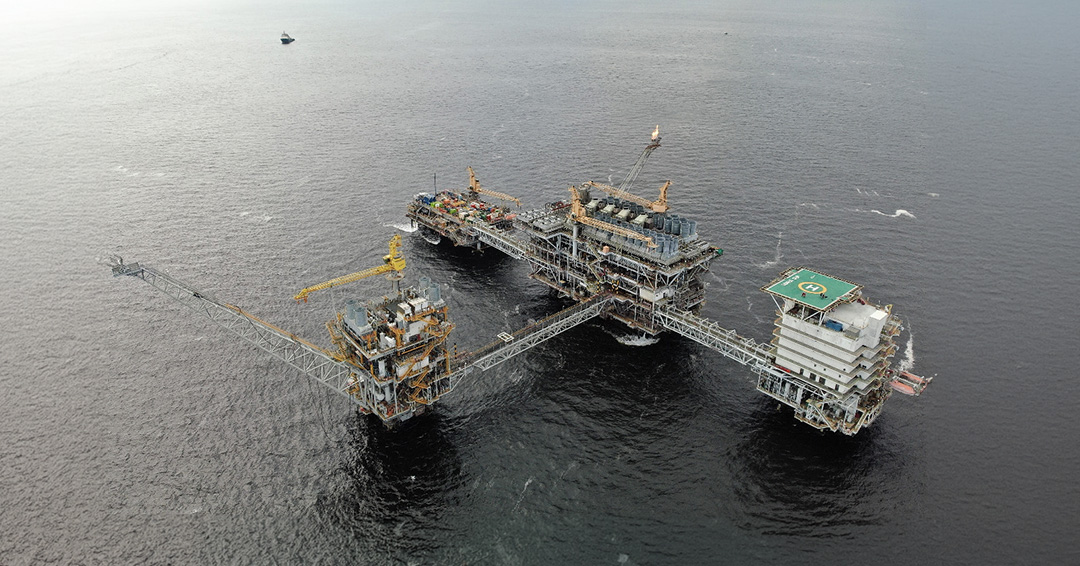
He’s spent the 10 years on the continent, first working at an offshore oil rig before taking the role at the plant, which cools and condenses natural gas so that it can be pumped onto ships for global transport.
Almost 6 million tons of LNG passes through the Soyo facility each year.
Spending his days on the southern shore of the Congo River, managing a team from many different international backgrounds — it’s an important posting for any engineer, but Knight says he didn’t have any idea that his mechanical engineering degree would take him so far.
“I didn’t really realize that was going to happen like that, or that it would open that many doors for me,” he said.
He had humbler aims when he enrolled at Auburn as a transfer student from a small university in South Carolina called Presbyterian College, where Knight played football and studied physics.
The school had a dual-degree program with several universities in the Southeast. One of Presbyterian’s partner institutions was Auburn University.
Knight studied for more than three years at Presbyterian College and then transferred for a final two years at Auburn. At the end of four heavy semesters of mechanical engineering coursework, Knight emerged with degrees from both institutions.
Knight had a glimpse of where his career would take him years earlier in Auburn, when he would have laughed if you told him he was headed for Angola one day.
Coming from Presbyterian, Knight said he struggled with the engineering curriculum in Auburn. What got him over the finish line were the study groups he joined.
“My peers really brought me through that. I wasn’t the best student,” he said. “I had to work at it. I’m not as gifted as some people are.”
There was one class in which he excelled, which is no surprise given his career: project economics.
“It was the finance side of things. That was the thing I was the best at,” Knight said. “It helped me tie the engineering technical side into business.”
He credited the success of his career to his faith in God and to a phrase that will be familiar to Auburn alumni: hard work.
“You put in a lot of hard work and then you get opportunity,” he said. “You get choices.”

Knight got choices: The engineer had on-site interviews with 31 companies before he graduated. He received 17 job offers. He could have worked in pulp and paper, manufacturing, automotive, construction or aerospace.
He chose oil and gas for practical reasons. The earning potential was high and the skills were transferable to a wide array of different industries.
As it happens, Knight wouldn’t need to worry about transferability — he’s worked his entire 25-year career at Chevron, beginning in February 2001 at the Chevron Pascagoula Refinery. It’s the company’s most productive refinery in the United States, handling almost 370,000 barrels of crude oil each day.
“Honestly, what I thought when I was in school was that I would take this job in Mississippi at a big refinery and just learn how to be an engineer,” Knight said on a call from Angola. “And then I would find a job back closer to home.”
That’s not how it worked out.
Captured in Colombia
Angola is just the latest stop a career at Chevron that has taken Knight throughout the United States, first as a maintenance engineer and then a project engineer, before moving him to postings in Bogotá, Colombia, as well as Singapore, Australia and, of course, Africa.
He met his wife, Susan, who was working for the Department of State after serving in the U.S. Marines, in Houston. They had their first child, Riley, in Houston, before getting word that Chevron was sending Knight to Bogota.
The city sits almost at the center of the country along the Andes Mountains. It hosts Chevron’s logistics and operations hub for its activity in the country. And it’s where his eyes were opened to the scale of what was possible with a company like Chevron.
First, there was the issue of learning his first new language in his 40s. He found himself living in a household where there are multiple languages being spoken and raising his young children not just in a foreign country, but immersed in a foreign culture.
And doing it while feeling he and his family had targets on their backs.
“I’ve never been treated better in my life, but it’s absolutely surreal when you watch your little toddler kid walk to school with a security guard and you’re driving around in armored vehicles and you have that high level of security around you,” Knight said.
The security was there for good reason. There had been attacks on American workers and infrastructure in the country, and through the early 2000s, Colombia had one of the highest kidnapping rates in the world.
By far, the most frightening moment for Knight was taking a hired car for work when his car was forced to a stop on a side street, men surrounded the car and put a gun in his face. They demanded Knight get in the trunk, threatened his family and began taking him to an unknown location.
His worst fears had been realized.
Or so he thought.
It seemed like a kidnapping because it was meant to — the kidnap training done at the time put someone in the supposedly deadly situation so they could be coached based on their real reaction.
“That wasn’t in the job description,” Knight said, laughing. “They don't tell you it's happening. They drive you around, next thing you know, you got a gun in your face and they throw you in the trunk of a car.”
Both he and Susan had to go through the training, the most extreme example of how international travel tested her and the family. Even day-to-day work abroad affected the Knights, for good and bad.
“For my wife, it’s hard, man,” he said. “When you uproot yourself and go to a completely different country and you don’t know the language, it’s a very out-of-body experience.”
Before they left Bogota, the Knights welcomed their second child, Kaden, and they had their third child, Avery, in Mt. Pleasant.
Knight’s career with Chevron has required the full investment of his family, and not just when they were international.
In his current assignment in Angola, he works a month-on, month-off schedule. When he’s at the plant in Soyo, Susan is handling her own job as an Investigative Analyst for the U.S. State Department and keeping the household with their three kids running.
“The rotational life is really tough. I’m gone for five weeks and my wife’s at home trying to juggle everything,” Knight said. “She’s basically a single mom with three kids, and that’s not easy with a full-time job.”
See You in Singapore
Knight’s journey from the Plains to the west coast of Africa started out with a straightforward assignment in Pascagoula. As a maintenance engineer, Knight put his mechanical engineering education to use keeping his area of the refinery running.
“It was mostly just repairing and fixing things. Planning jobs,” he said. “You weren’t managing people. You didn’t have to worry too much about money or business or anything. You just fixed things.”
He only had three years doing nuts-and-bolts engineering work before he was promoted to project manager. And that’s where the straightforward work ended.
Suddenly, his focus wasn’t on a piece of equipment or a part, it was on budgets, the team, personalities. To be successful, he couldn’t just rely on his engineering expertise as he took on budgets, timelines and teams.
From project engineer, he moved into more senior roles leading teams of engineers, projects and operations.
“Now I’m not just fixing thing in a plant, I’m integrating things with drilling rigs. I’m integrating things with reservoir management,” Knight said. “You start to see a bigger value chain. You’re solving people problems, but you’re also solving business problems — and not just problems, but opportunities. The dynamics of the oil industry are really crazy, and you keep adapting to the new opportunities that come at you.”
Perhaps no assignment illustrates just how wild the energy market can be than Knight’s visit to Singapore.
His unit found itself in need of a floating production, storage and offloading (FPSO) facility. These huge vessels process crude oil from offshore wells, separating the oil into its component petroleum products and pumping those onto transport ships.
Knight had been assigned as construction manager of one of Chevron’s FPSOs in 2010.
Step one? Buy an FPSO.
“I had to set up a company in the Bahamas underneath the Chevron umbrella. I had to fund it with the treasury of Chevron. I had to flag it in Liberia,” Knight said, laughing. “I had to go to Singapore and meet the ship. I literally jumped on the ship with a crew that took over the ship all in one.”
Purchasing the ship and having it repaired at the shipyard in Singapore cost approximately $20 million. The whole process took about three months.
The oil industry’s fast-paced nature was on full display with this project: By the time the vessel was ready, Chevron’s needs had evolved and it no longer needed the FPSO. Now Knight’s job was to sell the vessel he had spent the last quarter working on.
“You don’t get prepared for that,” he said.
From Angola to Everywhere
Knight has seen engineers arrive at the Angola plant and struggle because of the unique demands of the facility, which serves as a miniature version of the global energy market.
“I see the entire value chain of an oil industry. I interface with all the major oil companies in this area — Chevron, Exxon, Total, BP, Eni. I can see all their platforms producing offshore,” Knight said. “I see all their pipelines coming into my plant. My teams are directing them and talking to them.”
The engineering challenges are difficult enough. The plant has to cool the gas coming in from the pipelines to -240 degrees Fahrenheit before it can be pumped onto ships and transported globally.
But as Knight has learned in his career, it’s not the engineering challenges that require the most attention. The workforce is a mix of Angolan nationals, Americans, Europeans, Egyptians, Australians, Filipinos, Thai and more. Knight’s job is keeping a wide array of cultures not just working together, but achieving difficult and complicated goals.
“When you come out of school, you just think you’re going to solve problems or work on this or that — some manufacturing thing. But the problems I solve today and the challenges I solve today are much different,” he said. “The technical piece is the easy piece. The global culture piece, the people piece, dealing with governments, dealing with big business — that’s what makes it challenging.”
He looks back at his past — even his childhood as part of an often-relocating military family — and sees pieces that have all fallen into place.
“Because of the experience I’ve had over time, I was built for this,” Knight said.
Media Contact: ,