

Facilities
CPAC is dedicated to the advancement of polymer and polymer composite research including through their precise preparation and characterization. CPAC encompasses over 5,000 sq. ft of laboratory space in the Gavin Research Laboratory with a wide range of equipment and facilities related to the synthesis, processing, and characterization of materials.
CPAC is A2LA Accredited for a range of tests and offers specialized testing services in these and several other areas of chemical, mechanical, and thermal characterization.
The CPAC Research Laboratory Service Center instrumentation with set rates can be found below (rates for AU Internal Users only). For non-AU testing please contact aucpac@auburn.edu for details.
For AU Faculty and Students in need of financial support, CPAC has established the CPAC Research Amplification Program (RAMP). This program allows AU faculty and students free access to the AU CPAC facilities to aid in start up research for new faculty, obtain preliminary data, or conduct proof of concept studies. More details can be found here.
Research Laboratory Service Center FY26 Rates
Rates for AU Internal Users only. For non-AU testing, contact aucpac@auburn.edu.
| Instrument / Service | Rate | Unit |
|---|---|---|
| X-ray CT | $55.00 | per hour |
| Differential Scanning Calorimetry (DSC) | $17.50 | per hour |
| Thermogravimetric Analysis (TGA) | $17.50 | per hour |
| Instron | $42.50 | per hour |
| Dynamic Mechanical Analysis | $30.00 | per hour |
| Rheometer | $30.00 | per hour |
| UV-Vis Spectroscopy | $5.00 | per sample |
| FTIR Spectroscopy | $5.00 | per sample |
| Gas Pycnometry (for density) | $10.00 | per sample |
| Kinematic Viscometer | $25.00 | per hour |
| Dolphicam NDT | $40.00 | per hour |
| Porometer | $5.00 | per hour |
Service Center Instrumentation
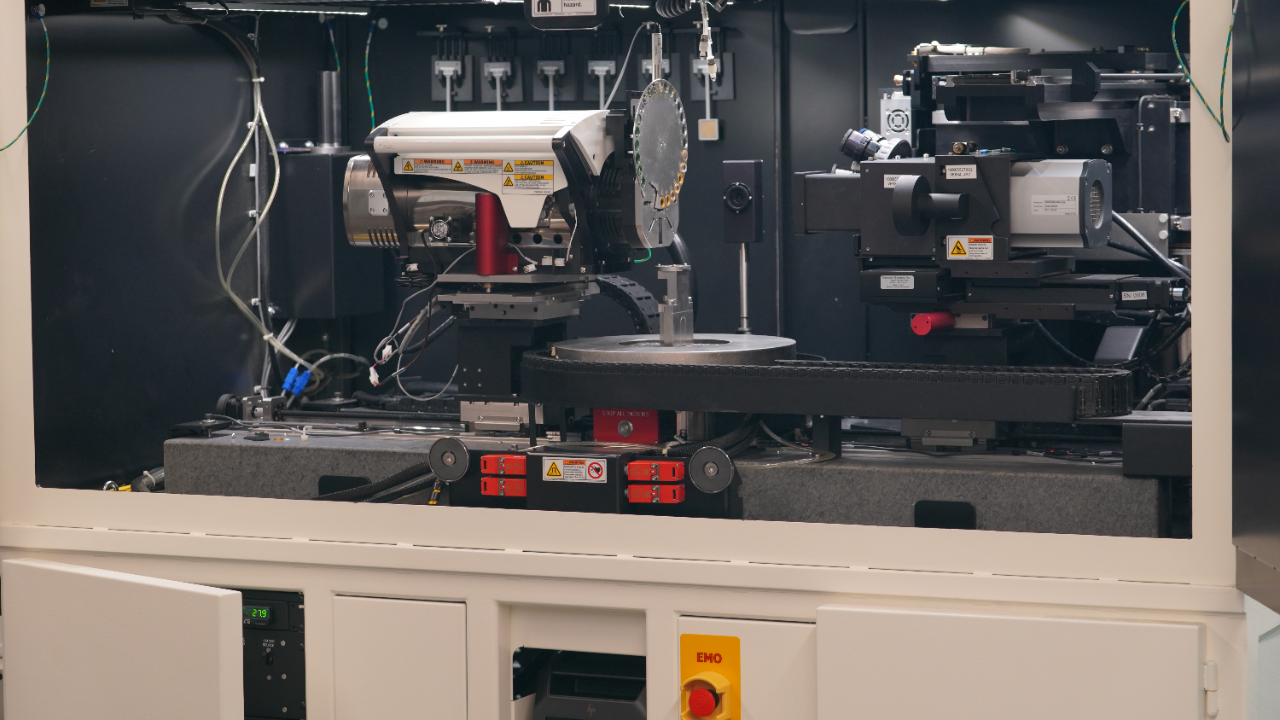
X-Ray Computed Tomography
ZEISS Xradia 620 Versa
- High-resolution 3D non-destructive imaging with spatial resolution down to ~500 nm
- X-ray source: 30–160 keV, up to 25 W
- Versatile sample sizes with in-situ / 4D capabilities
- Propagation phase contrast and multiple magnification objectives
Model: ZEISS Xradia 620 Versa
Sample Requirement
- Sample size typically up to ~50 mm in X, 100 mm in Y, 50 mm in Z (stage dependent)
- Solid, powder, or in-situ mounted specimens
What to expect
- High-resolution 3D tomographic reconstruction of internal microstructure, porosity, defects, and density variations. Supports time-resolved (4D) and in-situ mechanical/thermal experiments.
User notes
- Consult center staff for optimal scan parameters and reconstruction settings. Sample stability during long scans is important.
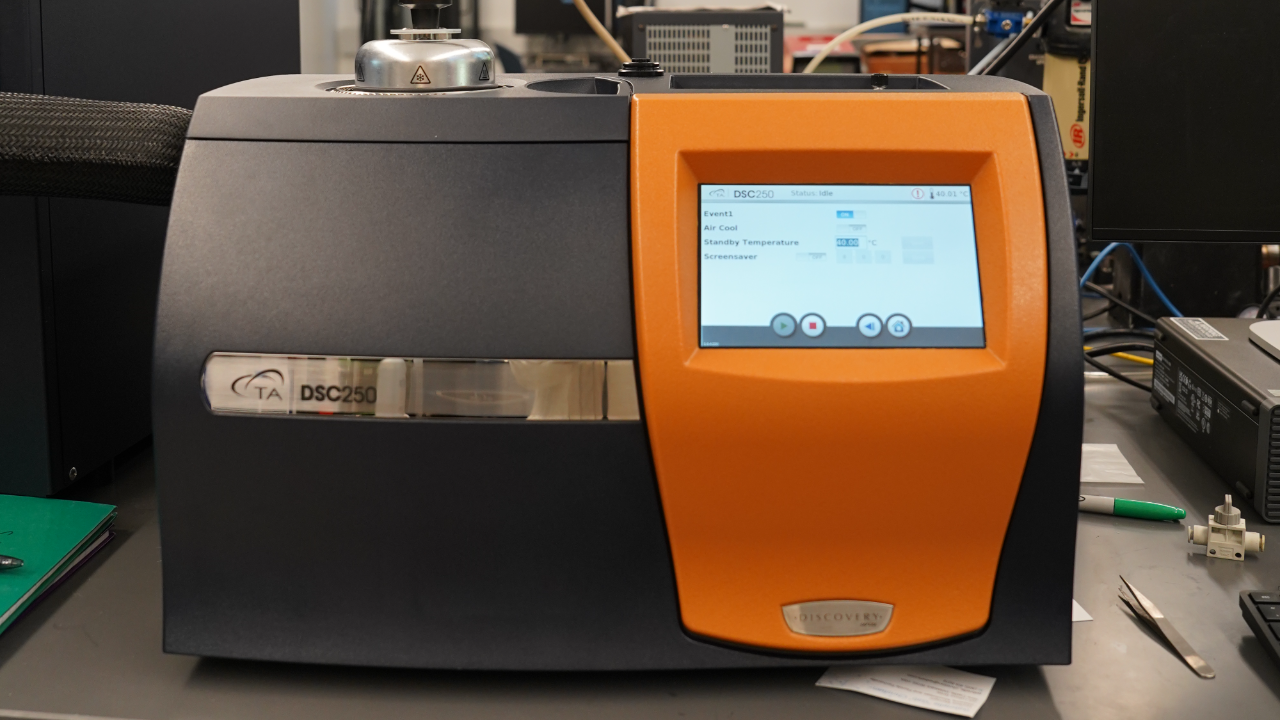
Differential Scanning Calorimetry (DSC)
TA Instruments, New Castle, Delaware, USA
- DSC 250 system equipped with RCS90 cooling unit
- Temperature range: -90 °C to 400 °C (or higher depending on configuration)
- Carrier gas: UHP Nitrogen
Model: DSC 250
Sample Requirement
- Pans: Tzero Aluminum
- Lids: Tzero Aluminum (with or without pinholes) or Tzero Aluminum Hermetic
- Material required: 10–20 mg
What to expect
- Measures heat flow (endothermic/exothermic) as a function of temperature. Provides phase transitions, glass transition temperature (Tg), melting point (Tm), crystallization temperature (Tc), specific heat capacity (Cp), enthalpy changes, and more.
User notes
- Provide prior TGA data to confirm sample stability unless the material is well-characterized. Sample preparation (pan sealing, mass accuracy) significantly affects data quality.
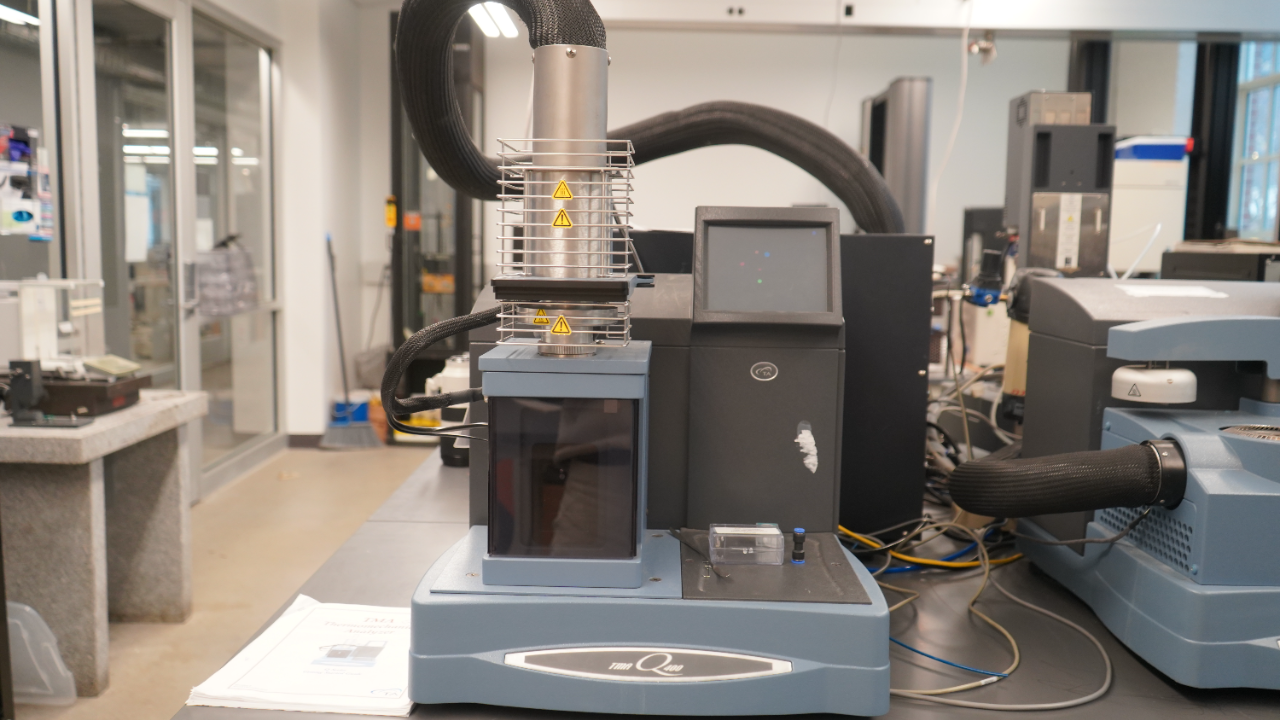
Thermogravimetric Analysis (TGA)
TA Instruments, New Castle, Delaware, USA
- Temperature range: up to 1000 °C
- Carrier gases: UHP Nitrogen or Air
- Software: Advantage for Q series
Model: Q500
Sample Requirement
- Pans: Platinum
- Material required: 10–20 mg
What to expect
- Measures weight change as a function of temperature. Determines decomposition temperatures, weight loss profiles, ash content, moisture content, and thermal stability.
User notes
- Provide prior information on sample stability when possible. Corrosive or reactive samples may require special handling.
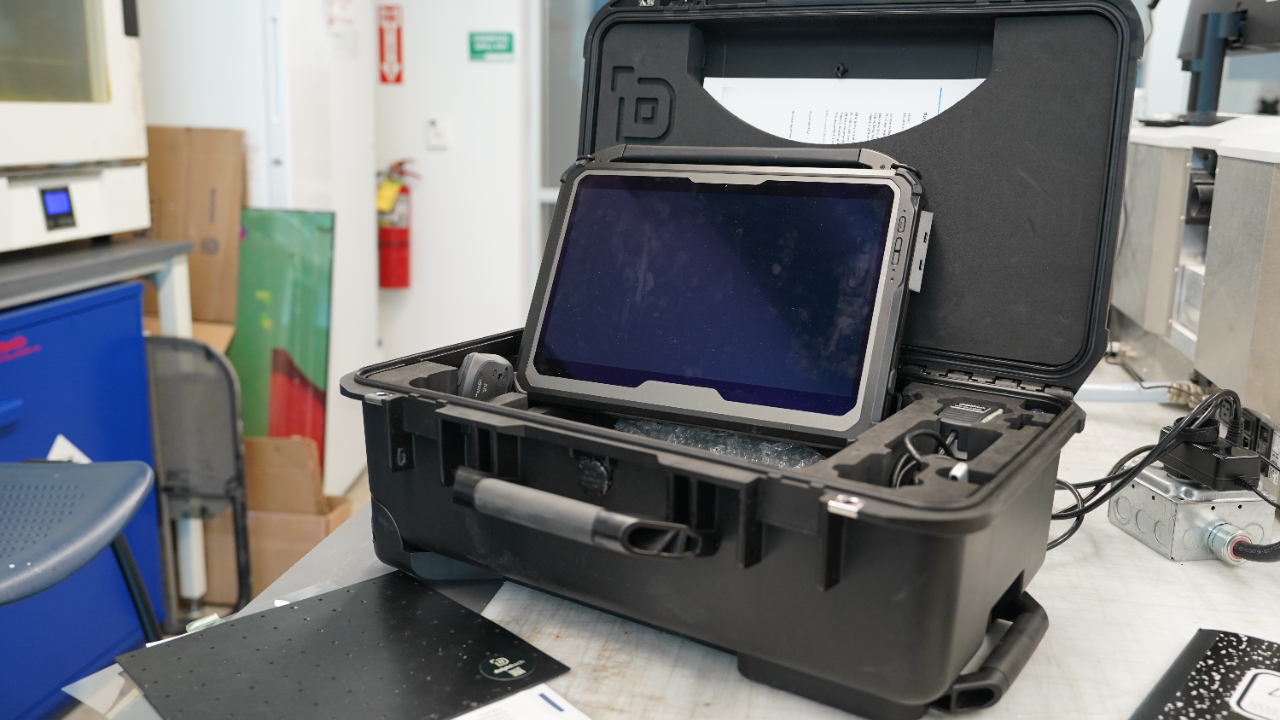
Thermomechanical Analysis (TMA)
TA Instruments, New Castle, Delaware, USA
- Temperature range: -90 °C to 350 °C
- Force range: up to 2 N
- Chiller: RCS70
- Carrier gas: UHP Nitrogen
- Software: Advantage for Q series
Model: Q400
Sample Requirement
- Maximum dimensions: 26 mm (L) × 10 mm (D)
What to expect
- Measures dimensional change (expansion/contraction) as a function of temperature under controlled force. Determines coefficient of thermal expansion (CTE), softening points, glass transition temperatures, and more.
User notes
- Sample must have a regular shape and sit stably on the probe/base. Relevant ASTM standards include E831 and E1545.
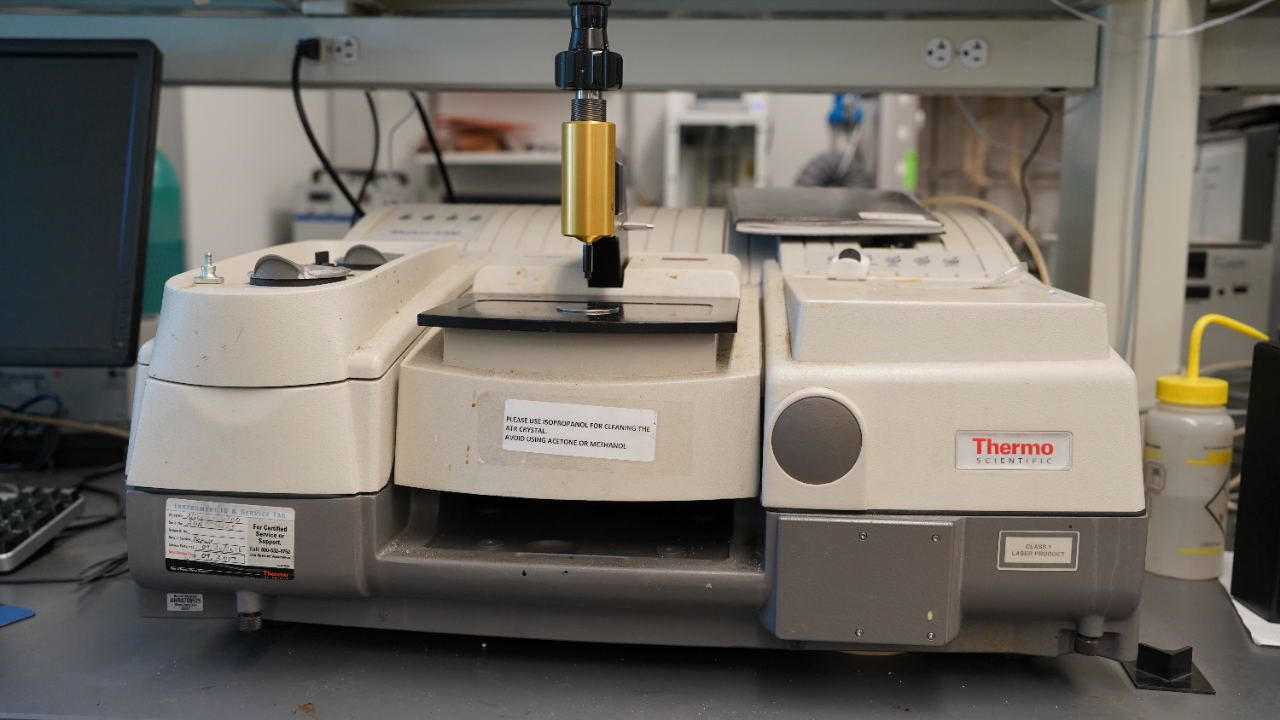
FTIR (Fourier Transform Infrared) Spectroscopy
Thermo Electron – Nicolet 6700
- Software: OMNIC
- Spectral range: 400 to 4000 cm⁻¹ (mid-IR)
- Modes: Transmission or Absorbance
Model: NICOLET 6700
Sample Requirement
- Powder, liquid, thin film, or soft solid (KBr pellet, ATR, or transmission)
What to expect
- Identifies functional groups via characteristic absorption bands in the infrared spectrum. Rapid qualitative and semi-quantitative material characterization.
User notes
- Pure metals, inorganic salts, and diatomic gases do not produce useful spectra. High water content, thick/opaque, or greasy samples often yield poor results.
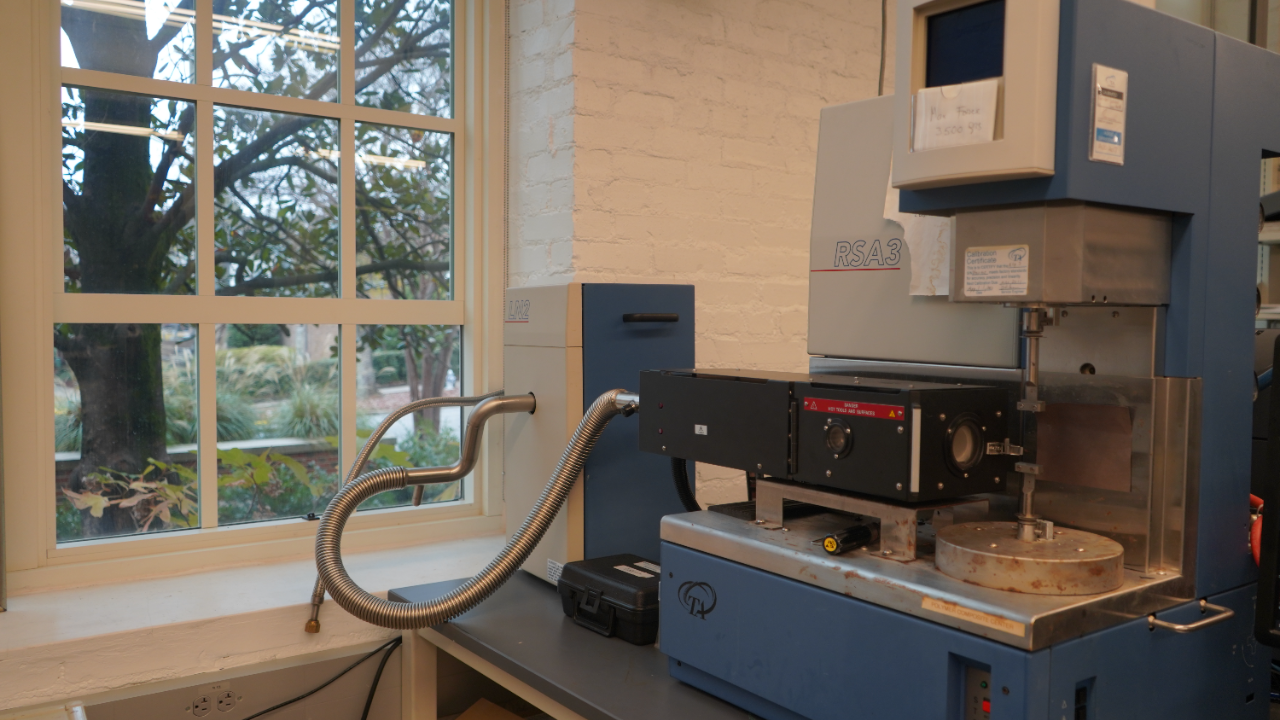
Dynamic Mechanical Analysis (DMA)
TA Instruments, New Castle, Delaware, USA
- Temperature range: -90 °C to 350 °C
- Software: Advantage
Model: RSA3
Sample Requirement
- Depends on clamp mode (tension, bending, compression, shear, etc.)
What to expect
- Measures viscoelastic properties (storage modulus E', loss modulus E'', tan δ) as a function of temperature, frequency, or time. Determines glass transition, stiffness, damping behavior. Compliant with various ASTM standards (e.g., D7028, D4065).
User notes
- Sample geometry and clamping are critical. Provide prior TGA/DSC data for thermal stability guidance.
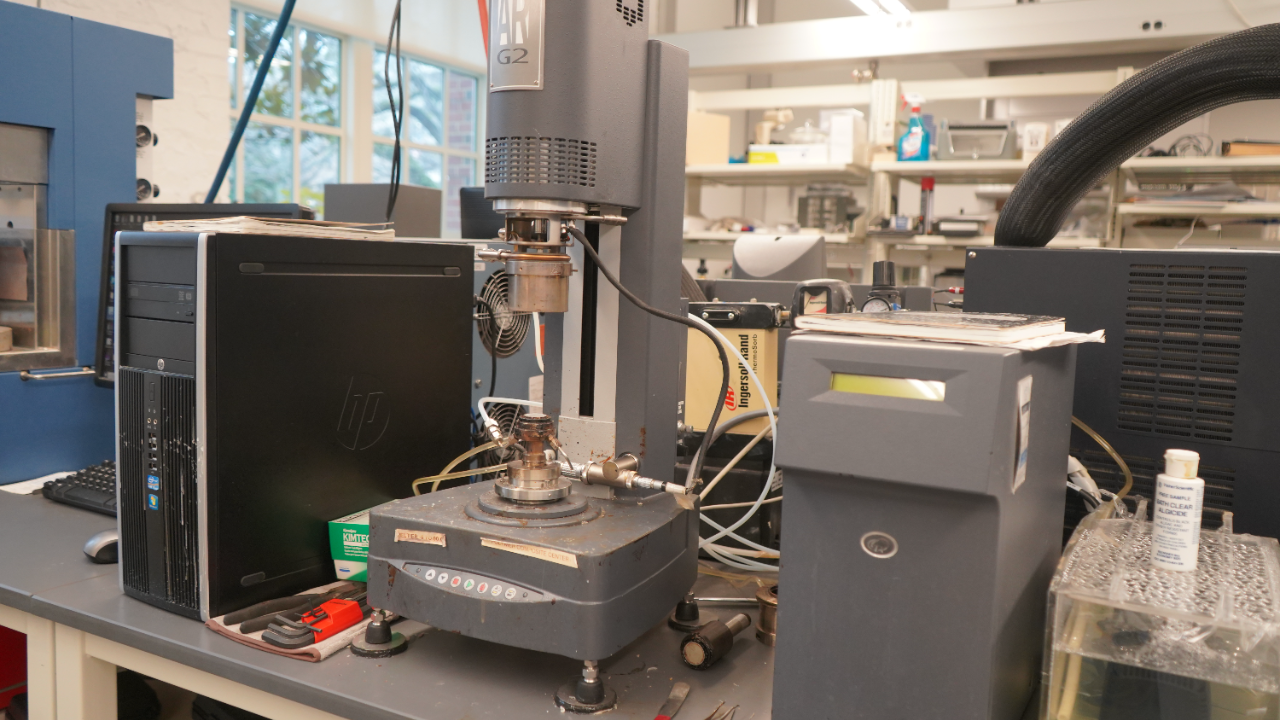
Rheometer
TA Instruments, New Castle, Delaware, USA
- Temperature range: up to 350 °C (configuration dependent)
- Software: TA Rheology Advantage / TRIOS
Model: AR-G2
Sample Requirement
- Liquids, pastes, gels, melts, or soft solids depending on geometry (cone-plate, parallel plate, etc.)
What to expect
- Measures flow behavior, viscosity, viscoelastic moduli (G', G''), yield stress, and time/temperature-dependent rheological properties under controlled shear or oscillation.
User notes
- Geometry selection and gap setting are critical. Consult staff for appropriate test protocols.
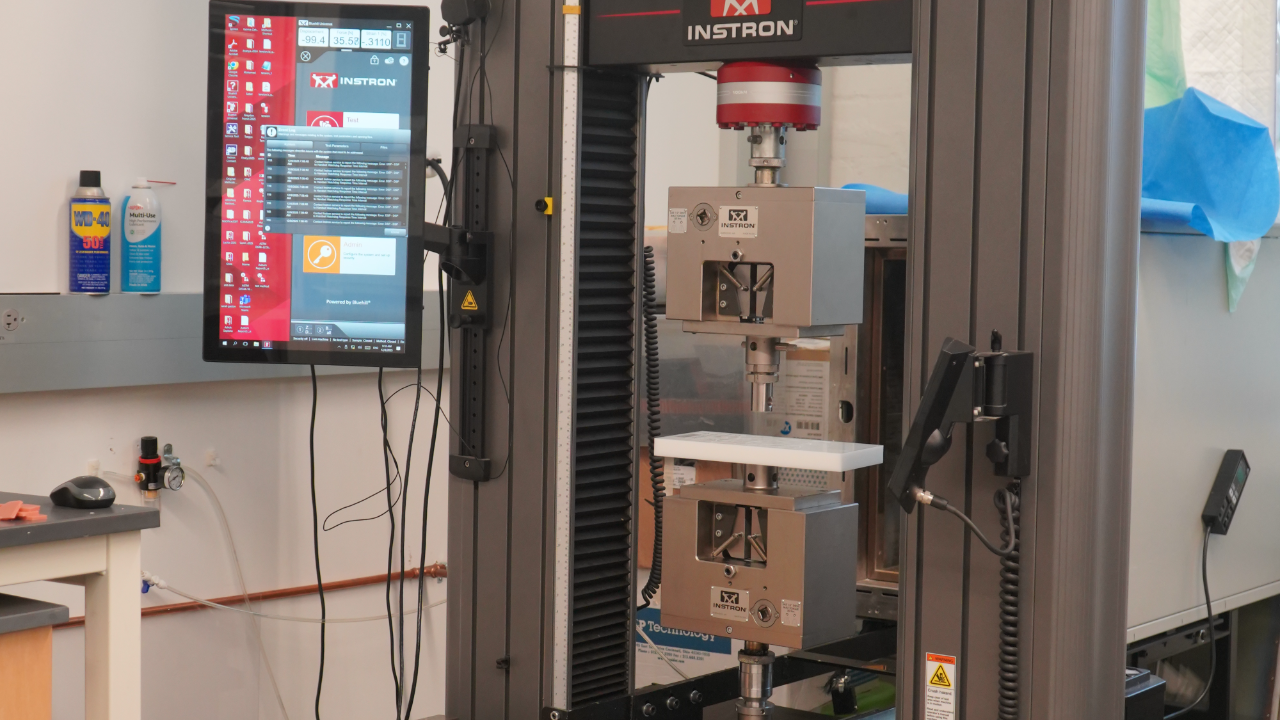
Universal Testing Machine (UTM)
Instron
- Available load cells: 100 N, 1 kN, 5 kN (additional capacities possible)
- Software: Bluehill Universal, Version 4.47
- Attachments: Tensile, compression, bending, peeling, tear, friction, adhesion, and more
- Environmental chamber available for elevated temperature testing
Model: 5982 (100 kN) and 68TM (10 kN)
Sample Requirement
- Dimensions vary by test type (tensile bars, flexural specimens, etc.)
What to expect
- Measures force vs. displacement. Generates stress-strain curves, modulus, ultimate strength, elongation, and other mechanical properties.
User notes
- Sample preparation is the user's responsibility after consultation with the Center Manager. Proper gripping and alignment are essential for accurate results.
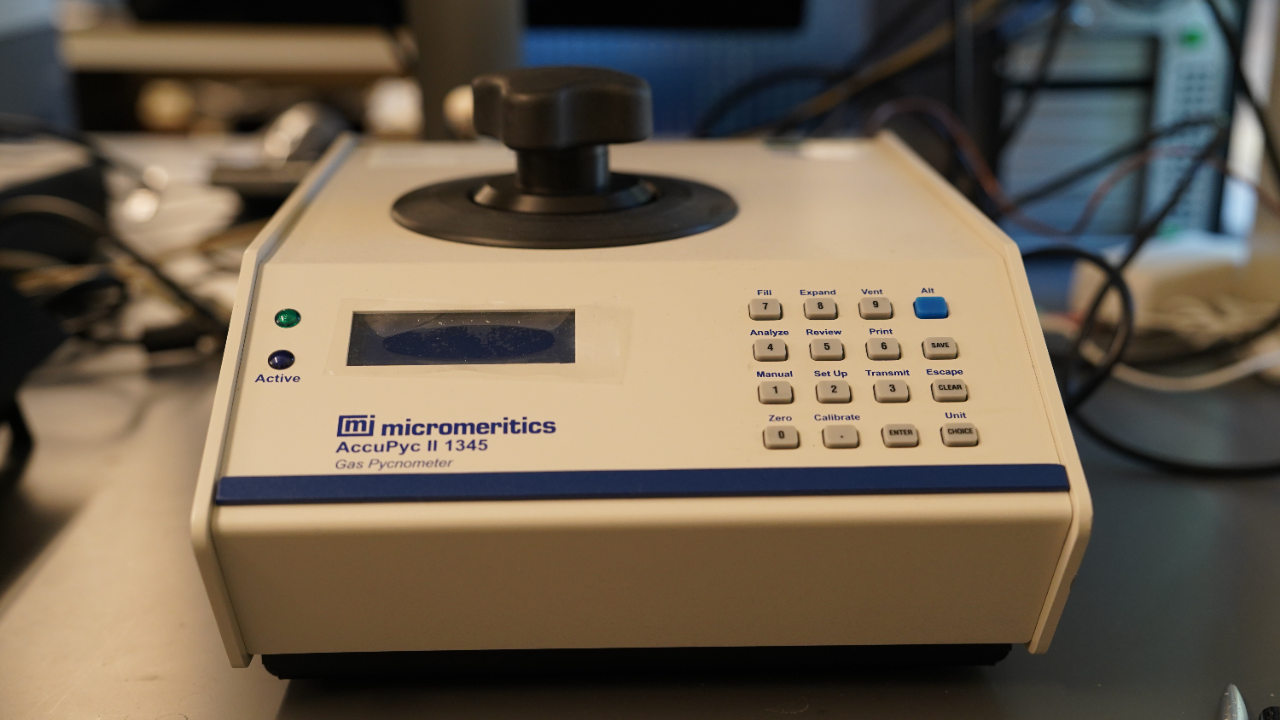
Gas Displacement Pycnometer (True Density)
Micromeritics
- High-precision skeletal volume and true density measurement using helium or nitrogen
Model: AccuPyc II 1340
Sample Requirement
- Powders, granules, pellets, solids, or porous materials (ceramics, polymers, metals, pharmaceuticals, etc.)
What to expect
- Accurate true (skeletal) density via gas displacement. Measures volume inaccessible to the gas (excluding open pores).
User notes
- Sample must be dry and degassed if necessary. Multiple runs improve repeatability.